

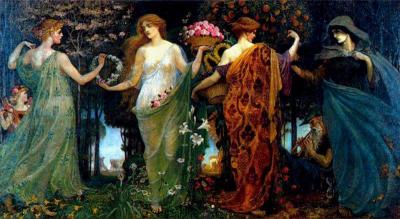
For so long I’ve been wandering in the maiden stage, but now I am a mother, to myself, since I’ve made hard decisions to loosen or cut ties with people who have not always acted in my best interest in their attached and, at least to me, manipulative ways; I have long felt a mother to whatever group of students I have the honor of guiding; and I moonlight as a card reader/astrological guide where I feel I can nurture and provide compassionate advice to those who desire a connection from the universe. The way I practice is that I allow my empathy and research about ourselves to encounter the client’s own internal wisdom. There is not anything that qualifies me to be a teacher or reader any more than anyone else. We are all guru to each other when we listen closely.
I am not sure why I have never wanted to be a mother of a child. Not-wanting has felt very natural to me. Now that I have put some distance between myself and my own mother, her voice and so her desires are not so much hovering over me. I feel free and good about my decisions, about following the path that is normal for me.
But what I really love about the four phases of the feminine way – maiden, mother, maga, and crone — is that we do not necessarily need to always identify with the stage that aligns with our age or any rites of passage. I remember going to a goddess ceremony in California where we could speak from any of the perspectives we felt aligned with that at the time and explain why.
Continue reading “The Four Phases of the Feminine Way by Elisabeth Schilling”
 It happened in the blink of an eye. So much of how we got here is blurry. I try to parse out the moments that came together to add up to this many years. I pause to absorb fragments, moments of the past.
 Who are the Dsir?
 The past few weeks, I’ve been sitting with the many layers held by the concept, and the manifest reality, of mother, mothering, and motherhood. Mother is seen in the divine feminine, in the cosmos, and in the sea and the glow of the moon. She is held in our genes and our histories and the eyes of our children. She is found in archetypes of healing, nurturing, and comfort, as well as in stories of criticism, coldness, and abuse. She is the soft one who tends grief and holds hands and braids hair, and she is the unbreakable one whose labor and caregiving is taken for granted in most areas of her life. We carry our mothers with us in our DNA, in our stories, and in the way we navigate the impacts of intergenerational trauma.
 A female friend recently posted an article by a woman writer about motherhood. The article was entitled “Children are NOT life’s flowers” (referring to a famous Russian saying which means that children are what makes life beautiful).
 It is amazing that in the current atmosphere of bringing out into the open so many issues, motherhood is not much discussed. Sexuality, gender and abuse are OK to speak about and question. At the same time, it is only within medical profession that such issues as “baby blues” or post-partum depression are valid topics.
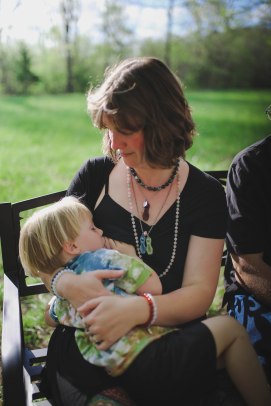 last night’s raindrops continuing to drip from the overfull gutters on the roof. The insistent stab of a single-note bird song in the air. His head nestles in the crook of my arm the way it has done every morning for three years. Blond hair against my nose, breathing in the slightly baby smell of him. “This is the last time,” I whisper softly. “We are all done after this. This is the last time we will have nonnies.”
 I had few expectations before my visit in the winter of 1999 to Cairo’s
