Wealth In Imagination by Laurie Goodhart

Artwork and sustainable agriculture are the two threads of my professional life. They mingle fruitfully beneath the surface as I sift through remaining evidence of ancient worlds, trying to sense how people of lost cultures met basic survival needs and also how they responded to the very human hunger for beauty, meaning, and story.

In revisiting the remnants with empathy and wonder, scavenging for resonant clues and forks in the road that we didn’t take, some subtle but significant things continually resurface. For one, various ancient Greek writers  (males, e.g., Plato, Strabo, Euripides) noted that it is “the women” who keep things sacred and maintain spiritually oriented rituals; that without the impetus of women, men would not bother to honor the sacred in everyday life, carrying on without much concern beyond themselves. Continue reading “Wealth In Imagination by Laurie Goodhart”

Personal Musings by Deanne Quarrie

Deanne Quarrie

If I Tell You

If I tell you what I feel
Don’t be offended or take on some sort of guilt.
If I tell you what I feel
Don’t think that my feelings imply blame.

If my feelings rise to the surface
Allow space for the thought that they are mine
For in their expression, simply wish to be spoken.

As I learn to tell you my feelings
I will search for an honesty of expression
Sharing – simply sharing what is felt.

For without words coming to the surface
there will never be a way to know me. Continue reading “Personal Musings by Deanne Quarrie”

Where’s the Love by Gina Messina

In a recent post I wrote about finding God in music. I confess, I cannot remember the last time I set foot in a church. As a woman, I continually grapple with the foundational messages of Jesus and Catholic Social Teaching and the disconnect with the power structures that seek to control the ways we love and find justice. I long to participate in the culture I grew up in, but cannot support the weaponization of the tradition. 

Lately, I’ve come to realize that the messages I connect to I find in music. There are particular songs that offer me the guidance, philosophy, and ideas around meaning and purpose that I resonate with. One of those is “Where’s the Love?” by the Black Eyed Peas.  

I’ve been listening to it on repeat lately because it is the sermon I need to hear; it speaks to me and even though it was recorded quite a while ago, it is still relevant. I think it is fair to say that in our current socio-political culture, people are “acting like they got no mamas.”  And by the way, I include myself in that statement. Like anyone, I sometimes get so caught up in believing that my way is the only way, I forget to listen to what others have to say.

We are in the midst of a political civil war and are so busy yelling past each other, we’ve forgotten how critical unity is to shaping a healthy government that serves its purpose – caring for the people. Continue reading “Where’s the Love by Gina Messina”

It’s Time for Nuns on the Bus to take to the Road Again: Getting Beyond Being “Pro-Birth” to Protecting all at the Margins by Dawn Webster

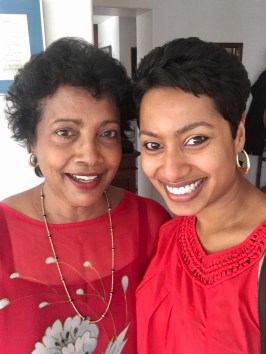
Author and daughter, Dr. Sheela Jane Menon, Assistant Professor at Dickinson College, PA

The country desperately needs to see the Nuns on the Bus on the road again. I just watched Radical Grace, nearly three years after my daughter and son-in-law gave it to me as a Christmas gift. My tardiness made me feel guilty, but despite the passage of time, the film still feels very timely.  Three years after the cancer that is 45 entered the White House; three years after the corruption and cruelty he unleashed has metastasized into key branches of government; three years after Catholics  have witnessed the heart of the Gospels ripped out the way children have been ripped from the arms of their parents at the southern border, this documentary about how a few nuns risked their place in the church to fight for justice tells me we need the leadership of the nuns more than ever.

Catholic voters from the heartland gave 45 the keys to the White House.—60 percent of them voted for him. Many justified voting for a man with Donald Trump’s appalling sexual, business, and racist history by pointing to his supposedly “pro-life” stance. Continue reading “It’s Time for Nuns on the Bus to take to the Road Again: Getting Beyond Being “Pro-Birth” to Protecting all at the Margins by Dawn Webster”

A Letter to the Editor: Hagar Has Her Say by Marilyn Batchelor

Dear Editor: 

I just want to set the record straight. I’ve heard stories about me being an ungrateful slave girl who was disrespectful to my master and mistress. I hear folks saying I went in and slept with my mistress’ husband, as if I had a choice. I didn’t. My body was not my own. 

Now, I am a free woman, but not without a price. I was an Egyptian hand maid to the Pharaoh. He gave me as a gift to a wealthy Hebrew couple, Sarai and Abram. Prior to this, I was respected amongst the other hand maids. I was still a virgin and that was worth something. As a servant, I already had no rights, nor control over my life. But at least I had my pride. 

I thought my new mistress would keep me safe from losing my virginity until I found a husband. Instead, out of impatience, she sent me in to her husband to have a baby. You see, Abram and Sarai had been trying to have children for many years. God had already promised Abram that he would be a father of many nations. Sarai, being barren, was no proof of this. 

They called me “slave-girl.” I was nameless – meant only to serve her and later to produce a child – something she couldn’t do. Why was it my fault that Sarai was barren? After I was forced to have sex with her husband, it was clear I was nothing but property.  Continue reading “A Letter to the Editor: Hagar Has Her Say by Marilyn Batchelor”

Untapped Communal Potential and Yom Kippur by Ivy Helman

imageYom Kippur, the Day of Atonement, was the 9th of October 2019.  On this day, Jews typically attend shul, offer various prayers, and participate in some form of fasting.  The day is meant to be a reflection on the ways in which we, as individuals and as a community, have not been our best selves.  In this reflection, we speak aloud our objectionable behavior and ask for the Divine’s forgiveness.

In some Jewish communities, the ashamnu prayer, which we use to acknowledge our harmful and destructive behavior, has been the same for centuries.  Its particular form and composition is a stylized, alphabetized list of misdeeds. For example, one can find on the list stealing, lying, being rude, disobeying the Torah, participating in abominations, turning away from G-d and so on.  

That being said, many communities have rewritten the prayer to speak to modern-day failings.  For example, one can find concern for racism and anti-Semitism.  Another ashamnu highlights the need to end war.  I even found an ashmanu that was considerably more personal in its reflection.  It problematized self-doubt and supported self-care. Continue reading “Untapped Communal Potential and Yom Kippur by Ivy Helman”

Embracing Darkness: All Hallows Eve in Old Lancashire


Come Halloween, the popular imagination turns to witches. Especially in Pendle Witch Country, the rugged Pennine landscape surrounding Pendle Hill, once home to twelve individuals arrested for witchcraft in 1612. The most notorious was Elizabeth Southerns, alias Old Demdike, cunning woman of long-standing repute and the heroine of my novel Daughters of the Witching Hill.

How did these historical cunning folk celebrate All Hallows Eve?

All Hallows has its roots in the ancient feast of Samhain, which marked the end of the pastoral year and was considered particularly numinous, a time when the faery folk and the spirits of the dead roved abroad. Many of these beliefs were preserved in the Christian feast of All Hallows, which had developed into a spectacular affair by the late Middle Ages, with church bells ringing all night to comfort the souls thought to be in purgatory. Did this custom have its origin in much older rites of ancestor veneration? This threshold feast opening the season of cold and darkness allowed people to confront their deepest fears—that of death and what lay beyond. And their deepest longings—reunion with their cherished departed.

Continue reading “Embracing Darkness: All Hallows Eve in Old Lancashire”

Ant Hill by Sara Wright

Yesterday I gave a poetry reading at a local library beginning and ending with thoughts about how Climate Change is affecting all living things. I am a naturalist who holds the radical belief that all living things are sentient. I also argue that we must not equate animal intelligence with that of humans.

Almost every poem I read was about my intimate relationship with some aspect of the natural world, for example, the changing seasons, my friendship with sagebrush lizards, steadfast trees, Sandhill cranes, beloved Black bears. Intimacy and inter –relationship are part of every experience I have with nature and by sharing these poems I hoped might draw others in to new ways of perceiving the earth and her creatures.

The whole point of my focusing on non – human species was to raise awareness that these animals and plants desperately need our help. Perhaps I wasn’t clear enough about how critical it is to bring animals, plants, trees, mushrooms into the picture in this age of the Anthropocene, that is, the period in which we live where a few men with power rule. Today, it is not an exaggeration to say that humans control every aspect of our fragile planet.

I repeat: Perhaps I wasn’t clear enough or perhaps almost no one was capable of listening? Maybe both. As soon as I concluded my reading one woman did actually bring up an incident involving a very difficult child who became attached to a lizard, so she at least, was on the track I hoped I had laid….

Continue reading “Ant Hill by Sara Wright”

To Light a Flaming Pumpkin: The Inexact Art of Family Ritual, by Molly Remer

Our bounty is inIMG_7695
creativity
friendship
community
the myriad small adventures
of everyday.
We tell of magic
and moonrise
and listening to the pulse
of the earth beneath our feet.

Ah, October. Fall has settled into the trees and air. Last year on Samhain (Halloween), as the sun was setting and the full moon was rising, my family stood together in the dim light on our back deck, lit a fire in a hollowed out pumpkin and offered handfuls of herbs into the flames as we celebrated our blessings, our harvests, and our bounty, as a family and as individuals. As we spoke aloud our blessings and our bounty, our words got deeper, broader, and more authentic. My twelve year old son stepped forward to say how thankful he is that he gets to live with his best friend, his fifteen year old brother, and they embraced over the flaming pumpkin. My fifteen year old son offered his thanks for a family that has “cool IMG_7387rituals like this” and my four year son offered his blessings for the “energy we feel together.” My seven year old daughter offered her gratitude for pandas and for toys.
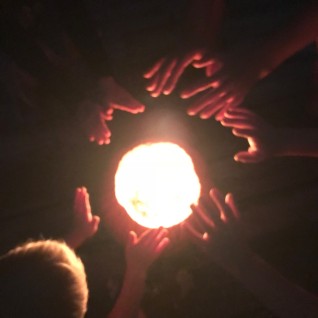
The next week, we returned the seeds to the pumpkin and released it to the outdoors to grow next year.

Seventeen years ago, I held my first Winter Solstice ritual. I wrote my wish for a baby onto a small piece of paper and rolled it up into a “seed” of my dreams that I planted within a special wooden box. On the autumn equinox the following year, I gave birth to my first child, a son who now stands inches above me, but who joins hands with his family each month to sing “Dance in the Circle of Moonlight” together on the back deck under the full moon.

After having this first baby, it became increasingly important to me that we celebrate holidays and traditions that reflect our spiritual values and worldview rather than the packaged version of the holidays offered by society, or the religious observances of dominant faiths that do not match our own. While we have celebrated the wheel of the year together in a variety of ways in what has now been sixteen years of parenting and twenty-one years of marriage, it wasn’t really until last year that I felt I finally, truly hit my stride in planning fulfilling, nourishing family rituals. Perhaps it is because I am no longer trying to juggle nursing a baby or changing a diaper while simultaneously also guiding a ceremony. Perhaps it is because I’ve loosened up and accepted the myriad imperfections possible within a multi-age celebration. Perhaps it is because when one of the children wanders off during circle or interrupts me while I’m talking, I accept it as part of the flow, and continue our work without breaking my stride. Perhaps it is because I now laugh too when someone makes a joke during my careful ritual, and continue to roll with it, instead of feeling like it is disrespectful. Perhaps it is because I consider a 15-20 minutes family ritual perfectly sufficient instead of trying to plan for a full-fledged, retreat-style “program” of activities. Perhaps it is because we’ve joined hands in family circle in so many ways and for so many years that we all now trust that I’m not giving up on doing this together.

In the course of the year we’ve anointed one another’s foreheads with fragrant oils while standing in the freezing water of a freshwater stream. We’ve felt the raindrops kiss our faces and the rays of the sun peek in and out of the clouds as we celebrated the summer solstice by releasing wildflowers into the river. We’ve howled at the moon together, built a green man face from leaves, stones, and sticks in the field, created flower mandalas, thrown pinches of cornmeal into the woods as a symbolic sacrifice, soaked our feet in warm water laced with rose petals and then massaged one another’s feet with lotion, walked through a spiral of candlelight, and offered handfuls of herbs into a flaming pumpkin.

As we notice the changing seasons and honor the call of nature within our lives through ceremony, celebration, and song, we make visible the interconnected dance of life. We reaffirm our commitment, our relatedness, to each other and to the natural environment around us. We communicate with and are in relationship to that larger force of life and spirit that we call Goddess. And, we bring our spiritual beliefs into our bodies, hands, minds, and hearts in an ever-spinning Wheel of celebration, attention, observation, enjoyment, communion, and love.

 “We can think of ritual as the container we weave in which we can be carried away by magic and ecstasy.”

—Starhawk and Valentine, The Twelve Wild Swans

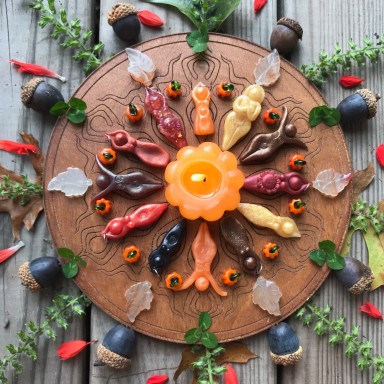
For your own flaming pumpkin ritual, choose a large, round pumpkin, cut off the top 42311806_2188101348068742_1038582461505732608_oand hollow it out. Keep the seeds to plant with the remnants of your fire later. You may start the fire with paper and a lighter and then keep adding herbs to keep it burning, or you may stoke it by putting some alcohol in the bottom of the pumpkin to begin with. Alcohol burns cool and can create a longer lasting, less smoky flaming pumpkin. Offer your autumn bounty into the pumpkin with herbs sprinkles/handfuls—these can be spontaneous spoken aloud declarations of your harvest, your celebrations, your gratitude, etc. What are you thankful for?
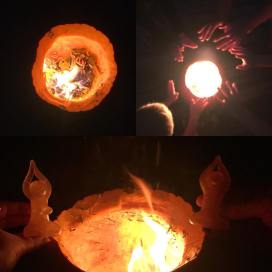
  • Optional: offer any sacrifices/releasing on slips of paper into the flames
  • Optional: Sing “Hallowed Evening” chant (by my kids and me)

Hallowed evening
Hallowed night
We dance in the shadows
We offer our light.

Additional Articles:

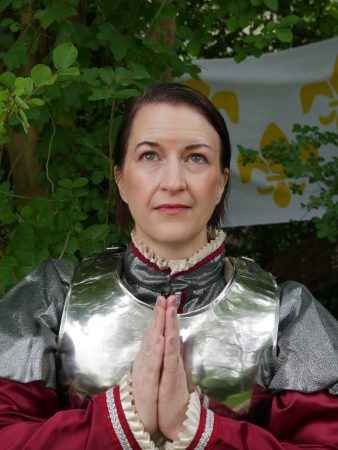
Joan of Arc from The Goddess Project: Made in Her Image by Colette Numajiri

“I’m not afraid. I was born to do this.” -Joan of Arc

Women are inherently valiant. In extreme situations we armor up and lead others through whatever we are battling at the time.

Joan of Arc was a human woman with otherworldly faith who, as a young teenager, listened to Divine voices and lead an army that eventually ended the 100 Years War.  “The real Joan of Arc is an uncomfortable fit as an icon of female solidarity or democratic rights. She achieved what should have been impossible for someone of her gender and class in 15th-century France.” wrote Helen Castor in her book Joan of Arc: A History. She was so respected and revered that 20 years AFTER Her death, 115 people testified on behalf of Joan of Arc (Jeanne d’Arc) and overturned the ruling.

Enbodying the Divine Feminine on Earth, women look to Joan as an inspiring example of a brave and active woman.  Joan inspired the Suffragettes, they held her banner and wore white (as Joan chose to wear white for purity when She was taken to the stake to be burned for the crime of cross-dressing) as they marched for women’s right to vote. Just as, a few months ago our newly elected Congresswomen all wore white in solidarity.

Continue reading “Joan of Arc from The Goddess Project: Made in Her Image by Colette Numajiri”