
Clerical Male Mess! by Janice L. Poss

“I am sorry!” “I am guilty of sex abuse” “I have hurt many young children!” “I have ruined lives!” “We are sorry for hiding sex abuse in the Church!” “We are criminals!” “We want to make amends!” We, in the pews, have yet to hear true contrition, instead we hear how the Church needs healing. True, but where is remorse from those who perpetrated and covered-up the crimes? To heal, we must hear from them.

Remorse, a contrite heart, admitting grave sin, deceitfulness, criminal behavior, the global Catholic Church has not yet confessed this loud enough. Why? Why is male clerical privilege so deeply ingrained in the construct of In Persona Christi that none of these guilty perpetrators of crime are able to directly tell Catholics worldwide that they truly, in their hearts grieve for our church and grieve for what they have done to our children? Where is their sensitivity for children? Continue reading “Clerical Male Mess! by Janice L. Poss”

This Is What Rape Culture Looks Like: Then and Now by Carol P. Christ

I was not paying full attention when I heard a news report on CNN saying that archaeologists had uncovered an “ancient erotic fresco” in Pompeii. Hmm, I thought to myself, this story deserves further investigation.

I had heard whispers about frescoes that only men were allowed to see when I visited Pompeii as a student years ago. I now know that these were idealized pornographic wall paintings in brothels of handsome young men engaging with beautiful prostitutes in variety of sexual positions. In real life prostitutes in Pompeii were slaves who worked in appalling conditions in dark, dank, windowless cells. No doubt many of their customers were unwashed toothless dirty old men.

The fresco in the news turned out to be an image of the rape of the Spartan queen Leda by Zeus disguised as a swan; it was found in a bedroom of a house or villa in Pompeii. Continue reading “This Is What Rape Culture Looks Like: Then and Now by Carol P. Christ”

Celebrating the Winter Solstice by Barbara Ardinger

Even though Jesus was born during the reign of Augustus, first Roman emperor, the empire didn’t celebrate that birth until three centuries later when his birth date was moved to mid-winter to match the birth date of the sun god Mithra. The Romans already had a long tradition of celebrating the winter solstice. This celebration was called the Saturnalia. Here are three days in December, taken from my daybook, Pagan Every Day. (When I wrote this book in 2003, I wrote longer days. The publisher demanded that I reduce every day to 300 words. I edited them all down to 301 words.)

December 17: Saturnalia begins

Saturn, who was conflated with the Greek Titan, Cronus, was an ancient Latin agricultural god whose name may derive from satur, “stuffed,” or sator, “a sower”; in either case he stands for abundance. He was a working god who oversaw viniculture and farming, the king of Italy during the golden age. When Jupiter conquered him, he hid himself (latuit) in the region that came to be called Latium. The Romans said Saturn’s body lay beneath the Capitol in Rome. Because his reign brought prosperity to the city, the state treasury and the standards of the Roman legions were kept in his temple when the army was at home. Saturn’s statue was bound in woolen strips to keep him from leaving Rome.

Continue reading “Celebrating the Winter Solstice by Barbara Ardinger”

Navigating Social Space as Power-Struggle, Pt. 2 by Elisabeth Schilling

Disclaimer/Trigger Warning: This post contains details about unwanted sexual advances. Read Part I here.

After Sicily, I went to the English countryside for an intended two weeks in a work exchange. A retired, but part-time, lecturer of Greek and Latin in his 60s was moving house and needed help packing and cleaning and cooking. There would, in a day or two, also be a male student from Lithuania and a Brazilian couple joining the communal house, and I found the position through workaway.info, a site one must pay for that I used three years ago with no problem.

On one hand, I have to use sites like this from time to time due to financial reasons. On the other hand, after traveling alone for awhile, I long for the communal exchange. I enjoy helping someone learn a language, cook for their family, organize their clutter because of the conversations along the way. They have a house and extra food. I have the time (my two classes I teach at university online do not take much) to help. If the people involved are mindful and truly grateful for community and shared work and resources, it can be a sacred return to a way of life where people can practice sharing, non-greed, and carrying each other’s burdens. We practice living with strangers, with all the challenges that presents, instead of isolating ourselves in presumed comfort. Continue reading “Navigating Social Space as Power-Struggle, Pt. 2 by Elisabeth Schilling”

Navigating Social Space as Power-Struggle, Pt. 1 by Elisabeth Schilling

The space we take up by our bodies is an element of the sacred. As we move from bed in waking, through our houses and then out into the world, if any of that movement places a woman in close proximity with a man or men, she might do well to observe how the male presence may modify her behavior, from adjusting orientation, position, and flow.

I was in Sicily for four weeks, and as I lived about 15 km from the town center, I took the bus. There is no on-the-minute bus schedule for my stop, but I could calculate when the bus would depart from the station and how long it might take to get to where I lived. Sometimes if felt like the bus just wouldn’t come. Continue reading “Navigating Social Space as Power-Struggle, Pt. 1 by Elisabeth Schilling”

Bear Spirit Guide by Judith Shaw

judith shaw photoBear has been important to human mythology and story for thousands of years. Some feel that Bear is the oldest European deity, as bones and skulls of bears have been found lovingly arranged on niches found in caves across Europe. The first written sentence from the Old Europe Script, invented around 6,000 years ago reads, “The Bear Goddess and the Bird Goddess are the Bear Goddess indeed.

Continue reading “Bear Spirit Guide by Judith Shaw”

Jewish Hair, Witch Hair, and the Problem of Identity by Jill Hammer

This is a time of increased vulnerability for many minority populations in the United States: people of color, immigrants, LGBT people, native peoples. The policies and rhetoric of the current administration have left all these groups exposed to hostility.  Women are also feeling the pressure, as the gender split in voting in the past election suggests. And, Jews also are facing increased visibility.  In addition to the murders in Pittsburgh, anti-Semitic incidents around the country have increased in the last few years.  All this has me thinking about visibility, chosen and unchosen.
My father, an Ashkenazi Jew with curly black hair, green eyes and dark skin, came from an immigrant family that arrived here in the early 20th century from the region of Poland known as Galicia.  His mother in particular valued assimilation into American identity, and prized blond hair as a sign of this identity– she in fact later dyed her black hair blond.  His aunt had blond hair and it was considered a family coup.  (There’s much to say here about developing an assumed American identity of whiteness, as well as the presumption of Christianity.) When I was a little girl, I had blond hair and blue eyes.  My father used to call me his blond-haired, blue-eyed girl.

“No,” I would insist.  “My hair is brown and my eyes are green.” Continue reading “Jewish Hair, Witch Hair, and the Problem of Identity by Jill Hammer”

The Gifts of Life: Do We Remember? by Carol P. Christ

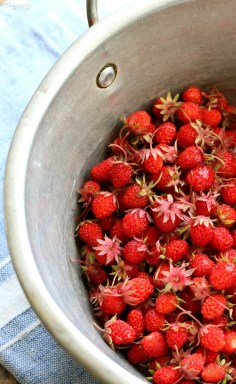
Strawberries shaped my view of a world full of gifts simply scattered at your feet. A gift comes to you through no action of your own, free, having moved toward you without your beckoning. It is not a reward, you cannot earn it, or call it to you, or even deserve it. And yet it appears.

Sweetgrass belongs to Mother Earth. Sweetgrass pickers collect properly and respectfully, for their own use and the needs of their community. They return a gift to the earth.

That is the fundamental nature of gifts: they move, and their value increases with their passage. The fields made a gift of berries to us and we made a gift of them to our father. The more something is shared, the greater its value becomes. This is hard to grasp for societies steeped in notions of private property, where others are, by definition, excluded from sharing.

The essence of a gift is that it creates a set of relationships. The currency of a gift economy is, at its root, reciprocity.

Robin Wall Kimmerer, Braiding Sweetgrass, 27-28

Thanksgiving has come and gone. We gave thanks for the food placed on the table and for the family or friends who shared it with us.

In our culture giving thanks can feel forced: I remember how my brothers and cousins and I hated to be asked to say grace at Grandma’s house. When we have not been taught, it can be difficult for us to understand that nothing is ours by right. Continue reading “The Gifts of Life: Do We Remember? by Carol P. Christ”

Unpacking the Midterm Elections by Anjeanette LeBoeuf

Anjeanette

As the dust is settling, with the mixture of finishing counting ballots and races being conceded, the true realities of what happened in the 2018 Midterm Elections is taking concrete form. From the earliest hours of November 6, numbers showed that both Democrats and Republicans, old and new, were taking to the polls, flexing their democratic rights, and showing the political regimes from local, state, and federal levels that the current state of being is not acceptable.

Continue reading “Unpacking the Midterm Elections by Anjeanette LeBoeuf”

And the Pies! Ongoing Grateful Thanks for Tradition by Marie Cartier

In November 2017 I wrote about pie baking. 

And in November 2015 I also wrote about pie baking.

Photo by Lisa Hartouni

In November 2016, I was destroyed by the “election” and wrote a post in November of that year “For Strong Women” just to help many of us keep going.

Continue reading “And the Pies! Ongoing Grateful Thanks for Tradition by Marie Cartier”