 This parshah contains the account of Jacob’s marriages to Leah and Rachel, (who happen to be his cousins) as well as the birth of his 11 sons and one daughter. It describes the long amounts of time Jacob worked for Laban in order to marry Laban’s daughters, and recounts the trickery of Laban giving first Leah, the older daughter to Jacob, before allowing Jacob to marry who he wanted to, Rachel.
Like the relationship between Hagar and Sarah, there is animosity between Leah and Rachel over Jacob’s love as well as the ability to bear children. This animosity spreads to the maids of Leah and Rachel, Zilpah and Bilhah respectively, as they are used by the sisters to conceive children on their behalf. One can see also this animosity in how Leah and Rachel name their sons. Yet, the parshah also contains two aspects that seem at odds with such a patriarchal perspective. First, there are five named women who play key roles in the goings-on. Second, Rachel is an active agent. Continue reading “Vayeitzei: Rachel and the Practice of Niddah by Ivy Helman”
 This is the first part of a series of reflections on the weekly Torah portions. For those of you unfamiliar with Judaism, we read the Torah in sections. There are 52 parshot (or portions), one parshah (portion) is read each week (most often during Shabbat morning services). It is common for rabbis, prayer leaders or someone of the congregation to offer reflections on the week’s parshah at Shabbat services.
 In the ancient world, snakes represented fertility, creativity, rebirth, wisdom and, even, death. They were often closely connected to female goddesses, priestesses and powerful human females who were the embodiment of such powers. For example, there is the Minoan goddess/priestess holding the two snakes in her outstretched arms. She is closely linked with fertility and domesticity. Similar figurines, with similar associations and dating to approximately 1200 BCE, have also been founded in the land of what once was Canaan, where Israelites also lived. Medusa, in whose hair lived venomous snakes, turned men who looked at her to stone. Ovid’s account of the creation of Medusa credits the Greek goddess Athena with Medusa’s lively hair. Another Greek legend says Perseus, after killing Medusa, gave her head to Athena who incorporated it into her shield. Athena, the goddess of wisdom, is portrayed often with snakes wrapped around her as a belt and/or on the floor next to her.
 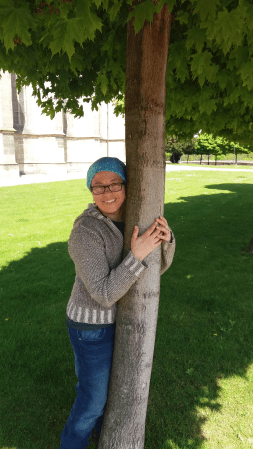 Let’s see if the following course of events makes sense. A few Wednesdays ago, I was thinking about possible topics for this post considering it would be Mother’s Day. In the midst of thought, the warning sirens in Prague began. They were only being tested but, nontheless, I immediately thought of tornados. You see tornados, as awful and devastating as they are, make me think of thunderstorms and lightning. I love a good thunderstorm, the louder the better.
 Embodiment is a feminist principle which has, as its basis, two fundamental criteria. First, humans require their bodies to live. We must acknowledge that our existence is tied to our bodies. This fact grounds us in this world. Here, and not in some other-worldly place, we live out our lives. We are dependent on our bodies and what the world provides for our survival. In other words, humans are inseparable and interconnected to this world. Humans are not above nature as the Western hierarchical dualist mindset would suggest.
 When I was in high school, I once gave a speech summarizing what I had learned about G-d through my dog. I still chuckle at the idea. I cringe sometimes and wonder what others thought of the piece. Oh, the seeming immaturity of such an idea and perhaps naiveté. I’m still embarrassed by my high school self.