{Part 1 was posted yesterday. You can see it here}
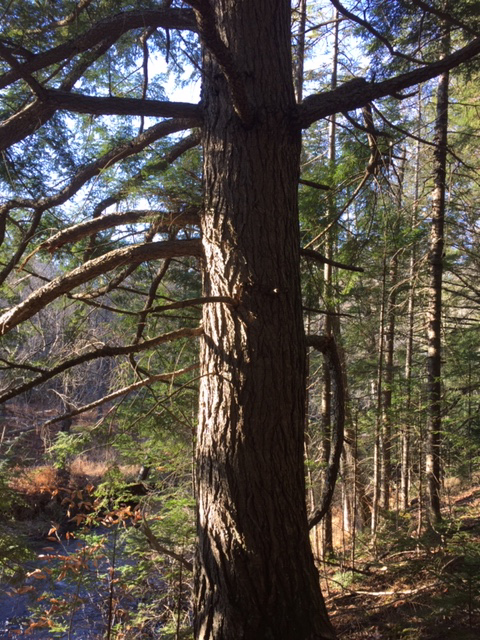
Soon after I began to create little traditions that I follow to this day. November is the month I begin to celebrate my love for every evergreen tree on the earth. The leaves of broadleaf trees have become nature’s mulch, yet forest green stays with us until spring, thanks to the conifers. Thanksgiving week is the time I choose to go into the forest to tip balsam boughs thanking the trees for being, always choosing a mild day when I can enjoy being outdoors. Then I weave fragrant wreaths sitting on my living room floor listening to choral music sung in Latin, a language I don’t understand, thankfully (!) This year my indoor Norfolk Island pines are already lit with rice lights for a few hours each evening lending a festive glow to the soothing cloak of darkness.
Recently I decided to include a dinner for this week of Wintergreen Tree Celebration and it turned out that the foods I wanted to cook were some of the favorite foods I prepared during those exhausting and meaningless thanksgivings, cooking that I did for others, including my children at my own expense. At first this idea of cooking a feast for myself, (after all the trees couldn’t join me) seemed silly until I recalled how much I loved my own food! I am an excellent cook and I can conjure up just about anything without a recipe.
Continue reading “A Different Type of Thanksgiving, part 2 by Sara Wright”
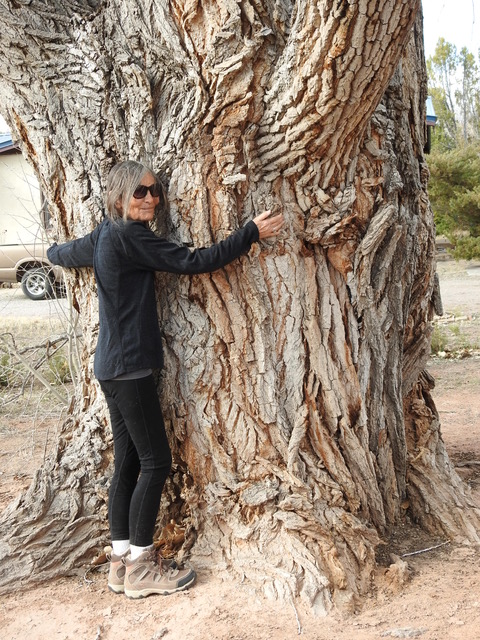 Yesterday I learned (NPR) that a third of the oak trees in this country will be dead within 50 years; I also read that our sugary harbingers of spring, the Maples, are dying confirming my own observations. I try to imagine what fall will be like without fire on the mountain.
 I have a vivid childhood memory of being sick with the stomach flu and standing in the doorway of my parents’ bedroom looking for my mother. Her care for sick children was tender and thorough. She would bring us ginger ale and toast with jelly. When she had time, she read us stories. I can remember her steering me, heavy with fever, back to a bed that she had magically smoothed and cooled. But that day my mother lay in her own bed in an old nightgown, not stirring. She had the flu, too, and could not get up to care for the rest of us. It was a shocking and sobering moment.
 I am a fairly private person; but I do like nice hugs. I grew up in a home that involved so much intentional love and affection that I came to see it as a normal part of any loving relationship. I’m pretty sure I startle my friends sometimes by saying such affectionate things; but they endure, and many of them claim to appreciate a nice hug, too.
 When I moved to Maine from New Orleans 15 years ago, I was delighted to discover how many birch trees were on the property where I lived with my new partner. Previously I had had little contact with these beautiful white trees, other than in pictures and stories. The name always evoked images of birch bark canoes and messages to fate scrawled with bits of burnt wood.
 Full Seed Moon 3/9/20
 Tomorrow is Tu B’Shevat, the New Year of the Trees, or their birthday. It is the day of the year when all trees, regardless of when they have been planted, turn another year older. The rabbis standardized this day in an effort to minimize complexities, since in the land of Israel, fruit can only be eaten from trees that are four or older (Leviticus 23-25). Tu B’Shevat, then, on a practical level, marks how old fruit bearing trees are.