


At 28 weeks pregnant with twins, on a gorgeous summer day, I looked in the mirror and marveled at the way my body had expanded to accommodate the two lives within. I was proud of my body, proud of myself. I put on a black, lacy bralette with matching underwear and threw a lightweight open front kaftan on top. I set my phone on a self timer and took some beautiful shots of myself. Sitting on the bed. Standing in front of a mirror. Next to the crib, looking down at my belly.
The lighting was perfect; I felt ethereal—like the definition of a glowing pregnant woman. Pregnancy is magical for about 2 seconds out of 9 months and I was basking in them. I thought about God as Mother and smiled at the way my body reflected the image of God. I uploaded a photo to Instagram. Positive comments started to come in right away.
A few minutes later, my husband Colby walked into the room asking, “Did you just post a picture of yourself wearing a bra? That’s really weird.”
My heart dropped into my stomach. He had policed my outfit choices before, and it wasn’t worth the conflict to bring it up. This time felt different. This time I was carrying a baby girl who would be a sister in a family with two brothers.
I pulled out my phone, swiping to a photo I had posted a few weeks earlier. Our family in swimsuits on the beach, our 3-year-old son in my arms. “I don’t see how it’s any different than this photo. I’m showing less skin today. No one would even know if it was a swimsuit or a bra.”
“It’s different,” he insisted.
I was stunned into silence, unsure how to break the stalemate. “Ok, I’ll delete the photo if it makes you uncomfortable. But I need you to stop policing my body.”
He looked at me quizzically and said, “What do you mean?”
I sighed. Once, early in our marriage, he texted me from across the room, “I can see your underwear peeking out from your shorts right now.” I wanted to retort, You’re the only creep who is looking at my crotch. Of course, he was my husband. It wasn’t creepy for him to look at me. And yet I felt objectified and ashamed. I felt myself wanting to pull away from his unexpected touch or to cover up when he walked into the room while I was changing.
I grew up having my body policed. There was an assembly in the cafeteria of my Christian high school where a guest speaker taught us the “biological hand grenade ladder,” a series of sexual escalations from hand holding to sexual intercourse. We were admonished not to progress beyond hugging. Health class reinforced it and heaped responsibility on girls: boys can’t control their sexual urges, so it’s up to us not to let things go too far.
Throughout my childhood, this was normalized. Comments from men in older generations, “Oh, you’re such a looker, I bet all the boys are chasing you.” Comments from women trying to desexualize me, “You’ve just got such a nice athletic build.” In high school, girls had to bring their formal dresses in to be approved to make sure they were not too revealing. I received a list of rules for what girls could and couldn’t wear on an overseas mission trip. Even into college, I was reminded that no amount of cleavage was acceptable.
I learned that my body was an object for public observation and consumption, and a liability because it could cause men to sin. My body was the problem. I needed to keep it hidden. I was used to this kind of body policing, and tolerated it for most of my life because I felt I had no choice. So when it continued in my marriage, it felt normal.
I looked at my husband and said, “You know that never in my life have I been trying to cause someone to lust because of an outfit choice, right? My entire life I have been made to feel like how others view my body is my responsibility. And I’m done. We’re going to have a daughter. She is going to have two brothers. We are not going to raise her to feel shame for her body. I need you to stop commenting on my outfits. If I ask for your opinion, you can give it. Other than that, stop policing my body.”
It took being pregnant with a daughter to find my voice. I spoke up for her, because I didn’t want her to believe her body was a problem to manage. I told him I wanted to raise her with the same openness we had already given our son, that she would grow up proud of her body and her genitalia the way little boys are taught to be proud of theirs.
I didn’t deliver my speech gracefully. I was fuming. We agreed to take a break and revisit the conversation later. I hopped in the car, parked two blocks away, and called my older sister, sobbing. She reminded me that my husband and I had grown up in the same culture, two sides of the same coin. I was a girl under purity culture, and he was a boy. I was told boys can’t control their sexual urges and women don’t have them; that it was my job to cover up and stop any sexual contact. He was told that lust is uncontrollable, that it’s “every man’s struggle,” that he ought to “bounce his eyes.”
We were both taught to read 1 Corinthians 6:19 as a warning: “Your body is a temple,” meaning, be pure; don’t mess it up! I have shifted the emphasis completely to the next part of the verse, “of the Holy Spirit.” What stands out to me is this idea of the indwelling of the Spirit of God within us. That small reframe changes the whole concept. Instead of hearing a command to discipline my body, I hear an invitation to trust my body as the home for all my spiritual experiences.
I deleted the photo and went home, calmer. Over time, he took the feedback and those comments stopped. We were both instilled with the same values and are slowly uprooting the ones that we no longer live by—together. I set down the responsibility of managing other people’s reactions to my body. When I look in the mirror now, I don’t see an object of consumption or shame. I see a woman made in the image of God.
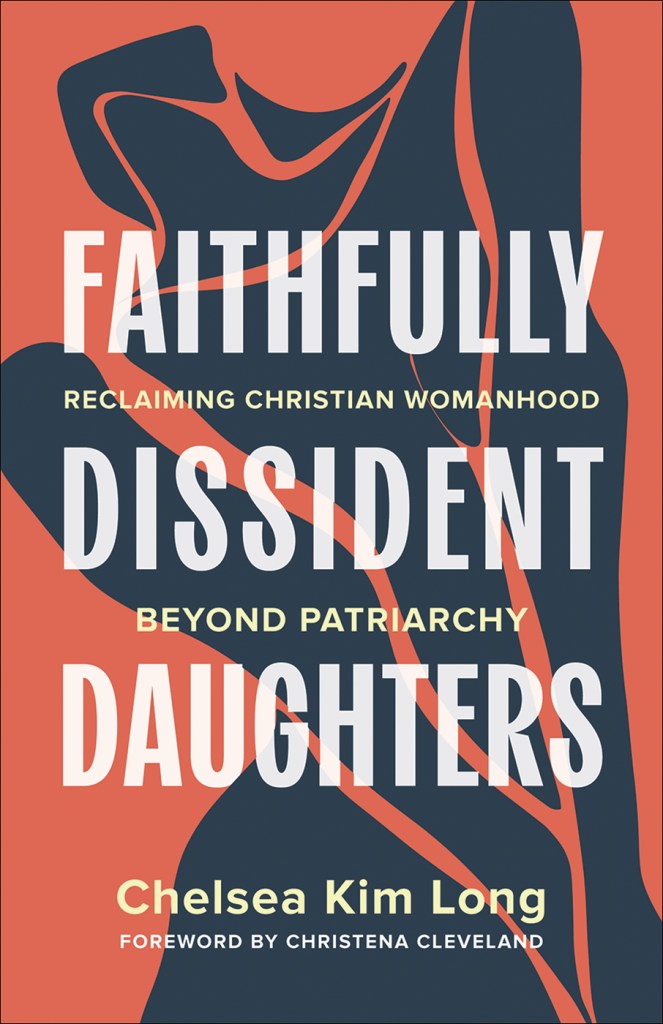
You can purchase Faithfully Dissident Daughters on Amazon or through Bookshop
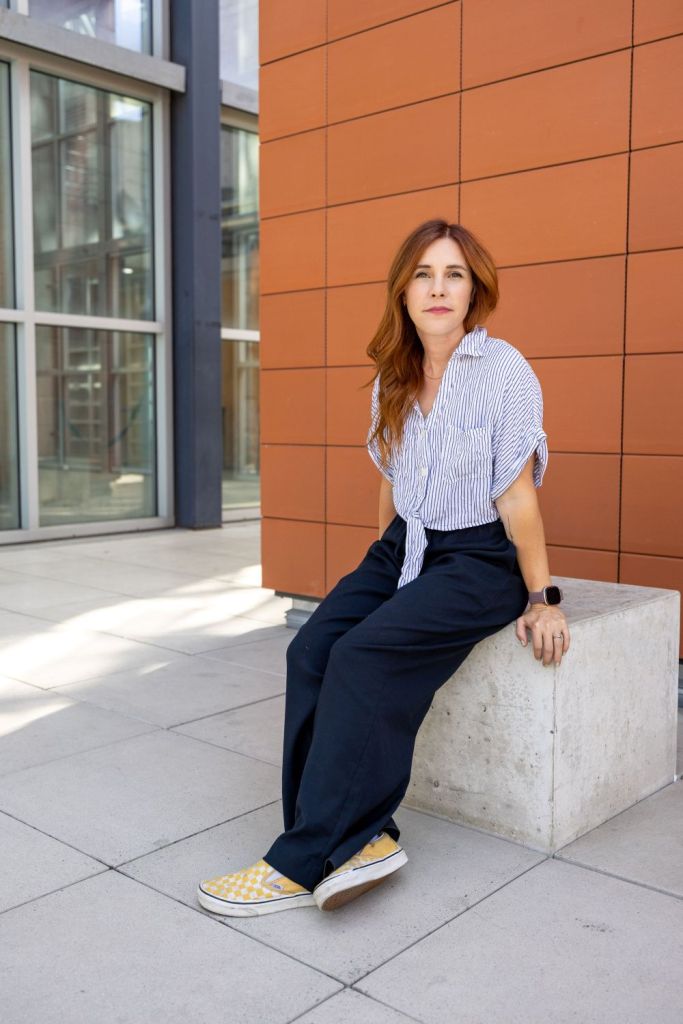
BIO: Chelsea Kim Long is a writer, lay theologian, and meditation teacher exploring Christianity through the lens of women’s embodied experiences and contemplative spirituality. Her work invites readers to reimagine Christianity beyond patriarchy—toward a more expansive and inclusive expression of faith. She lives in San Diego with her husband and three kids, where she co-leads an intentional neighborhood faith community grounded in belonging and justice. “Faithfully Dissident Daughters” is her first book. Follow her on Instagram at @chelseakimlong and learn more about her work at: www.chelseakimlong.com
Discover more from Feminism and Religion
Subscribe to get the latest posts sent to your email.


Wow. Chelsea, so powerful!! YES to what our daughters teach us!! And yes to navigating this ‘messy’ world between how we were raised and how it ought to be … glorying in our Goddess given body.
Featured Virtual!
LikeLike
Thank you so much, Caryn! I am so grateful for the journey of learning how to advocate for myself through advocating for my children, especially my daughter!
LikeLike
Chelsea this is absolutely truly true. Thank you for writing this. Although I am eight-one years old and have reclaimed my own sanctity many years ago, I remember well how my body was policed by adults… and my husband.
LikeLike
Thank you so much for the comment, Majak. I have so much hope that it can be better for future generations of women. Thanks for blazing the trail in your own life, too!
LikeLike
Chelsea, I’m so glad you were able to claim your body, your voice, the divine within. Purity culture has done so much damage to so many. I love your reframing.
LikeLike
Thank you, Beth!
LikeLike
I certainly like the trajectory of your moving forward: “…invitation to trust my body as the home for all my spiritual experiences.” The part that stands out to me is “trust my body.” I, too, grew up in a culture similar to yours, remembering the women faculty of my boarding school (now defunct) examining all the items of our wardrobe as we modeled before them. Women’s bodies have always (in fundamentalist circles) been put under more scrutiny than men’s. Never could fully understand that. Aren’t all humans (according to fundamentalist dogma) born under the curse of original sin? Yet, women pay the price within that society. Am happy to see you pushing back!
LikeLike
Thanks for the encouragement, Esther. It’s wild how it’s so normalized and in my opinion, so truly against God’s heart for women (and men!).
LikeLike
I cringed at that commentary. I’m glad your husband is changing. I’m so sorry. I grew up as a Jehovah’s Witness. And one of the reasons I left is that I disagree with their view of women.
Now I’m a Pagan. And it’s further helped me see and understand things within myself that need to be purged. I thought I was a feminist for a long time. Only to realize I still have a lot of work to do.
Before seeing a pregnant woman, it seemed so mundane to me. Now I see a pregnant woman and I think of the Great Goddess. Birthing the multiverse from her womb. Every woman is an Avatar of the Goddess. They are already pure by virtue of existing.
Every pregnancy is a small universe from within. The Star dust of the big bang reforming to create a new being. To give it shape. To become. And thus, it requires no approval.
May Asherah, Cybelle, Yemaya, and the Horned Goddess be with you and your family.
LikeLiked by 1 person
Thank you for the beautiful comment! My husband was a product of the same culture that I was, so I don’t blame him in that regard. We’ve both had to grow into new values and we are both accountable for the ways we are showing up now! It sounds like you’ve been on an incredible journey as well.
LikeLiked by 1 person
And still headed on that journey. Every time I think I have learned enough……life or Fate(s) have decided I need to learn something new. Whether I like it or not lol. I am happy to hear that. He must truly love you to be working to change as well. So I am happy to hear that.
LikeLike
I’ve thought that many times; this man must truly love me. I don’t take it for granted, and I know I will never abandon myself again.
LikeLiked by 1 person
You don’t strike me as the kind of person who takes anything or anyone for granted. You seem very thoughtful and erudite. And it’s a genuine pleasure to have read this.
LikeLike