On the recent Goddess Pilgrimage to Crete, I visited the Historical Museum in Heraklion where I saw a beautiful embroidered silk panel of a mermaid identified only as having come from Koustogerako, a village in western Crete. As it is unlikely that a man in a Cretan village would have been talented in embroidery, in this case “Anonymous” most definitely “was a woman.”
In this thread painting a mermaid surrounded by fish is holding the anchor of a ship in one hand and a fish in the other. In Greece the mermaid is the protectress of sailors. In a well-known legend, a mermaid said to be the sister of Alexander the Great, emerges from the sea in front of a ship during a storm and asks: “Is Alexander the Great still living?” If the sailors answer, “Yes, he lives and reigns,” the ship is saved.
During the past week I attended a Los Angeles premiere of a new documentaryAnita: Speaking Truth to Power (Dir: Freida Lee Mock USA, 2013). The screening was sold out and I had great seats saved for me– sitting with a friend who works at Samuel Goldwyn, the distributor of this fine film.
In 1991, Anita Hill provided testimony she hoped would serve to dissemble the nomination of Clarence Thomas as a Supreme Court justice. Although the vote would end up being close (52-48) Hill’s testimony did not serve to dissuade the decision — Clarence Thomas’ nomination was confirmed and he was appointed to a life term on the Supreme Court four days after Hill’s testimony concluded. Here is an outline of the debate.
I remember watching the hearings in 1991 at a friend’s house in Sacramento, CA where I was couch-surfing with another friend while we were in Sacramento from Los Angeles to protest for gay rights—to speak our truth to power. I remember being amazed that she was doing this—and that it was being televised. We were glued to the set before we went off to the protest we were attending.
I’m on a mission to write women back into history, because, to a large extent, women have been written out of history. Their lives and deeds have become lost to us. To uncover their buried stories, we must act as detectives, studying the sparse clues that have been handed down to us. We must learn to read between the lines and fill in the blanks. My writer’s journey is about reclaiming the lost heroines of history and giving voice to that lost motherline.
Many of my novels address spiritual themes. As a spiritual person, I’m very interested in women’s experience of the sacred. As well as being written out of history, we women, for the past five-thousand years of patriarchy, have been side-lined and marginalized by every established religion in the world. Even in alternative spiritual movements, male teachers and leaders have abused their authority over their female students and followers.
But in every age, there have been women who have heroically rebelled against this patriarchal stranglehold to claim their authentic spiritual experience. Often it has involved looking within rather than without for spiritual guidance. Many of these women have been mystics.
What is a mystic?
The American Dictionary states that mysticism is the belief that it is possible to directly receive truth or achieve communication with the divine through prayer and contemplation. In other words, according to my personal definition, you don’t need a priest or other authority figure. The divine mysteries are within your own heart.
Some of the most famous mystics of the Western spiritual tradition have been women who plunged deep within their souls for spiritual guidance and emerged with ecstatic, prophetic, and radical insights.
Many of us imagine female mystics as cloistered women, like Hildegard of Bingen, but what would it be like to be a married woman with children and experience divine visions when you’re in the middle of making dinner or doing the laundry?
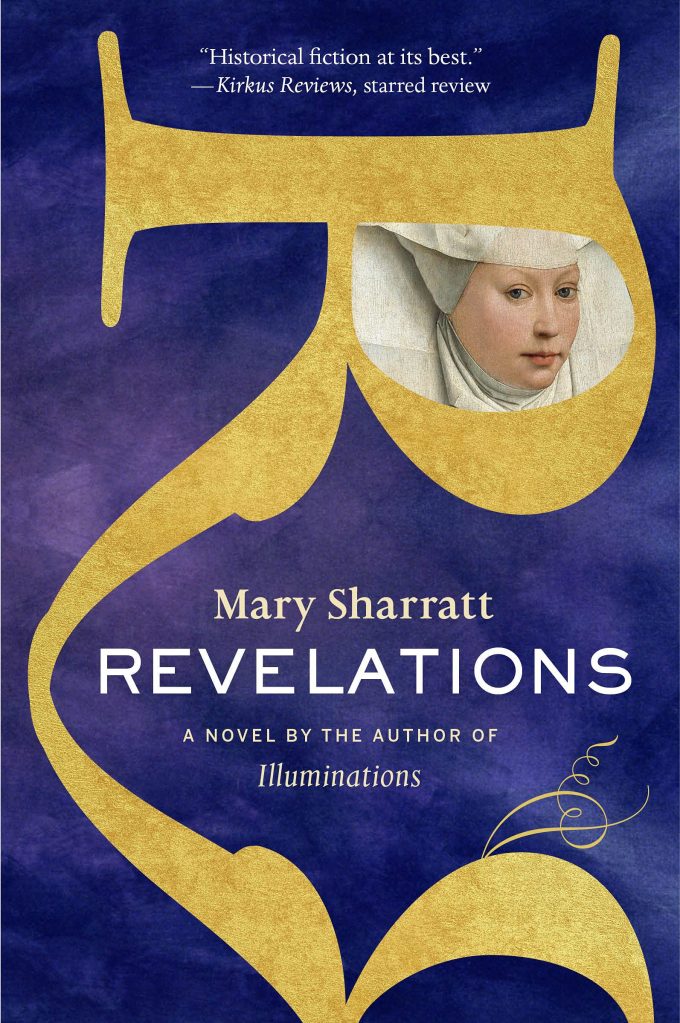
One of the most eccentric mystics of the late Middle Ages was a desperate housewife and failed businesswoman from Norfolk, England, named Margery Kempe (c. 1373 – after 1438). She is the heroine of my novel Revelations.
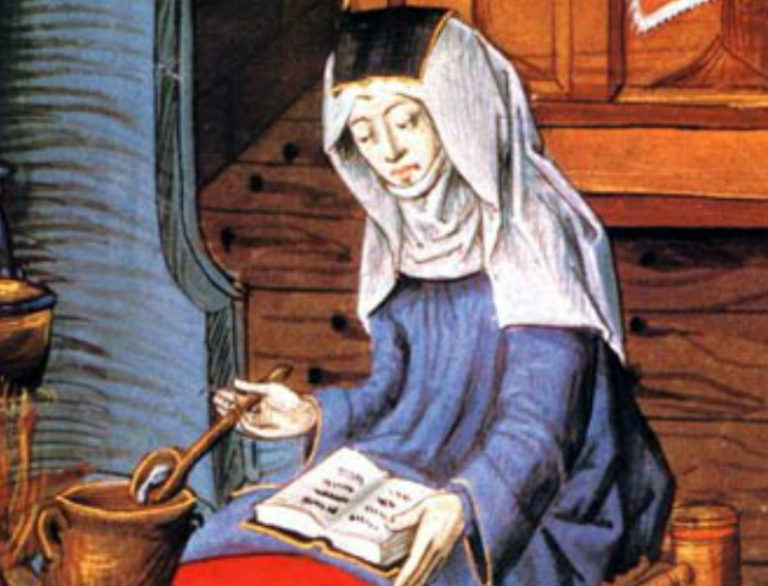
She ran a brewery and then a horse mill to grind grain, but both businesses failed. Around the age of 40, Margery had reached her breaking point. She was done. The mother of fourteen children, she feared that another pregnancy might kill her, but she couldn’t trust her husband to leave her alone, because canon law upheld his right to sexual congress without her consent. More than anything, Margery wanted to literally walk away from her marriage and go on pilgrimage to Jerusalem.
Since divorce wasn’t an option, she traveled to nearby Norwich to seek spiritual counsel from the anchoress Julian of Norwich, one of the greatest mystics of all time. Margery confessed to Julian that she had been haunted by visceral, body-seizing spiritual visions for the past twenty years. In my novel, Julian, recognizing Margery as a fellow mystic, made a confession of her own. She had written a secret book of her mystical visions, entitled Revelations of Divine Love, the first book in English written by a woman. In an age where heretics were burned at the stake, this was a dangerous text, describing an unconditionally loving God who appeared as Mother and threatened the established Church’s insistence on eternal damnation. Nearing the end of her life, Julian entrusted the book to Margery, who hid the manuscript in a secret compartment in her pilgrim’s staff.
With Julian’s blessing, Margery set off on the adventure of a lifetime to spread Julian’s radical, female vision of the Divine. Her travels took her to Rome, Jerusalem, and Santiago de Compostela. When she returned to England, she was arrested and tried for heresy several times and came close to being burned at the stake. The authorities couldn’t seem to handle this independent woman who traveled on her own and who dared to preach to other women in public. She preserved her story for posterity in The Book of Margery Kempe, the first autobiography written in English.
Margery offers inspiration for those of us who seek to live as mystics and contemplatives in the full stream of worldly life.
Mary Sharratt is committed to telling women’s stories. Please check out her acclaimed novel Illuminations, drawn from the dramatic life of Hildegard von Bingen, and her new novelRevelations, about the mystical pilgrim Margery Kempe and her friendship with Julian of Norwich. Visit her website.
I’m on a mission to write women back into history, because, to a large extent, women have been written out of history. Their lives and deeds have become lost to us. To uncover their buried stories, we must act as detectives, studying the sparse clues that have been handed down to us. We must learn to read between the lines and fill in the blanks. My writer’s journey is about reclaiming the lost heroines of history. My quest is to give voice to the ancestral memory of that lost motherline.
My novels address spiritual themes. As a spiritual person, I’m very interested in women’s experience of the sacred. As well as being written out of history, we women, for the past five-thousand years of patriarchy, have been side-lined and marginalized by every established religion in the world. Even in alternative spiritual movements, male teachers and leaders have abused their authority over their female students and followers.
But in every age, there have been women who have heroically rebelled against this patriarchal stranglehold to claim their authentic spiritual experience. Often it has involved looking within rather than without for spiritual guidance.
One of these women was Hildegard of Bingen, the heroine of my novel Illuminations. Born in the lush green Rhineland in present day Germany, Hildegard (who lived from 1098–1179) was a Benedictine abbess and one of the most accomplished people of her time. She founded two monastic communities for women, composed an entire corpus of sacred music, and wrote nine books on subjects as diverse as theology, cosmology, botany, medicine, linguistics, and human sexuality, an intellectual outpouring that was unprecedented for a 12th-century woman. Her prophecies earned her the title Sybil of the Rhine.
Hildegard’s vision of Sapientia, Divine Wisdom.
An outspoken critic of Church corruption, she courted controversy. Though women were forbidden to preach, Hildegard embarked on four preaching tours in which she delivered apocalyptic sermons warning her male superiors in the Church that they must reform their evil ways or suffer divine wrath. But she had to pay the price for being so outspoken. Late in her life, she and her nuns were the subject of an interdict (a collective excommunication) that was lifted only a few months before her death. Hildegard nearly died an outcast, her fate hauntingly similar to that of many canceled women in our contemporary cancel culture.
Hildegard’s theology of the Feminine Divine has made her a pivotal figure in feminist spirituality.
A key concept in her philosophy is Viriditas, or greening power, her revelation of the animating life force manifest in the natural world that infuses all creation with moisture and vitality. To her, the divine was manifest in every leaf and blade of grass. Just as a ray of sunlight is the sun, Hildegard believed that a flower or a stone was God, though not the whole of God. Creation revealed the face of the invisible creator. Hildegard celebrated the sacred in nature, something highly relevant for us in this age of climate change and the destruction of natural habitats.
I, the fiery life of divine essence, am aflame beyond the beauty of the meadows, I gleam in the waters, and I burn in the sun, moon and stars . . . . I awaken everything to life. Hildegard von Bingen, Liber Divinorum (Book of Divine Works)
Hildegard’s philosophy of Viriditas went hand in hand with her celebration of the Feminine Divine. Although the established Church of her day could not have been more male-dominated, Hildegard called God Mother, and said that she could only bear to look upon divinity in her visions if God appeared to her in feminine form. Her visions revealed God as a cosmic egg, nurturing all of life like a womb. Masculine imagery of the creator tends to focus on God’s transcendence, but Hildegard’s revelations of the Feminine Divine celebrated immanence, of God being present in all things, in every aspect of this greening, burgeoning, blessed world.
According to Barbara Newman’s book Sister of Wisdom: St. Hildegard’s Theology of the Feminine, Hildegard’s Sapientia, or Divine Wisdom, creates the cosmos by existing within it.
O power of wisdom! You encompassed the cosmos, Encircling and embracing all in one living orbit With your three wings: One soars on high, One distills the earth’s essence, And the third hovers everywhere. Hildegard von Bingen, O virtus sapientiae
This might be read as an ecstatic hymn to Sophia, the great Cosmic Mother.
Mary Sharratt is committed to telling women’s stories. Please check out her acclaimed novel Illuminations, drawn from the dramatic life of Hildegard von Bingen, and her new novelRevelations, about the mystical pilgrim Margery Kempe and her friendship with Julian of Norwich. Visit her website.
Is Goddess feminism an old religion or a new creative synthesis? Can it be both? Goddess feminism draws on the feminist affirmation of women’s experiences, women’s bodies, and women’s connection to nature; the feminist critique of transcendent male monotheism as the symbolic expression of male domination of women and nature; and 19th and early 20th century discussions of Goddesses and matriarchy.
Most Goddess and other spiritual feminists have experienced Wiccan rituals, which are often simply called Goddess rituals. For many of us, elements of Wiccan practice strike a chord of knowing, while other aspects seem odd or strange or even just plain weird. What are the roots of Wiccan ritual?
Moderator’s note: This marvelous FAR site has been running for 10 years and has had more than 3,600 posts in that time. There are so many treasures that have been posted in this decade that they tend to get lost in the archives. We are beginning this column so that we can all revisit some of these gems. Today’s blogpost was originally postedMay 20, 2019. You can click here to see the original comments.
Trigger Alert: The bible on its face is quite violent to women.
Amidst the ugliness that is American politics in general and abortion politics specifically, I began to look for guidance to understand what is happening. I ended up pulling out two books that I read long ago. The first is Woe to the Women-The Bible Tells Me So by Annie Laurie Gaylor. Gaylor, in turn, was inspired by the work of Elizabeth Cady Stanton in her The Women’s Bible which was originally published in two parts (1895 and 1898).
I had forgotten how inspired I have been by both books. Together, they motivated me to begin looking at how the bible is a foundational paradigm of our culture. I started researching how translations have been altered from original meanings. I have already written a few blogs about how the representations of Eve have been changed to strip Her of the roots of Her original power. Take a look here and here.
Moderator’s note: This marvelous FAR site has been running for 10 years and has had more than 3,600 posts in that time. There are so many treasures that have been posted in this decade that they tend to get lost in the archives. We have created this column so that we can all revisit some of these gems. Today’s blogpost was originally posted March 6, 2019. It is paired with a new guest post abut Margaret Fell which will be posted tomorrow. You can visit the original post here to see the comments.
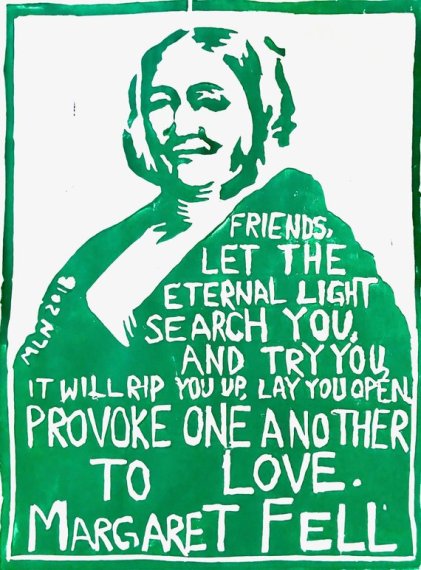
This linoprint of Margaret Fell can be orderedhere.
Pendle Hill will forever be associated to the Pendle Witches of 1612 who live on in the undying soul of the landscape and its folklore and who inspired my 2010 novel, Daughters of the Witching Hill. Pendle Hill also gave birth to the Quaker movement.
In 1652, George Fox, a simple weaver’s son and cobbler’s apprentice turned dissenting preacher, wandered across England on a spiritual quest. When he climbed Pendle Hill, his revelation came to him—an event that would change both Fox and the world forever. He envisioned a “great multitude waiting to be gathered.”
Moderator’s note: This marvelous FAR site has been running for 10 years and has had more than 3,600 posts in that time. There are so many treasures that have been posted in this decade that they tend to get lost in the archives. We are beginning this column so that we can all revisit some of these gems. Today’s blogpost was originally posted June 30, 2012. You can visit it here to see the original comments.
We are going through a huge cultural shift toward restoring the female to her full radiance. However you want to define that, it is rising now, through us.
That which is Sacred, what should we call it? We’ve been told to name it he, him, his. That it was blasphemy to do otherwise, to say she, even as they desecrated the Divine with comparisons to mortal overlords, those cruel masters, despoliators, persecutors. No. Reconsider. That fearful address to an authoritarian punisher takes us far from true reverence. Rather revere the roots of Being, manifesting in all Nature around us, within us. The profound silence, and the Deep calling to the Deep.
Deeply I go down into myself. My god is Dark and like a webbingmade of a hundred roots that drink in silence. ― Rainer Maria Rilke
Feminists have always found holy places in the forest, under trees, near springs or wells or by rivers and streams and this year my refuge has been the forest, where the goddess lives still…I have spent most of the summer visiting in a very special forest, one that has been protected by people who have bought up thousands of acres to protect the land from motorized vehicles and other machines that ruin the earth. Old trees shade an understory that is thick with new growth, ground cover and mushrooms abound. There are beaver ponds and springs, rivers, and bogs. When I enter the narrow winding barely discernable paths I feel as if I am parting a veil to enter a holy place because the trees have been allowed to grow and the forest is so healthy.