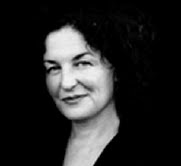
Lucy Burns, A Look at a Catholic American Suffragette by Michele Stopera Freyhauf

As we approach the election period infused with controversy, saturated by television commercials, as well as endless advertisements on the radio, Internet, and yes, even Facebook, we must remember the sacrifices made by our foremothers during the suffrage movement, which gave women the right to vote.  While all elections are important, this one has targeted issues involving women in a way that could negatively impact our rights – to the point of rewinding the clock on progress made in women’s equality during the last 40+ years.  This election needs the voice of all informed voters.  However,  it is imperative for all women to make their voices heard this year by casting a vote.  To turn a blind eye to these issues diminishes the sacrifices our foremothers made for us. To not cast a vote takes away your voice, makes you a silent bystander – something that was tried by the government and patriarchal system during the suffrage movement.

To illustrate this, I would like to highlight Lucy Burns and the Night of Terror endured at the Occoquan Workhouse by her and many of her friends.   Of all Suffragettes, Lucy Burns spent more time in jail then any other protesters.  Born 1879 in Brooklyn, Lucy was raised in the Roman Catholic tradition by a father who believed that his sons and daughters should be educated equally.  Burns gradated from Vassar College in 1902, then attended Yale Graduate School studying linguistics.  She eventually went to Oxford University in England to resume her studies.  It was at Oxford that she became involved with activism and the suffrage movement. Continue reading “Lucy Burns, A Look at a Catholic American Suffragette by Michele Stopera Freyhauf”

Is the Republican Party Platform Truly Pro-Life? by Michele Stopera Freyhauf

As many feminists invest their life fighting for women’s rights to be the center of attention – no one could predict the occurrences of this election year.  In my previous post “Rape is Not a Political Platform – Rape is a Violent Crime!” Carol P. Christ made a comment about women’s issues and politics:

 “I have been waiting all my life for women’s issues to become central in an election campaign, but I guess I should have been more specific in my wish: this is not the format I imagined…”

Christ’s reaction is like so many others in the election; no one could have imagined such a bizarre and backwards slide being lobbied against women’s rights.   Issues being bantered around continue to be rooted in a purported pro-life stance.  This ranges from trans-vaginal ultrasounds, definitions of “legitimate” rape, and now using an Ob/Gyn’s “best guess” to define the gestational age of a baby from the time of a woman’s last period.  This is not a game – this is semantics, this is politics, this rhetoric, and frankly, this needs to stop. Continue reading “Is the Republican Party Platform Truly Pro-Life? by Michele Stopera Freyhauf”

How Joan of Arc Crashed Through My Pagan Heart by Marcia Quinn Noren

Born into a Lutheran family of academicians, from earliest childhood I questioned their divisive, anti-Catholic rhetoric and systemic methods of indoctrination. The punitive consequences of my rebellion against their worldview were swift, harsh and unrelenting. Separated emotionally from my mother, subjected to abuse by a narcissistic father who considered himself a warlock, I subconsciously adopted the warrior archetype as a means of survival. Steely armor encased my heart, hidden beneath a feminine veil. When the feminist voices of the 1970’s grew into a force that would not be silenced, for the first time, I felt less alone.

Actively seeking alternative spiritual resources throughout the years that followed, I found a road with many tributaries rising up to meet me, as though that ancient Irish blessing had touched my life with grace. Soothed by nature’s elements, I have always felt the presence of divinity in the earth and sky, in the company of animals and invisible beings. Through studying Hindu and Buddhist traditions, I learned the value of going into the silence. A glimpse of the divine feminine appeared when Quan Yin poured compassion into my soul from the vessel she carries. An immersion into the Western Mystery Schools brought the Hebrew Tree of Life into focus, and there I found a balance of yin and yang, male and female in the Kabbalah’s Sephiroth. Continue reading “How Joan of Arc Crashed Through My Pagan Heart by Marcia Quinn Noren”

Sacred Outcry: A Poetic Trilogy by Mary Saracino

1.  NO COUNTRY FOR OLD WOMEN

Howling from the mountaintops
wailing from the riverbanks
scooping the moon into their waning wombs
the old women know that lies kill,
distortions maim, hope isn’t enough to feed starving
babies, school the ignorant, put an end to war.

Like Furies, the old ones rise,
clench their furious fists against the blazing sun;
like Harpies they roar, casting dire warnings
upon the winds of change; soothsaying Sibyls
decipher omens, portend the future, speak in baffling koans.
With dakini wisdom they cut through
illusion, vote in primaries, attend caucuses,
raise their voices against power, shatter
the corrupted ceilings that chafe the crowns
of their wizened heads.

The wandering Maenads cry: “This is no country
for old women.”

Medea calls down her midnight powers,
prays for revolution, strengthens the tired tongues
of memory. Eloquence isn’t enough to heal
a wounded country; sequined celebrities
can’t mend a nation’s odiferous past. Kali avenges
her sisters, the long-patient Queens & Crones,
Maidens & Mothers. The forgotten ones
wait and watch and warn: “Beware the hubris
of ages. Beware the greedy hand that grabs the golden fleece.” Continue reading “Sacred Outcry: A Poetic Trilogy by Mary Saracino”

The Original Art by Elise M. Edwards

Storytelling is the original art as the desire to communicate is a common thread of all the other arts. I started reflecting on the stories – through various mediums–that have shaped me, and I wanted to use my post today to honor the herstories, the narratives of the women that have been meaningful to me.

On Tuesday night, I attended a gathering of storytellers.  I sat with two of my friends and listened to professionals and amateurs alike share stories.  The stories they told presented a range of narratives from Danish folktales to improvised children’s stories.  I was both horrified and enchanted by the content of their works.  While one story was a particularly violent tale of retribution and “justice,” another seemed to offer lessons about cooperation.

I thought about sharing a story of my own, but I didn’t feel prepared.  By the end of the evening, I was aware of the irony of my reluctance to share.  I was afraid I was not a good enough storyteller, yet I’d spent a good part of the previous two weeks traveling and catching up with old and new friends, which certainly involved animated retellings of the events going on in my life. Continue reading “The Original Art by Elise M. Edwards”

WHEN THE OLYMPICS CELEBRATED THE STRENGTH OF GIRLS AND THE RENEWAL OF LIFE by Carol P. Christ

The first “Olympics” were races of girls of various age-groups around a 500 foot stadium in ancient Olympia. The races of girls were held every four years on the new moon of the month of Parthenios (September/October). They were dedicated to Hera Parthenos who renewed her virginity in the river Parthenias. The winners of the races wore olive crowns and feasted on the flesh of Hera’s sacred cow.

These “Olympics” for Hera and for girls came before the more celebrated Olympics for men that were dedicated to Olympian Zeus. The temple of Hera at Olympia is older than the temple for Zeus and the girls’ Olympics were tied to the more ancient lunar calendar.

What did the girls’ Olympics celebrate? Continue reading “WHEN THE OLYMPICS CELEBRATED THE STRENGTH OF GIRLS AND THE RENEWAL OF LIFE by Carol P. Christ”

That Which Is Sacred by Max Dashu

We are going through a huge cultural shift toward restoring the female to her full radiance. However you want to define that, it is rising now, through us.

That which is Sacred, what should we call it? We’ve been told to name it he, him, his. That it was blasphemy to do otherwise, to say she, even as they desecrated the Divine with comparisons to mortal overlords, those cruel masters, despoliators, persecutors. No. Reconsider. That fearful address to an authoritarian punisher takes us far from true reverence. Rather revere the roots of Being, manifesting in all Nature around us, within us. The profound silence, and the Deep calling to the Deep.

Deeply I go down into myself. My god is Dark and like a webbing

made of a hundred roots that drink in silence. ― Rainer Maria Rilke

There are myriad emanations of the indescribable Source, but Goddess women call it she, as medicine to what they have forbidden in us, to us. That Shakti, the effulgence that pours through all living beings, including the rocks. The Shekhinah, the ever-flowing waters of Nummo, of Anahid. The Tao that is “the mother of whatever exists under the sky, upon whom myriads of beings depend for their birth and existence,” as the Dao De Jing says.

“The Universe is the Goddess. She is not separate from it, She did not create it and then let it be. She is what is, what was, and what will be.”1 So the Kemetic people praised Neith, Mother of the Neteru, on her great temple at Sa in the Nile Delta. Inscribed magnificats exalt her in some of the greatest spiritual literature of the world:

Neith, Mother of the Neteru


Greater is her name than of all gods and goddesses

The primordial One, eldest of the primeval gods

She who made that which is

She who created that which exists…

Who gave birth to Ra,

Who brought forth in primeval time herself,

Never having been created.

But not all wisdom is written. Continue reading “That Which Is Sacred by Max Dashu”

Hagar – Demoted Servant or Egyptian Princess? By Michele Stopera Freyhauf

A socio-political examination of Genesis 16 explores how ancient myth can influence the story of Hagar and Sarai. Socio-political events could have occurred between the Egyptians and King Solomon that influenced the writing of this text.  According to John Currid in Ancient Egypt and the Old Testament, the Egyptians and Hebrews borrowed many things from each other and because of that, an inter-relatedness exists between the languages as well as cultural and religious practices of both kingdoms (26).  It is this inter-relatedness that I wish to explore and ask the question -was Hagar an Egyptian Princess demoted to a lower position of servitude in order to make a political statement of superiority of the Israelites over the Egyptians?  Or is this a story of conflict between two of Solomon’s wives?  Finally, could this story tell us about events that occurred after Solomon’s death since the Biblical texts from the pre-exilic period began to take shape during the reign of David and Solomon?  This is a very brief exploration of these theories.

In Genesis 16, Hagar and Sarai connect Egypt and Israel in a familial relationship, one rooted in strife.  These two women, an Israelite and an Egyptian, are brought together because of Sarai’s barrenness and need to fulfill the covenantal promise. Because of this, Hagar becomes Abram’s secondary wife.  This is not the only time that marriage between an Israelite and Egyptian occurs in the Old Testament.  Joseph marries and an Egyptian, the daughter of a priest of On (Genesis 41:45).  Solomon also has an Egyptian wife who seems to have some importance because she is mentioned six times in the Old Testament (1 Kings 3:1; 7:8, 9:24; 11:1-2; 2 Chronicles 8:11).

Important is the fact that this passage could be rooted in the writings that emerged in that period that portray family strife.  Savina J. Teubal in Ancient Sisterhood: The Lost Traditions of Hagar and Sarah, states these “andocentric writing and editing” of the biblical narratives portray conflicts between women who “vie for the attention of their husbands or sons” (19).  In this case the story really could be a tale of family strife inspired by two of the wives of Solomon, one of which was Egyptian.

Continue reading “Hagar – Demoted Servant or Egyptian Princess? By Michele Stopera Freyhauf”

AN ALTAR WITHOUT GOD? A “PLACE” FOR THE SACRED by Sara Frykenberg

The altar was not for particular spirits, but honored all the ‘spirits’ we brought with us to share: the spirits of the women and men in our stories, the memories imbedded in the items we gathered together and the spirit of every person present in the class that day.

Last week my students and I created a non-religious altar to conclude our class, Women, Religion and Spirituality.  We read about different feminist spiritual traditions in which women created altars to honor their ancestors, spirits or deities; and I thought it might be fun to practice our own form of literal physical creation.  I asked students to bring in inspiring items, pictures of people who’d helped them to grow or anything that honored what they considered sacred in their lives.  I also asked them to bring food to share, as no altar seems complete without food of some kind.  However, asking my students to participate in a course ritual, I also felt it was important to respect their very different beliefs… which resultantly, left me wondering how we would create an altar without God.

My religious experience taught me that altars were a place to surrender gifts in return for a greater gift of God’s blessing or love.  The church I attended as a child did have a literal, physical altar; but this raised table was only used monthly to present the communion bread and grape juice before it was passed through the pews.  Otherwise, I came to understand, one’s heart was the altar and we needed to present our sacrifices there.  Financial gifts needed to come from the heart, then put into the offering plate.  Gifts of time or action had to start in the heart, even when required by the youth group or spiritual authority; and resistance to giving these gifts also required sacrifice.  My resistance or lack of desire to sacrifice required that I leave my unwillingness at the altar so that I might become appropriately grateful.

At some point I started leaving too much at the altar; and like Abraham’s Daughter I said enough is enough.  I recognized myself in the sisters and brothers lying under the sacrificial sword, and I took back my heart.  My heart, I realized, hadn’t been the altar; it had been the offering and sacrifice. Continue reading “AN ALTAR WITHOUT GOD? A “PLACE” FOR THE SACRED by Sara Frykenberg”

In Honor of All that Gives Life by Ashley Anderson

The depth of life’s interconnection is our greatest vulnerability and our greatest hope. We are beings in relation.

Today we celebrate Mother’s Day. Drenched in some strange amalgam of consumerism and genuine desire to nurture the ones who have nurtured us, we buy flowers and gift cards. We plan Sunday brunches or make that extra-long phone call to our mothers living far from us. My own mother, to whom I owe my courage and creativity, lives two thousand miles away. It was she whose breath gave rise to my own, whose gentle strength and fierce passion made way for my being in the world. It is my mother to whom I trace my beginning, and yet, if life is as Anais Nin imagines it, a “process of becoming” are we not ever-beginning? If all life itself is in process, if the powers of destruction and creation flow, creating and re-creating all that is, I wonder at the wombs that make and re-make us.

This process of becoming is an adventure through the whirlwind, a tour of the chaosmos. Our becoming, wrapped up with the becoming of Creation itself, is an unwinding of the fibers of the universe and our own souls, spiraling toward liberation. And so, on this Mother’s Day, I offer gratitude and honor toward all that gives us birth, to all who take part in our process of becoming.

Wave Womb by Galen Dara

In honor of ourselves. There is a sense that each of our beginnings emerges out of a wound, out of a dying. The day I was born was the day I received my first scar. I was a C-Section baby and the doctor nicked the edge of my forehead narrowly missing my eye. Soon enough, the wound healed and I still have a tiny scar by my right eye. Today, many years and many scars later, I marvel at our ability to heal. We give life to ourselves, after the movements of death have swept through us, after long nights of grief and the collapse of all we knew. In the quiet stillness of a soul razed, creativity moves. Continue reading “In Honor of All that Gives Life by Ashley Anderson”