–Christopher Penczak, Sons of the Goddess, p. 51
Our oldest son is rapidly sliding into manhood. Creaky voice. Height stretching on a near-daily basis. Fuzz on upper lip. I am finding it hard to hold 
space for his transition as a teenager while still caring for a not-quite-two year old small boy as well, one who reminds me regularly of my first baby boy and what it was like to be a mother to only one, focused on each stage of development, each new word, each successful identification of a new color. Now that first baby boy swings that last baby boy onto one hip with practiced ease, washes dishes, helps to cook, pours milk for his sister.
Several years ago, I was asked to work on a coming of age/manhood ceremony for a friend’s son. It never quite came together—I didn’t feel like I could do it and I still feel regret about having let that boy down. At the time though, and still now, I felt that I’m not “qualified” for the job—I don’t know the men’s stories either. The council of men needs to prepare his ceremony. Where is the men’s council, the circle of men? I think we have them around us, but that there is much less cultural permission for them to gather in groups to honor transitions in sacred ways. Much as women’s circle work feels radical and transformative and even threatening to patriarchal culture, men gathering in circle to honor and guide one another, that is perhaps even more so. I see Red Tents around the world. I see women’s circles springing up with a glorious passion and far flung expression. I am guiding other priestesses in circle work, and Red Tents and Pink Tents, and holding ceremonies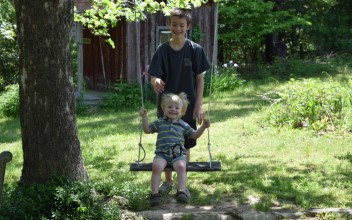 for our daughters coming of age. What about our sons? Where are their ceremonies and welcomes into manhood? Where are their stories in the desert? Is it a mother’s job to provide the container for those stories? Can I call the circle for my son and then step back? I know what it means to be a girl reaching into womanhood. I know what it means to circle with other women. Does it have to be different for boys and men?
When I was reading books, looking for ideas for my friend’s son, I noticed that most pagan rituals described for boys include the element of the son being “kidnapped” from the mother, women, and girls and being taken away by the men and left alone. I hate these rituals. Every time I read one like it, my heart screams, “NO, we want more than that for our sons.” Despite being promoted as part of an alternative spiritual framework, how does this type of ceremony support and honor the type of world we wish our children to grow up in? Why do boys need to be kidnapped from their mothers and left alone in order to be men? Isn’t that the very root of patriarchy on this earth? No thank you.
I bought another book specifically because it mentioned including a rite of passage ceremony for boys. I read it with eagerness and was dismayed at  what I found. The circle was called, held at dusk, and each person was instructed to bring a rock for the newly fledgling boy. They were to go around the circle and share what they learned, what they were imbuing into the stone…so far, so good, right?…and then, throw it into the darkness and say, “find it for yourself.” When I read this, I had an epiphany. If this was a ceremony for girls, we each would have handed her the stone and welcomed her into the circle with our wisdom, we would have made sure she knew that she was strong, powerful, and capable, but also that part of that power meant that we were standing with her and offering our wisdom in support. She would not have to crawl in the darkness alone looking for rocks, because we’re there. And, that is the core message of most women’s circles and ceremonies for girls. We’re there. You are not alone. So, then I knew…a ceremony for a boy need look no different. Maybe I do not know the stories from the men’s desert, but I do know what it is like to celebrate someone for their unique gifts and strengths, look them in the eye and affirm their power, and sing to them with love of my support of their dreams. This is not a gendered thing, this is humanity. How do we want to welcome boys into the world of adults? By casting away our wisdom and telling them to search in the darkness for themselves? Or by standing next to them, shoulder to shoulder, hand in hand, and offering all that we have, all that we are, in support, and trust, and honor of their evolving selves?
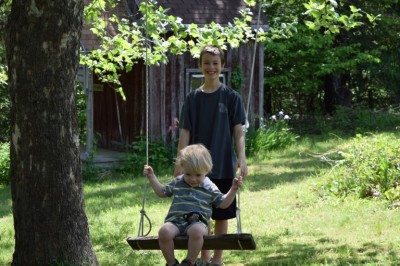
This summer, we gathered in sacred circle for a chanting workshop and a summer ceremony. The men at the chanting workshop sang just as wonderfully together as the women do in the Red Tent. The boys in the summer circle joined hands just like anyone else.
We do know how to do this.
This song below was recorded during the chanting workshop and feels appropriate for this occasion…
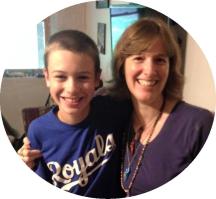
Molly has been “gathering the women” to circle, sing, celebrate, and share since 2008. She plans and facilitates women’s circles, seasonal retreats and rituals, mother-daughter circles, family ceremonies, and red tent circles in rural Missouri and teaches online courses in Red Tent facilitation and Practical Priestessing. She is a priestess who holds MSW, M.Div, and D.Min degrees and finished her dissertation about contemporary priestessing in the U.S. Molly and her husband Mark co-create original goddess sculptures, ceremony kits, and jewelry at Brigid’s Grove. Molly is the author of Womanrunes, Earthprayer, and The Red Tent Resource Kit and she writes about thealogy, nature, practical priestessing, and the goddess at Brigid’s Grove.



 Let’s see if the following course of events makes sense. A few Wednesdays ago, I was thinking about possible topics for this post considering it would be Mother’s Day. In the midst of thought, the warning sirens in Prague began. They were only being tested but, nontheless, I immediately thought of tornados. You see tornados, as awful and devastating as they are, make me think of thunderstorms and lightning. I love a good thunderstorm, the louder the better.
 This time last year our move was for me to take a job. No more football. And a move not for football meant massive shifts in the daily life of our family.
 I know a man who says to his daughter: “You should be ashamed of yourself” when he wants to imbue some good habits in her. One example would be not putting her dirty socks in the laundry basket. It might seem trivial, but I don’t think it is. I feel that shame is a toxic element of our personalities. I believe shame results in negative consequences, such as sabotaging oneself and health problems.
 There is no correlation between difference and danger. Yet, differences are regularly considered threatening. In fact, much of Western society’s patriarchal energy is spent categorizing, controlling, managing and fighting difference. Difference is so ingrained within the psyche that most differences are understood to be antithetical, perhaps even unbridgeable, opposites. Good/bad, black/white, rich/poor, women/men and human/animal are just a few examples. To further amplify this distinction, patriarchy considers one aspect of the difference more valuable than the other.
 “Why is religion important to ecofeminism?”
