No, I Don’t Fucking Need Anxiety Meds: The Covid Misogyny Epidemic by Trelawney Grenfell-Muir

“I think you should take medication for anxiety.”

This was my doctor’s response when I calmly listed my Covid symptoms, which had been going on for a month and had landed me in Urgent Care twice and the ER twice, once via ambulance when the hotline nurse thought I was having a stroke because my face suddenly went numb, and my blood pressure, usually below normal, had shot up to 199/113.

I had just described my previous month – two weeks of crippling fatigue, occasional sore throat, then stomach upset arrived day 17 along with fever and cough that sometimes worsened into scary difficulty breathing, then came the pricking and shooting nerve pains, numbness, and feeling that all my blood was cold and trembly and horribly uncomfortable, the metallic taste in my mouth, the painful glands, vicious headaches, a week of horrible adrenaline spikes and insomnia, bladder discomfort, two days of insatiable, continual, desperate thirst, conjunctivitis… hell, I’m sure I’m forgetting a few. Continue reading “No, I Don’t Fucking Need Anxiety Meds: The Covid Misogyny Epidemic by Trelawney Grenfell-Muir”
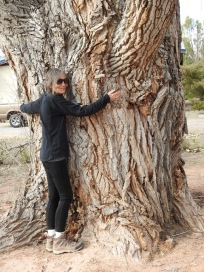
Midsummer Meditation by Sara Wright

It is past “midsummer” and we are moving into the hottest time of the year without a drop of nourishing, healing rain… When I walk around outdoors I find myself focusing on the many different ferns that grace the forest edges – ferns that hold in precious moisture creating damp places for toads and frogs to hide, places for young trees to sprout, places for the grouse and turkey to hide their nestlings, ferns whose lacy fronds bow low as if in in prayer. Sweet fern covers the hill above and around the brook.

The Ostrich ferns are giant bouquets that sprout up around Trillium rock shielding tender wildflower roots. Maidenhair is being devoured by insects, sadly, the only fern having difficulty here. New York ferns are stiff with ladder like fronds and the few cultivars provide soft shades of dark red, blue and green.  Along my woodland paths the tall pale green bracken stalks have to be pulled although I leave all that I can around the edges to protect the mosses. All the ferns are forever unfurling in a state of becoming, spiral gifts for any discerning eye. Continue reading “Midsummer Meditation by Sara Wright”

Losing My Skin by Carol P. Christ

I arrived to Crete on June 6. Movers were in my house in Lesbos on the 4th and 5th. I put myself, my car, and my cat on an overnight ferry from Lesbos to Athens on June 5, and, after a day, took a second overnight ferry from Athens to Heraklion. Then another day moving my furniture and belongings up to my 5th floor apartment using a crane. The agreement was that the moving company would put all of the furniture in its place, while I would unpack over the next few days.

This was the end of a very long journey. I bought the apartment at the end of September and expected to be in Crete by Christmas. Paperwork problems delayed the contract of sale until the end of February. My architect was ready to begin renovations. I hoped to be in Crete by the end of March. Then the Covid quarantine hit Greece. Luckily work on the apartment was allowed to continue during the quarantine. And my architect sent copious photographs and asked my opinion about everything. Continue reading “Losing My Skin by Carol P. Christ”

#SharetheMicNow: Social Justice and Christianity by Laurel E. Brown and Anjeanette LeBoeuf

In the midst of recent events and protests, a social media campaign entitled #sharethemicnow has emerged.  The campaign asked white people and people of influence to use their platforms, quiet their voices, and highlight, heighten, and listen to their Black counterparts. I have been honored and privileged to be a monthly contributor here at FAR for 5 years. This month’s post will be in participation with the #sharethemicnow campaign. This campaign seeks to keep the momentum for the realization and implementation of equality and just treatment for all peoples – regardless of race, religion, gender, or sexual orientation. I asked a dear friend of mine, whom I had the pleasure of working with at Whittier College, to write this post. Dr. Laurel Brown, whose discipline is in Social Work, shares with us some thoughts on Christianity and Social Justice in midst of our current issues.


Continue reading “#SharetheMicNow: Social Justice and Christianity by Laurel E. Brown and Anjeanette LeBoeuf”

Recognizing Our Mentors by Joyce Zonana

Ever since I first read it when I was sixteen, I have loved Homer’s Odyssey. For many years I was lucky enough to teach it almost every semester, and so I came to know it intimately. Despite the valid feminist critique of the ancient Greek epic—that it glorifies patriarchy, justifying and perpetuating men’s control over women—I still find it to be an inspiring evocation of female autonomy and power, both human and divine. Especially divine.


At the close of the introduction to her exquisite new translation of Homer’s Odyssey, classical scholar Emily Wilson directly addresses the reader. “There is a stranger outside the house,” she tells us:

He is old, ragged, and dirty. He is tired. He has been wandering, homeless, for a long time, perhaps many years. Invite him inside. You do not know his name. He may be a thief. He may be a murderer. He may be a god. He may remind you of your husband, your father, or yourself. Do not ask questions. Wait.

There is much to explore in this passage and the lines that follow. But what strikes me today is Wilson’s simple sentence: “He may be a god.” 

The stranger may be a god. Or a goddess.

Ever since I first read it when I was sixteen, I have loved Homer’s Odyssey. For many years I was lucky enough to teach it almost every semester, and so I came to know it intimately. Despite the valid feminist critique of the ancient Greek epic—that it glorifies patriarchy, justifying and perpetuating men’s control over women—I still see it as  an inspiring evocation of female autonomy and power, both human and divine. Especially divine. Continue reading “Recognizing Our Mentors by Joyce Zonana”

Poem: Eight Minutes and Forty-six Seconds by Marie Cartier


I was in a funeral procession yesterday for a man I have never met.

George Floyd. A man who was killed by a police officer.

Mr. Floyd was black. The police officer is white and had his knee on Mr. Floyd’s neck.

For eight minutes and forty-six seconds. A young woman filmed it.

And we, the world, watched it on YouTube and eventually everywhere

in the social media universe, where things go when they go viral.

Like a disease. Like an infection. Like something which must be cured.

We watched a black man plead for his life, for his mother, for breath. Continue reading “Poem: Eight Minutes and Forty-six Seconds by Marie Cartier”

Butterfly – Soul Transformation by Judith Shaw

judith shaw photoI offer this look at the life and stories of Butterfly as a healing salve for our very troubled world. In this time of great, world-wide transformation, as we grapple with the many, many racial, social, economic and environmental injustices currently tearing the fabric of society apart, may the lessons that Butterfly brings help us on our path to love.

Continue reading “Butterfly – Soul Transformation by Judith Shaw”

The Song of the Forest by Sara Wright

My friend


When He comes
I forget who I am.
My story vanishes.
Boundaries dissolve.
Emerald green,
leaf filtered light,
clear mountain streams,
trees, lichens, moss –
become ‘all there is’.
In the still dawning
animals speak.

Nature’s ultimate gift is that given the chance S/he dissolves the artificial socially constructed boundaries that humans have erected to separate themselves from the Earth who is burning in the Fire, unable to breath, as many of us are beginning to do now.

We have a choice to re-establish interconnection – to become part of the original family that birthed us into life 500 million years ago… regardless of outcome.

Developing an intimate connection with Nature allows us to disappear into the whole. Ironically, dissolution of self is where peace is found.


Sara is a naturalist, ethologist ( a person who studies animals in their natural habitats) (former) Jungian Pattern Analyst, and a writer. She publishes her work regularly in a number of different venues and is presently living in Maine.

Matriarchal Politics The Vision of an Egalitarian Society (Part 2): Macrostructures by Heide Goettner-Abendroth

Regionalism

In a new matriarchal society, “bigger” is not necessarily “better.” The smaller units of society, responsible for engendering person-to-person and transparent politics, are given preference. They must not become so big that people cannot see through them, and cannot participate in their decisions, as is the case in so many of today’s national states and super-powers. But they must be big enough to safeguard their self-sufficiency by a subsistence economy, and the diversity of their handiwork, technologies and arts. The ideal dimension is that of the region.

The borders of a region are not random, like national borders are; rather they have developed out of the conditions of the landscape and out of cultural traditions. Regional borders are formed by the decisions of the people themselves who want to live together on the basis of common cultural and spiritual traditions; this avoids any war of culture or of religion. Often the landscape corresponds to these cultural borders, because natural borders can be formed by mountain ranges, rivers, big lakes, or the sea which bind and bound people into their regional places. Continue reading “Matriarchal Politics The Vision of an Egalitarian Society (Part 2): Macrostructures by Heide Goettner-Abendroth”

Spiritual vs. Material: The Middle Way? by Elisabeth Schilling

new FAR picFor much of my life, I’ve wanted experience. I think it stems from my childhood/teenage years. When I would travel (for school events, mostly), everyone my age or a bit older always seemed SO much older than me, so much more mature, and I always felt like a little kid, and that embarrassed me. I didn’t care about money or being materially successful. It seemed more admirable to take a road or overseas trip and meet a lot of different people and encounter cultures and read books that would help me grow emotionally and mentally. Recently, my friend who is younger and on his way to being a millionaire by the time he is 40 has tried to encourage me to read books about financial investments and business. I do not have the best habits with money, mainly meaning I don’t usually save or invest and just live paycheck-to-paycheck rather carelessly.

But in the Dhammapada and Upanishads, they say that neither those who only follow the material path nor those who only follow the spiritual path will reach nirvana. . . it is only those who find a balance between the material and spiritual, the mind and the body that will be able to reach nirvana, be one with Brahman and notice the true self. Continue reading “Spiritual vs. Material: The Middle Way? by Elisabeth Schilling”