
Forward, Upward, Inward: A Spiritual Response to Right Now by Rachel Hollander

Brother Francesco, known to the world as Saint Francis of Assisi, left us many sweet and lovely poems and songs. In “The Canticle of the Sun,” he wrote about the gifts of nature. Brother Sun, his light and radiance.  Sister Moon and Stars for their beauty.  Brothers Wind and Air, through fair skies or storms. Sister Water for her humility, purity, and usefulness. Brother Fire, who lights the night, is playful and strong. And Sister Death, whom no one living can escape. And, of course, he included: 

Praised be You my Lord through our Sister, Mother Earth who sustains and governs us, producing varied fruits with coloured flowers and herbs. 

Mother Earth. We live on her, we eat what she provides, we use what wondrous supply she shares with us, and….

We are not the kindest of children. We are not always so Grateful for what our Mother so generously lends to us. Because it is a loan. Do not be mistaken. Mother Earth is not a bottomless well of giving. She is a Mother with expectations; a Mother who gives and then wants to see us give back.

These are tough lesson for humans; some humans, anyway. And never before have we been taught that lesson more clearly than right now. Continue reading “Forward, Upward, Inward: A Spiritual Response to Right Now by Rachel Hollander”
Foundation Collapse by Sara Wright

 I was writing an article when a sharp crack slammed through the house. I jumped out of bed to identify the frightening sound and found nothing. It wasn’t until I was in the bathroom that I saw that the floor had separated from its molding. Frightened out of my wits I crawled into my cellar to discover a supporting beam had collapsed. Others would follow. I was leaving for New Mexico in a week.
Frantic, I called around to find a foundation contractor, and cancelled my plans to go south. Why was it that every trip to New Mexico was preceded by omens, bad news and now a crisis? PTSD struck and I was walking on air. Uncomfortable with the person I found I managed to get the foundation propped up temporarily and left thinking I had someone who would do the work in the spring… Continue reading “Foundation Collapse by Sara Wright”

Reaching for New Language for the Sacred by Glenys Livingstone

The term ‘PaGaian’, which became the title of my work, was conceived in at least two places on the planet and in the opposite hemispheres within a year of each other, without either inventor being aware of the other’s new expression. It was some time before they found each other … one party in Australia, myself having published a book with PaGaian in the title; and the other party, Rob Blake – in the UK having registered the domain pagaian.org as the term seemed to him to express a cosmology constellating in his mind. The term PaGaian was actually conceived by my partner Taffy Seaborne in late 2003, enabling the book to manifest: heretofore the body of work developed there took six lines to express.

This reaching for a new word, was the reaching for a language, which is a power; to bring together an Earth-based – ‘Pagan’ – spiritual practice indigenous to Western Europe, with recent Western scientific understandings of the planet as a whole living organism – ‘Gaia’ as it has been named, and which by its name acknowledged resonance with ancient Mother Goddess understandings of our Habitat, as an alive sentient being. So, the term ‘PaGaian’ splices together Pagan and Gaian, and it may express a new autochthonic/native context in which humans find themselves: that is, the term may express for some (as it did and does) an indigeneity, a nativity, in these times, of belonging to this Earth, this Cosmos. For myself, the new expression consciously included and centralised female metaphor for sacred practice: that is, practice of relationship with the sacred whole in which we are, and whom I desired to call Mother, and imagine as the Great She. Continue reading “Reaching for New Language for the Sacred by Glenys Livingstone”

Fasting During Covid-19 by Jamilah Ali

My beautiful mask was made by my sister-in-law, Gloria

“O you who believe, fasting is prescribed for you as it was to those before you, that you may (learn) self-restraint.” Quran 2:183“

This month of Ramadan 2020 is auspicious for me as it is my 30th year of fasting after I converted to Islam in late 1989. For those who do not know, Ramadan is a month of fasting which Muslims are instructed by God to observe unless sick, pregnant or traveling. We are allowed breakfast before dawn and then no food, drink or sexual intercourse during the daylight hours.  Fasting includes your speech; not to lie, argue or backbite.

The fasting hours in my locale this year are from 5 am to 8 pm.  The evening meal after the fast is called iftar and is usually a time to gather at the mosque or friends’ houses to eat together. During Ramadan there are extra evening prayers and the whole Quran is recited. Ramadan is based on the lunar calendar, so the date moves up by 11 days each year. At the end of the month we have community prayer, a sermon and a three-day celebration called Eid.

2020 is like no other Ramadan in memory. The irony is not lost on many of us fasting this year that God timed it this way. During the pandemic, quite surprisingly I am more connected than ever. Normally, as a Progressive Muslim the month is a little lonely for me. Usually my girlfriend is supportive, but not to the point of fasting with me. We had a group who met together to read Quran, but we never completed the effort in full measure due to logistics. We would meet for an iftar every year at a member’s home.  I may go at least once to break my fast at the traditional mosque. Usually Eid was the celebration we would look forward to, meeting with the whole community for prayer and then out to breakfast wearing our best outfits.

Continue reading “Fasting During Covid-19 by Jamilah Ali”

Hagar and Intersectionality by Marilyn Batchelor

I began to follow Kimberlé Crenshaw a little more than five years ago when I first learned of her theory of intersectionality as a more concise description of oppressions stemming from race, age, gender, sex/sexual orientation, religion and socio-economic status. 
In Delores Williams’ book, Sisters in the Wilderness, there is a closer look at womanist theology as it relates to Intersectionality. The focus on traditions of biblical appropriation that emphasize liberation of the oppressed “showed God relating to men in the liberation struggles,” Williams says in the introduction. “In some African American spiritual songs, in slave narratives and in sermons by black preachers, reference was made to biblical stories and personalities who were involved in liberation struggle.”  Continue reading “Hagar and Intersectionality by Marilyn Batchelor”

Moments of Beauty by Sara Frykenberg

Last week a friend of mine started a post asking people to share something that they’ve enjoyed or appreciated since shelter-at-home orders began across the country and globe. This friend was in no way trying to minimize the very difficult situations that so many of us find ourselves facing during this pandemic. Rather, the list she elicited and generated helped to create, at least for me, a moment of hope or peace—a moment that I suspect many of us need right now.
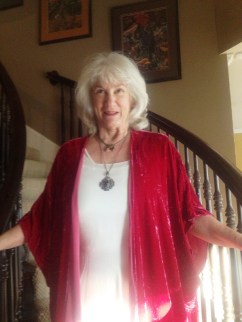
Inspired by my friend (who has quite a talent for pointing out the potential for joy or happiness), I would like to add to her list here by sharing a couple of my “moments of beauty” in the hopes I can share this hope or peace. Continue reading “Moments of Beauty by Sara Frykenberg”

Birthright by Christine Irving

I am a priestess of the divine feminine, ordained in the Fellowship of Isis.  So how did I end up becoming ordained for a second time in the Christian Gnostic tradition?  It seemed to me, that there were several paradoxes inherent in the situation.  My questions and conflictions made me an utter pain to both my mentor and fellow classmates.  Ironically, in the end I was the only one who stayed the course.
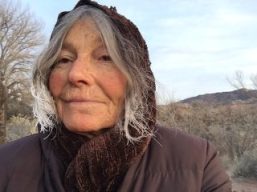
I rejected Christianity at thirteen and never looked back.  It took me a long time to say, “I am not a Christian,” aloud.  The first time I made that declaration, I thought I was having a panic attack because my heart was beating so fast.  The next time I felt that kind of fear I was alone in our apartment in Dubai, writing the liturgy for my Gnostic mass – the final requirement for becoming a priest.  Sitting safe and sound, of no interest to anyone, in a country that wasn’t even Christian, I was suddenly swept with the temerity of what I dared to do.  Women have been burned for much smaller crimes and all those ancient memories flared up at once.  The memes that infect us as children stay with us, vocal and insistent at the least opportunity and it may take a long time to manufacture the antibodies our souls need to regain health. Continue reading “Birthright by Christine Irving”

May – A Time of Becoming by Sara Wright

Picture of Sara Wright standing outside in natureReturning home to Maine in April has allowed me to experience winter turning her ancient wisdom filled face towards the maiden of spring. Although the month has been chilly, and until two days ago snow covered tree stripped mountains still held a dusting of snow, all nature is celebrating renewal.

In the woods the maples are turning a deep rose red. Here in the yard all my fruit trees are waiting for May’s rain and the warmth of a waxing solar sun to set fragrant bursting blossoms as are the lilacs. Blood red cardinals sing love songs in my pine forest, whistling up the dawn. Wood frogs croak in the vernal pools, laying jellied egg masses, young foxes race through oak groves crackling leaves in their wake. The goose stands watch over his nesting mate at the pond, a loon does the same, haunting the sky with his song. Continue reading “May – A Time of Becoming by Sara Wright”

Women Invented Agriculture, Pottery, and Weaving and Created Neolithic Religion by Carol P. Christ

When I look at the two chapters on Goddess history in my book Rebirth of the Goddess (1996), there is very little I would change, but there is new evidence I would add.* Before discussing that, I would like to underscore two important points I made in discussing Goddess history that are often overlooked or ignored by other writers. The first is that women were the likely inventors of three new technologies at the beginning of the Neolithic age: agriculture (because they were the gatherers of plants and the preparers of plant foods), pottery (primarily used for food storage and preparation), and weaving (women’s role in almost all traditional societies). The second is that the so-called “age of the Goddess” is not a more “primitive” or “unconscious” stage of culture that needed to be superseded or overthrown by more “evolved” or more “rational” patriarchal warrior cultures.
Cultural theorists like the archetypal psychologist Carl Jung assert that “the feminine” represents the unconscious and nonrational ways of knowing such as intuition. From this it follows for them that the age of the Goddess was the age of the unconscious. This sounds good to some women and even to some feminists who have experienced aspects of so-called rational philosophical, theological, and scientific traditions as dogmatic, authoritative and wrong! Wrong about women and wrong when they exclude other than narrowly defined “rational” ways of knowing. However, there are important reasons to reject Jung’s theory.

The theory that earlier more “feminine” or pre-patriarchal cultures are unconscious or pre-rational has been used by Jung and his followers to justify the overthrow of earlier cultures by patriarchal warrior groups in order to allow humanity to develop so-called rational ways of thinking which are identified as “masculine.” That the so-called rational men of these cultures were warlike, subordinated women, seized other people’s lands, and held slaves is rarely counted against their alleged superiority. Moreover, the theory that the pre-patriarchal Goddess cultures of the Neolithic can be categorized as unconscious in no way accounts for the technological inventions that define the Neolithic era. Continue reading “Women Invented Agriculture, Pottery, and Weaving and Created Neolithic Religion by Carol P. Christ”

Unorthodox: How Looking for “Truth” Misses the Point by Ivy Helman.


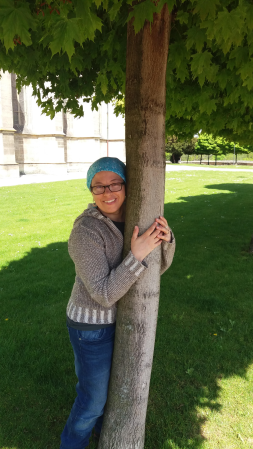
ivy tree huggingA few weeks ago a Slovak journalist reached out to me about the new Netflix four-part series entitled Unorthodox.  In the email, the journalist wrote that they had read about my work as a Jewish feminist and wanted some insight into the new series.  Their main question was: how accurate is the portrayal of the Satmar community?

I was slightly surprised.  The journalist wasn’t looking for my opinion on Esty as a young Jewish woman who takes control over her life and works tirelessly to quite literally have her voice heard.  Rather, the questions were: is the Satmar community really like that; do they not use the internet or have smart phones; is quality education so lacking; is marriage arranged; would a woman really be that clueless about her own body; is sex like that; and, do they really have no privacy?  

Fast forward.  I did the interview.  I figured that if I could offer the article’s Slovak and Czech readers a better understanding of Jewish life, my efforts were worth it.  I tried to focus the interview toward those  goals and my feminist take on the story.  The piece was published, and somewhat proud of my efforts, I posted a link to the article on my Facebook page.  Continue reading “Unorthodox: How Looking for “Truth” Misses the Point by Ivy Helman.”