

 In recent weeks and even months I have not been my usual cheerful self. After returning from sharing companionship and spiritual vision with a group of wonderful women on the Goddess Pilgrimage to Crete, I have been feeling lonely. This feeling came to a head on December 7 when it was cold and grey here in Lesbos, as had it been for weeks.
 Feeling particularly sad that morning, I realized that December 7 was my mother’s Yahrzeit, the twenty-third anniversary of her death. The fact that I must use a Yiddish word to speak of this important day reflects the fact that we do not have a word (let alone a ritual) in the English language, in our versions of the Christian tradition, or in Goddess feminism to recognize the day a loved one died. As we Americans all know, we are supposed to get on with it and not dwell on death and dying.
A friend called that day to let me know that she was planning to visit me for few days during the holiday season, adding that she was looking forward to enjoying my tree and holiday decorations. “Oh,” I said, “my (live) Christmas tree is so heavy and hard to get into the house, I was thinking of not even bringing it in this year.”
That afternoon, I girded my loins and knocked on a neighbor’s door to ask for help. Of course one of the reasons that I was feeling sad is that as I live alone, I have no one to help me move a heavy tree. The neighbor’s shy son was more than willing to help, and we were lucky that we got the tree in a day before the pounding rains that would have doubled the weight of the soil in its pot.

 As I decorated my tree over the next two days, memories of my mother flooded into my mind. How I miss my mommy. “Do you still think of your mother?” I asked an older friend shortly after my mother died. “Yes,” she replied, “Every day.” Me too, I thought, as I unwrapped the Christmas tree skirt, one of the last gifts Mom had given to me, and the dolls and pink doggie she had saved for me.
The ritual of decorating my tree for Christmas is my memorial to my mother’s love. How much fun we had choosing what was usually a scrawny tree—the largest we could afford, but not the smaller prettier one my mother would have preferred. How I remember baking and decorating cookie cutter cookies—eating the raw dough, licking the sugar icing from our fingers, and always putting what Mom said were too many red hots and silver dots onto the cookies.
My mother’s memories of Christmas were not all happy. But my Mom tried her best not to dwell on sadness. Shortly before she died, I found my mother baking cookies for a man who also had cancer. “I was feeling sorry for myself,” she said, “so I decided to do something for someone else.” I could hear my mother’s mother speaking through her in that moment.
My grandmother’s attitude, which was Midwestern, Christian, and deeply female, was nearly lost to me, for I come from the generation that discovered therapy. In the process of dealing with our feelings, we criticized our ancestors for not doing the same. As Christmas approaches this year, I wonder: were my Mom and my Grammy right? Is there a profound truth in their knowledge, transmitted through the generations, that the best way to deal with one’s own sorrows is to do something for others?
***
 If so, then I guess it is time to plan my winter solstice birthday party (which I was also thinking of cancelling this year)–pick up the phone and start inviting friends over to enjoy my home, my tree, and my food, the gift of life shared with others.
Happy Winter Solstice to all and to all a good night!
***
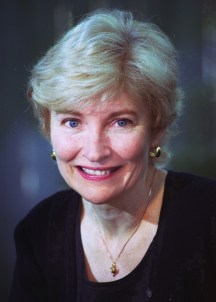
Carol leads the life-transforming Goddess Pilgrimage to Crete (facebook and twitter) spring and fall–early bird discount available now on the 2015 tours. Carol can be heard in interviews on Voices of the Sacred Feminine, Goddess Alive Radio, and Voices of Women. Her books include She Who Changes and Rebirth of the Goddess and with Judith Plaskow, the widely-used anthologies Womanspirit Rising and Weaving the Visions and the forthcoming Turning to the World: Goddess and God in Our Time. Photo of Carol by Michael Bakas.
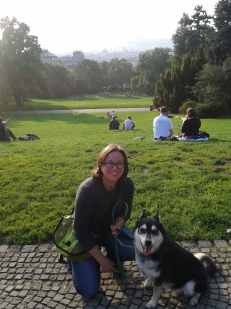
 For those of us in the northern hemisphere, December is one of the darkest months. The days are shorter. Night comes earlier. Each morning I eagerly await the dawn, the potential sliver of sunshine seeping through my window and warming my otherwise cold wintery skin. For those of us who struggle with seasonal depression, December can be difficult. The colder and shorter days cast shadows on our spirits as we yearn for the warm glow of light. Each December as we inch toward the winter solstice, I am reminded of the Goddess of the Dawn, Aurora, and of the unique ways in which a variety of wisdom traditions invoke the coming of light amidst the stark December night skies.
 A revolution is happening through Divine Feminine rituals! More and more faith communities are reclaiming the power of the Divine Feminine in sacred rituals.
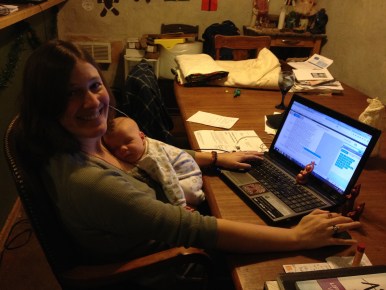 When the wheel of the year turns towards fall, I always feel the call to retreat, to cocoon, to pull away. I also feel the urge for fall de-cluttering—my eyes cast about the house for things to unload, get rid of, to cast away. I also search my calendar for those things which can be eliminated, trimmed down, cut back on. I think it is the inexorable approach of the winter holiday season that prompts this desire to withdraw, as well as the natural rhythm of the earth which so clearly says: let things go, it is almost time to hibernate.
 Sappho was a metrical virtuoso. Many of her fragments survive because they were quoted solely to illustrate otherwise unattested metrical forms. Indeed, there is no precedent or parallel in the poetry of other ancient Greeks for both the range of meters Sappho used as well as the individual characteristics of certain of such meters. The only obvious precedent is in the meters of the Vedic hymns of the Rsis of ancient India.
 In her comment following
  December 7 marks the Second Sunday of Advent.
 Feminism and Religion