Moderator’s note: This marvelous FAR site has been running for 10 years and has had more than 3,600 posts in that time. There are so many treasures that have been posted in this decade. They tend to get lost in the archives. We are beginning this column so that we can revisit some of these gems. Today’s blogpost was originally posted January 28, 2014. You can visit it here to see the original comments.
Well the Golden Globe awards have been handed out. I don’t have a television, so I didn’t actually watch, but a quick google search gives the results. Highest honors go to a movie about blacks as slaves and whites as criminals. That’s appropriate.
But this is feminism and religion, so let me get to the point. It’s about a chance discussion on social media about the “merciful god” and historical institutions like slavery (holocaust, or oppressions like misogyny, homophobia, Islamaphobia and others…).
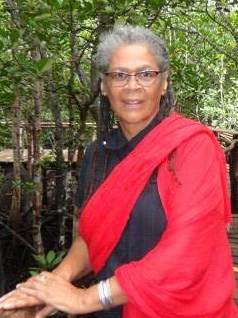
My view of the divine, the cosmos and of the world is shaped by my slave ancestry. Recent area studies about Islam in America estimate that one third of the Africans forced to the Americas were Muslim. My first African relative on US soil identified as Moor (another term used for “Muslim”). But Islam did not survive slavery.
Continue reading “From the Archives: Slavery and God/dess by amina wadud” This week’s Torah portion, or parshah, is Shemot (Exodus 1:1-6:1). This parshah sets the scene for the liberation of the Israelites from slavery both by introducing main characters and elaborating on just how difficult life was for the Isrealites under Pharoah’s rule. The parshah contains many noteworthy aspects: the death of Joseph and the multiplication of the Isrealites in Egypt; the increasing wrath of the Egptians; the birth and adoption of Moses; Moses’ encounter with the Divine in the form of a burning, yet unconsumed, bush; the revelation of the divine name, G-d’s plan for Moses’ role in the liberation of the Israelites from slavery; Moses’ attempts to get out of his assigned role; and Moses’ first confrontation with Pharoah.
 My partner and I are getting married in a little over a month. She, a lawyer, and I, a professor, live in the Czech Republic. Technically, we aren’t getting married because the Czech Republic doesn’t have marriage equality. Our relationship will not be recognized in the U.S. For that, we need to be married in a state or nation that has marriage equality. Germany might soon. Other options would be a number of EU countries or the United States, but that doesn’t affect our status in the Czech Republic. Finally, our marriage will also not be recognized by some in Jewish circles as well since the
  Recently I saw