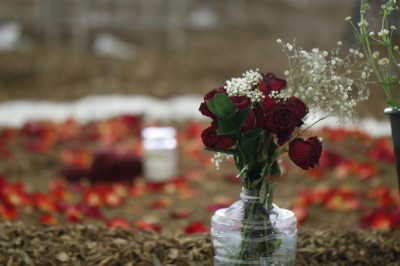
 On Rosh haShanah and Yom Kippur (the Jewish New Year and the Day of Atonement), and on the festivals throughout the year, traditional Jewish liturgy includes the Thirteen Attributes of the Divine. Exodus 34:6-7 is the first to mention these thirteen attributes, or thirteen names really, for God. This Rosh haShanah, as part of my work as a creative liturgist, I offered a new meditation on these thirteen attributes, dedicated to the Shekhinah, the Divine Presence.
In the biblical story, Moses asks God to show him God’s face, and God’s response is that Moses cannot see God’s face but “I will make all My goodness pass before you.” God hides Moses in the cleft of a rock, passes by the cleft, and recites the following: YHWH, YHWH, compassionate and gracious, patient, abundant in kindness and truth, extending kindness to the thousandth generation, forgiving mistakes, and cleansing…” The liturgy actually cuts off the rest of the text, which is harsher, in favor of retaining the loving divine attributes. At the new year, when the liturgy invites us to reflect, consider our actions, and acknowledge the brevity of our lives, Jews recite the text as a prayer to invoke God’s mercy.
Thirteen is a somewhat uncommon sacred number in Jewish tradition (seven, ten, and twelve are more common), but it’s a frequent sacred number in my practice. In my spiritual tradition, at the Kohenet Hebrew Priestess Institute, we place at the core of our work thirteen netivot, or paths, of sacred action. We also call them the “archetypes,” the “priestess paths,” or “the paths of Shekhinah.” Each of these paths—maiden, midwife, prophetess, mother, wise woman, shrinekeeper, lover, weaver, etc.– comes from an ancient way in which women embodied the sacred. As a community, we use these paths as a guide for how to serve the sacred and one another, and we also understand them as faces of Goddess. Continue reading “The Thirteen Attributes of Shekhinah: A Prayer for the High Holidays by Jill Hammer”


 My birthday was last Wednesday. Perhaps more than any other time of the year (yes, even more than Rosh Hashanah and Yom Kippur), the days and weeks leading up to my birthday are filled with personal reflection. Not that religious and secular new years don’t give me pause to reflect, but I think the lack of buzz around this personal event seems to offer me more space and time to think.

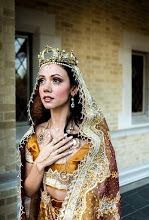
 This year, February 28th, the 14th of Adar on the Jewish calendar, is the first night of Purim, a holiday the orthodox
  In the ancient world, snakes represented fertility, creativity, rebirth, wisdom and, even, death. They were often closely connected to female goddesses, priestesses and powerful human females who were the embodiment of such powers. For example, there is the Minoan goddess/priestess holding the two snakes in her outstretched arms. She is closely linked with fertility and domesticity. Similar figurines, with similar associations and dating to approximately 1200 BCE, have also been founded in the land of what once was Canaan, where Israelites also lived. Medusa, in whose hair lived venomous snakes, turned men who looked at her to stone. Ovid’s account of the creation of Medusa credits the Greek goddess Athena with Medusa’s lively hair. Another Greek legend says Perseus, after killing Medusa, gave her head to Athena who incorporated it into her shield. Athena, the goddess of wisdom, is portrayed often with snakes wrapped around her as a belt and/or on the floor next to her.
  My cat is a hunter. You can see it in her eyes. She plays fetch considerably better than the dog and seems to enjoy playing with her “kill” – throwing it up in the air, batting it around and pouncing on it – long after it is “dead.” If we forget to clean up her toys before bedtime, her prowess invades the night. For such a tiny cat, she can meow at almost deafening volumes.
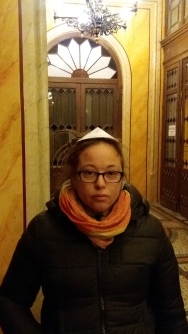 Last week Sunday, my partner and I were in Budapest, Hungary. We stopped at the Dohany Street Synagogue, the second largest synagogue in the world and the largest in Europe. After we bought our tickets and proceeded through security, we decided to go into the synagogue first and then the museum.

