 In national quarantine and sheltering-in-place or is it “safer-at-home,” all I could think about was that we were living in a scene from the late Afrofuturist writer Octavia Butler’s book Parable of the Sower. So I texted my friend, Afrofuturist writer Tananarive Due and said: hey let’s do a webinar on this. And this turned into weekly – then monthly – free webinars on the wisdom we can glean from Octavia Butler as we live through these political days.
Here, I share a recent workshop and dialogue that lifts up Octavia’s Parable of the Sower and highlights themes of prophecy, dystopia, theology and a way forward in times like these.
If you are interested in engaging more intimate work centered on Octavia’s work, visit OctaviaWebinar.com for more information.
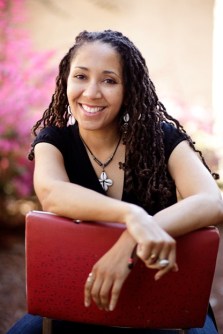
Dr. Monica A. Coleman is Professor of Africana Studies at the University of Delaware. She spent over ten years in graduate theological education at Claremont School of Theology, the Center for Process Studies and Lutheran School of Theology at Chicago. Coleman has earned degrees from Harvard University, Vanderbilt University and Claremont Graduate University. She has received funding from leading foundations in the United States, including the Ford Foundation, the Andrew W. Mellon Foundation, and the Woodrow Wilson Fellowship Foundation, among others.
Dr. Coleman offers workshops, lectures and books for your organization, university or church. She warmly connects with people as she shares principles for growth and liberation. Read her story here.
 I began to follow Kimberlé Crenshaw a little more than five years ago when I first learned of her theory of intersectionality as a more concise description of oppressions stemming from race, age, gender, sex/sexual orientation, religion and socio-economic status.
 One of the things I love most about being an educator is introducing my students to the thinkers who have inspired me. I am especially delighted when I can share things I’ve learned from meeting and hearing these scholars speak. One of the joys of “coming of age” as a religious scholar in the early 21st century is that I have been able to meet some of my heroes. I’ve conversed with scholars whose writings about justice, liberation, hope, love, and religion’s potential to be a moral force in a hurting world inspire me. I’ve been able to hear them speak at conferences and workshops where I’ve felt the truth and power of their words in my body. One of the most inspiring women I’ve met in my academic journey was Dr. Katie Geneva Cannon. She passed away on August 8, and although I was not one of her students, I grieve and mourn this recent loss. I remember her and honor her for her spirit, her scholarship, and her soul’s work.
 This past summer, my friend and I were perusing the exhibits at the