

Mantras are not just the prescribed sound formulas or sentences found in Eastern religions, but they can also be thought of as the words or phrases that we continually repeat to ourselves. The word mantra comes from Sanskrit and its roots are manas-, meaning “mind,” and -tras, which can be translated as “tool.” Thus, mantra is a tool to protect the mind.
How often do we engage in negative self-talk like “It’s my fault” or “I’m to blame for what’s happened to me” or “No one loves me”? These expressions can become mantras, as we believe their messages from constant repetition. In hospice and hospital settings, one often finds patients who have convinced themselves that “This is God’s punishment” or “Everyone has forgotten me” or “I’m so scared.” These phrases, rather than protect the mind, become what is believed by the mind and may lead to increased anxiety, stress, and depression, and consequently the need for spiritual and emotional support.
Chaplains, as members of the care team in hospice and hospitals, provide spiritual and emotional support to patients and their families. Most often, chaplains attentively listen to patients and their caregivers (often family members) about the patients’ life story, their relationships, their dreams unfulfilled, and their wishes for those whom they are leaving behind. Chaplains take part in family meetings where decisions are made about patients’ care, sometimes interjecting to ask for clarification of medical terms and to ensure that the family understands. Sometimes, the chaplain will lead prayer with the patients and their families, and at other times, the chaplain will pull other tools from her toolbox such as mantra meditation.

 Sitting in front of the computer, I slowly and intentionally insert earbuds, click to start my favorite writing playlist, and open up Microsoft Word. I feel the tips of my fingers resting lightly on the keys, and notice the slight give of each printed square, glossy in the middle from months of 80 words per minute. I lightly tap my fingers on the keys, not pressing enough to type a letter, body motionless except my fingers, watching the absolute stillness of the screen, exploring the edge between pressure and performance with slow, shallow breaths, finally noticing the moment when the edge is breached, the key catches, and a letter appears on my screen, taking it in with satisfaction.

 Since I wrote
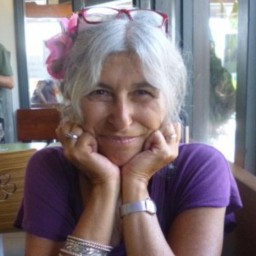 At the lovely small Chanukah party I attended earlier this month, I did not taste the latkes, those delicious potato pancakes fried in oil and typically served with sour cream and applesauce. My hostess offered them to me repeatedly, proudly noting that she’d used her Polish grandmother’s recipe. But I politely said “no thank you,” I’d just started a diet. “Who starts a diet in December?” someone asked. Someone else pointedly wondered “How can you not eat latkes at Chanukah?” but I quietly insisted that I needed to refrain. I promised, though, that I’d have some next year, once I’d shed the extra pounds that were making me uneasy in my own body.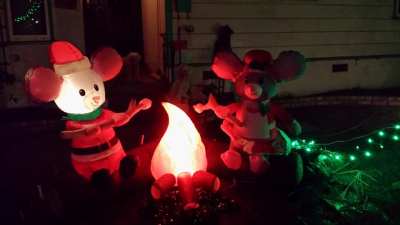

 Feminism and Religion