The Urban Dictionary defines a diva as a woman who exudes great style and confidence and expresses her unique personality without letting others define who she should be. In my mind, a diva is a woman who stands in her sovereignty and blazes a trail for other women. We all need to claim our inner diva to truly dance in our power. And if you’re looking for inspiration, I present three herstorical divas to die for.
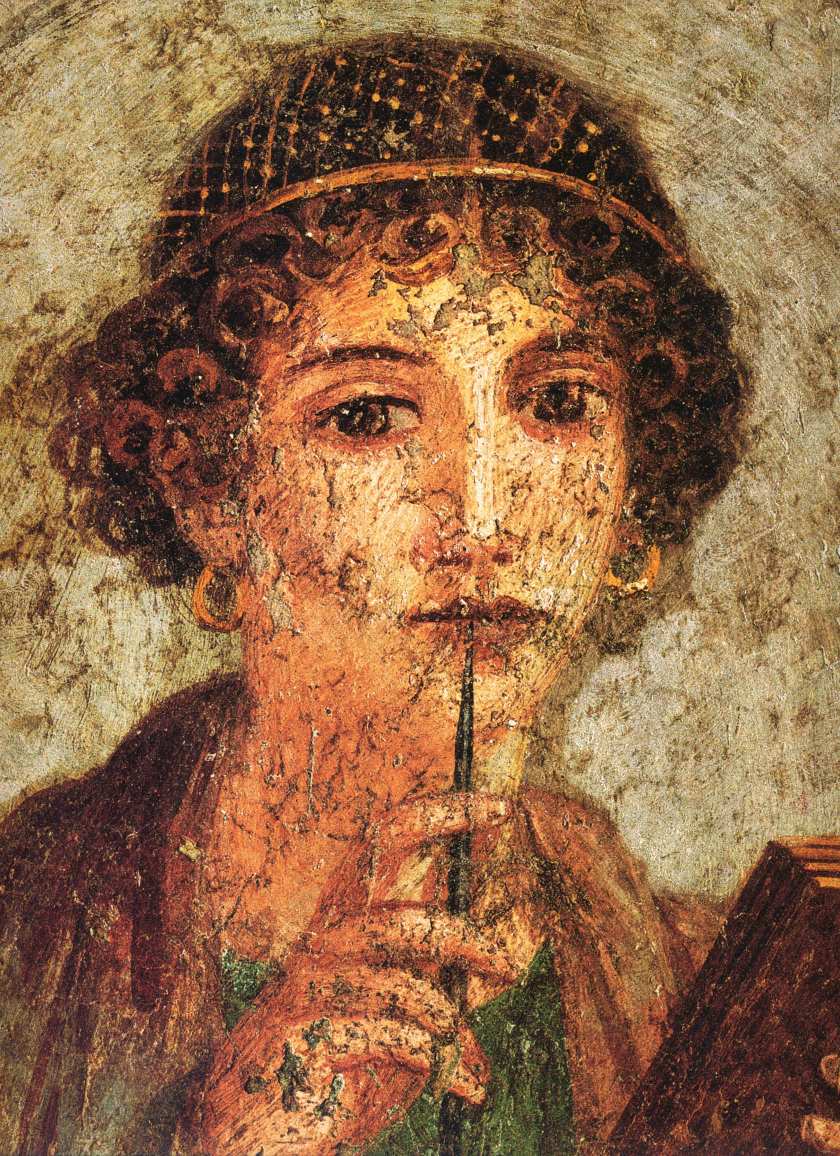
- Sappho ca. 630 – 580 BCE
Sappho of Lesbos wrote the book on love. Literally. Her searing love poetry addressed to other women gave us the word lesbian. She was the first—and the best!—to describe passion as a visceral experience, in which we are seized and transfixed by Aphrodite, Goddess of love. Though much of her work was destroyed by the patriarchal fun police, the fragments of her poetry that survive are timeless, haunting, and utterly true.
What we must remember is that Sappho’s poetry wasn’t just romantic or erotic–it was sacred, each poem a holy offering to Goddess Aphrodite.
Continue reading “Three Herstorical Divas to Die For by Mary Sharratt”


 I touch the earth and offer gratitude
 Candide, ou l’Optimisme (in English, Candide, or Optimism) is a satirical, picaresque novel published in 1759 by François-Marie Arouet, better known as Voltaire, who was possibly the smartest author of the Age of Enlightenment…but he annoyed so many courtiers and public officials that he was forever traveling around Europe to get away from their threats of arrest and bodily harm. A picaresque novel is an adventure novel with a clever,
 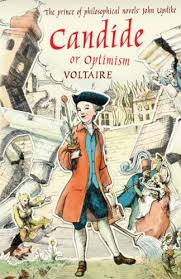 tricky hero who somehow survives and makes us like him. Voltaire wrote his novel primarily to criticize the optimism of the German writer Gottfried Wilhelm Leibniz, who said that because God is always benevolent, everything that happens is always for the best. This presumably includes the bloody Seven Years War (Protestant vs. Catholic, fought mostly in Germany and France) and the Lisbon earthquake of 1755, which occurs both in Lisbon and in the novel. Even though Voltaire was accused of blasphemy and heresy, among his other sins and crimes, Candide was enormously popular throughout Europe, a popularity that continues to this day.
 Part One of this post looked at connections between the cosmic dance and the Goddess Hera. To read it,
  A few years back, I turned forty years old. On the cusp of this landmark birthday, I wrote about the stigma of so-called midlife crises. I resisted the idea that changes associated with midlife should be mocked, when indeed many of those changes actually represent something like birth itself. I have come to think, however, that I was perhaps naïve in my wild embrace of midlife self-birthing. I still believe what I said before, basically, which was that midlife occasions opportunity for self-knowledge in a way that is largely inaccessible to babies, children, adolescents, and novice adults. What I could not have known a few years back is how much it costs to answer the waking self’s summons.