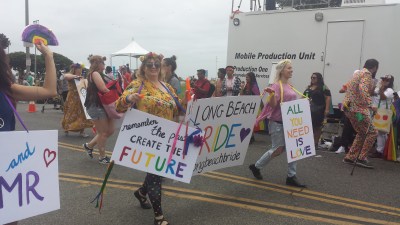
Last year I published a photo essay with pictures of Long Beach, CA’s Pride week-end. You can see last year’s photo essay here. I also published a photo essay of the Los Angeles Resist March from last year here.
It feels more important than ever to re-member/ re-attach ourselves to the normality of resistance, freedom, solidarity, courage and joy. I hope the pictures here help you FAR family to re-member your activist selves and re-invigorate them if they are in need of it. I know mine was before the past week-end. Here are photos from the Long Beach Dyke March on Friday night, and the Long Beach Gay Pride parade on Sunday morning.
At my school, a religious institution, we start every faculty meeting with a reflection, meant to inspire us, make us think, help us to connect, etc. I am admittedly, sometimes very uncomfortable with these reflections. I don’t always like corporate ‘prayer’ because of my past experiences in an abusive faith. They make me uncomfortable, defensive; even though I understand the value of collective ritual. Challenging me to face these feelings, my department chair asked me to give a reflection for our faculty assembly. So I did so by sharing the way I know how to share (in a collective way) best: in a blog. And here I present these reflections, my blog, with all of you as well. My thoughts about taking the year apart, and putting ourselves back together again at the end of the year:
(Reflection has been edited slightly in terms of length and clarification for presentation to this online audience.)
Fox, as a member of the Canidae family, is related to wolves, jackals and dogs. But unlike these animals who hunt in packs, fox hunts alone.
Fox is intelligent, clever and cunning. While it is persistent, fox is gentler and less aggressive than wolf. Fox is associated with feminine magic, offering the power of the feminine to both men and women.
For over ten years, I’ve been teaching a work of early Jewish mysticism known as Sefer Yetzirah, or the Book of Creation. There are widely differing opinions on the book’s origin and dating, but many scholars date it to the sixth century. Its core concept can be described simply: the Divine used the Hebrew letters as metaphysical channels to create the different aspects of reality: the directions, the elements, the planets, the months of the year, and so forth. Each letter is a channel by which God creates a unique form or entity, and meditating on the letters provides us with a connection to divine creative power. In its discussion of the letters, Sefer Yetzirah shows a strong connection to feminine imagery, and thus helps the later kabbalah develop its own link to the feminine.
Sefer Yetzirah shows influences from Aristotle to Gnosticism, and is often viewed as a work of Jewish philosophy. However, it is also a work of meditation, giving the reader instruction on how to focus and connect to the divine. Scholars such as Richard Hayman and Marla Segol have noted that the book’s structure and content connect it to magical literature: for example, the book has a deep concern with “sealing” the space of the world: letters of the Divine Name are used to seal the six directions of the universe. In a similar way, ceremonial magicians of the ancient world used sealing ritual, including the incantation bowls that were buried in the corners of a home to keep out evil forces. The book, like much ceremonial magic of the region, also discusses the elements. However, Sefer Yetzirah has a three-element system rather than a four or five-element system. The three formative elements are air, water, and fire.
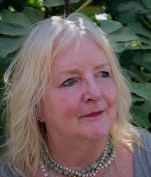
Following up on my recent blogs on the roles of women in the Neolithic revolution and on “egalitarian matriarchy,” I have been re-reading Peggy Reeves Sanday’s ground-breaking book, Women at the Center, about the survival of the “adat matriarchaat” (the principles of matriarchy) among the more than four million Minangkabau people of Indonesia.
According to Sanday, the customs of the matriarchaat (the Dutch word has been adopted by the Minangkabau people)—including matrilineal descent, matrilocal marriage, and ownership of the land by the mother clan—have survived accommodation with Islam. This is in no small part due to the fact that one of the principle values of the matriachaat is to conjugate (to come together) rather than to dominate. Rather than viewing Islam as an opposing force, the Minangkabau emphasize the aspects of Islam–such as love and compassion for the weak–that are compatible with their traditional worldview. Through this clever maneuver, the Minangkabau manage to practice Islam while maintaining their traditional egalitarian matriarchy. Continue reading “A Question about “Egalitarian Matriarchy” in West Sumatra by Carol P. Christ”
My woman’s body is entering the dark time of the moon, even with blinding white snow lashing the windows, even with a full moon tracing its way far above thick clouds. My mood is black and soon I’ll be flowing red, and the snow will just drive on white, white, white.
In The White Goddess, Robert Graves tells us: “…the New Moon is the white goddess of birth and growth; the Full Moon, the red goddess of love and battle; the Old Moon, the black goddess of death and divination.”
The Celt in me feels cradled by this imagery, even if, as Judith Shaw and Carol P. Christ have pointed out elsewhere on this site, the idea of maid, mother, and crone is a modern invention, not gift from the past. I agree with Christ: “My suggestion is that we give up the idea that the details of contemporary Goddess Spirituality are rooted in and authorized by tradition. We can instead acknowledge that though we are inspired by the past, we are the ones who are creating contemporary Goddess Spirituality.”
We have been lost to each other for so long. My name means nothing to you. My memory is dust.
This is not your fault or mine. The chain connecting mother to daughter was broken and the word passed into the keeping of men, who had no way of knowing. That is why I became a footnote, my story a brief detour between the well-known history of my father and the celebrated chronicle of my brother.
Anita Diamant, The Red Tent
I am an expat author. My home is everywhere and nowhere. A wanderer, I have lived in many different places, from Minnesota, my birthplace, with its rustling marshes haunted by the cries of redwing blackbirds, to Bavaria with its dark forests and dazzling meadows and pure streams where otter still live, to my present home in the haunted moorlands of Pendle Witch country in Lancashire, England. My entire adult life has been a literal journey of finding myself in the great world.
For as long as I remember, I longed to be a writer. As a novelist I am on a mission to write women back into history. To tell the neglected, unwritten stories of women like my pioneering foremothers who emigrated from Bohemia (now the Czech Republic) in the 1860s to break the prairie soil of southern Minnesota.
To a large extent, women have been written out of history. Their lives and deeds have become lost to us. To uncover their buried truths, we must act as detectives, studying the sparse clues that have been handed down to us. We must learn to read between the lines and fill in the blanks. My heroine’s journey, in other words, is about reclaiming the lost heroines of history. My quest is to give voice to ancestral memory of that lost motherline.
“There is no such thing as a bad blessing,” Mama Donna tell us, “no rules . . . no recipes, no prescriptions, no instruction manuals,” no “one-size-fits-all” House Blessing. Yet it’s not so much “anything goes” as “everything matters”: “The only thing you can do wrong in a ritual is to not pay attention to your true intentions.”
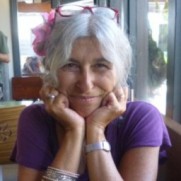
Donna Henes, familiarly known as “Mama Donna,” is a national treasure. From her “House of Many Altars” in what she mischievously calls “Exotic Brooklyn,” she serves as an exuberant, irrepressible urban shaman: holding outdoor public rituals at each solstice and equinox for over forty years; blessing and leading New York City’s annual Halloween Parade; creating meaningful, personalized ceremonies for funerals, weddings, new babies, new homes, and new businesses. In 2009, the governor of New York State called on her to bless the fleet during the quadricentennial celebration of Henry Hudson’s voyage to the New World. She is the author of five books, including The Queen of Myself and Celestially Auspicious Occasions, and publishes a monthly e-newsletter, The Queen’s Chronicles, that offers “meaning, moxie, and magic for midlife women.”
It was Sunday, April 1, with grilled corn and veggie-dogs and a day gardening with friends and neighbors. Each household with their own raised bed. We started seeds and planted starter plants. We spent all day outside, various friends and neighbors stopping by at different times of the day. This was my effort at a new practice of spirituality – to touch something green every day. Perhaps not the most obvious starting point, but it was what I could do.
I’ve always had a hard time understanding “spirituality” – or what people mean by it. I’ve never quite connected. When explained to me, I understand what people say it means, whether to them specifically or as a term broadly speaking, and as a scholar of religion I can study it and learn about it, but I just don’t connect with it. I didn’t have an entry point to the term or the practice. Continue reading “A Grounded Spirituality, in Community by Xochitl Alvizo”
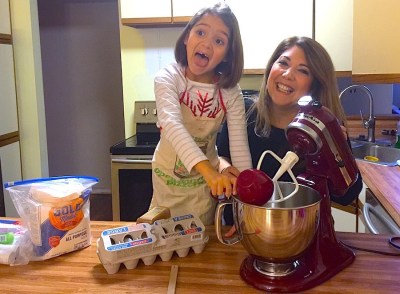
The passing of my mother was very sudden. At the young age of fifty-six, I thought I had many years to spend with her so I hadn’t worried that any conversation with my mom would also be our last. Now when I look back, I wish I would have treated every word I spoke to her so delicately, as if those words would be the last she would ever hear from me, but I suppose that is why they say hind sight is 20/20.
Preparing for her funeral I went to her home and gathered some of her things; I wept as I came to the realization that they were all I had left of her. I found many cherished and priceless possessions that served as reminders of her continued presence in my life. I discovered her diary that described her absolute joy over being a mother during our childhood years and her poetry that described her belief of motherhood as her most important role. And then there were her recipes, her cookbooks, perhaps her most important possessions, at least to me, which held her secrets that she used to comfort and love those around her. Continue reading “Do This in Memory of Me By Gina Messina”




 Following up on my recent blogs on the roles of women in the


 Donna Henes, familiarly known as “
 It was Sunday, April 1, with grilled corn and veggie-dogs and a day gardening with friends and neighbors. Each household with their own raised bed. We started seeds and planted starter plants. We spent all day outside, various friends and neighbors stopping by at different times of the day. This was my effort at a new practice of spirituality – to touch something green every day. Perhaps not the most obvious starting point, but it was what I could do.
 The passing of my mother was very sudden. At the young age of fifty-six, I thought I had many years to spend with her so I hadn’t worried that any conversation with my mom would also be our last. Now when I look back, I wish I would have treated every word I spoke to her so delicately, as if those words would be the last she would ever hear from me, but I suppose that is why they say hind sight is 20/20.

