 If Jesus ran for president, what would his campaign look like? Where would he stand on social policy? Who would be his running mate? Who would (not) vote for him? With our current political dialogue dominated by supposed Christian views and a nation that overwhelmingly claims the teachings of Jesus as the basis for its morality, what would the response be if we came face to face with the (unintentional) founder of the tradition? How would we really respond to Jesus’ teachings in contemporary society? And maybe more frightening, how would Jesus respond to us?
Imagine that Jesus was in the US today and launched his bid for the Whitehouse. Don’t imagine him announcing on the deck of an Aircraft Carrier, he’s more of a Homeless Shelter guy. Would he be the conservative “Christian” he is often labeled by the right? Would he be a Democrat as so many book titles have claimed? A libertarian? Green party? How do his teachings measure up with the various political parties and would there be room for Jesus at any of their tables?
What would Jesus think of our current and past presidents, nearly all whom have invoked the Lord’s name during their time in office. What would he think of both Jimmy Carter and George W. Bush claiming that God wanted them to run for POTUS? What about Bush’s (and Ronald Reagan’s) claim that God guided all of his policy making decisions while in office? And what about Barack Obama’s statement that when it comes to his politics, at the end of the day, “God is in control”?
Although not bringing God into the conversation would be career suicide for any politician and a large population of voters in the US claim a Christian identity, few would actually vote for Jesus if he ran for president. Many of the values and ideologies associated with Christian views are in direct contrast to the teachings of Jesus. For one, Jesus was anti-materialistic and we are living in one of the most gluttonous nations in the world. Let me say upfront, I am guilty. I have an unhealthy obsession with handbags and little makes me happier than a good sale at Nordstrom. I own it. But that doesn’t change who Jesus was or his teachings. Even if he was alive today I don’t think Jesus would be swayed by Nordstrom—-although I have seen amazing sandals there.
We have adopted Jesus as an American Icon, and in doing so, have twisted his words and teachings to support our own ideas. It’s enough to make one think those WWJD bumper stickers stand for “What Wouldn’t Jesus Do?” And so, if Jesus did run for President, it is impossible to imagine, in a country that has adopted him as its icon and claims a “Christian” identity, that Jesus would ever be elected. His understanding, loving approach would probably bar him from even getting a reality show—which appears to be key for a presidential resume these days.
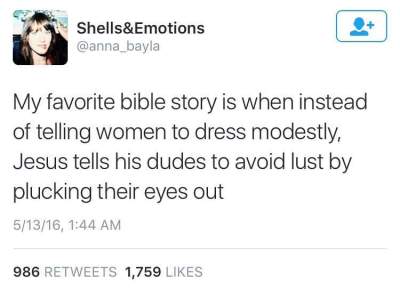
That’s right. Likely no Christian would vote for Jesus and most would attack him for his teachings and politics – yes, Jesus was highly political. Some might like his message, but the media would label him unelectable and the GOP would go after him for being a left-wing, pro-union, welfare supporting, Obamacare enthusiast and democrats would argue that Jesus is a nice guy but doesn’t know a thing about running a country. If it came down to it, and the country was under threat, Jesus would never push the red button. Both would rather him be a mascot for their campaigns – “Jesus the carpenter” – AKA the new “Joe the Plumber.”
While Jesus the American Icon might have a chance in a presidential election, Jesus the Jewish carpenter of the Gospels would be laughed off the ballot.
This article is an excerpt from If Jesus Ran for President coming from the Far Press in Fall, 2016 and was co-written with Steven Mazan.
Gina Messina, Ph.D. is Assistant Professor of Religion and Gender Studies at Ursuline College and Co-founder of Feminism and Religion. She writes for The Huffington Post, has authored multiple publications and is the co-editor of the highly acclaimed Faithfully Feminist: Jewish, Christian, and Muslim Feminists on Why We Stay. Messina is a widely sought after speaker and has presented across the US at universities, organizations, conferences and on national platforms including appearances on MSNBC, Tavis Smiley, NPR and the TEDx stage. She has also spoken at the Commission on the Status of Women at the United Nations to discuss matters impacting the lives women around the world. Messina is active in movements to end violence against women and explores opportunities for spiritual healing. Connect with her on Twitter @FemTheologian, Facebook, and her website ginamessinadysert.com.


 After reading my essay (4-15-16) on this Feminism and Religion site, one of my male colleagues (also a good friend) pushed back at me. “Seems to me,” he said, “that the issue in any oppression is power and power structures are fluid.” He went on to say that men don’t always exercise power over women and then cited his less-than-satisfactory experience with a female dean who tried to unfairly eradicate an academic program he initiated. He reminded me that in bygone times, there were queens who ruled empires–sometimes harshly. Currently, there are women with a certain amount of power who control (to some extent) the lives of their housekeepers (usually women) and gardeners (usually men). Often these housekeepers and gardeners are women and men of color who inhabit a lower social strata.
 Blodeuwedd, also known as the Ninefold Goddess of the Western Isles of Paradise, was a Goddess like no other in the manner of her birth. She is one of the main figures in the Mabinogion, the Welsh cycle of stories of the early Celtic Goddesses and Gods. But to understand Blodeuwedd, her short life, her actions, and her death we must look back to the story of Arianrhod, Celtic Sky Goddess.
 I’ve been asked by both academics and Pagans what inspired me to pursue doctoral research on the British Goddess movement: of the many ways that people first
  a girl, the women in the neighborhood looked out for each other, and my mother had a wide circle of women friends. My grandmother lived nearby, and she and my mother spoke on the telephone nearly every day. My mother and I had a close relationship cemented by caring together for my baby brother.
 My
My  In the TV film about American suffragists “
 One story that has marked my life as a feminist is that of Sarah and Hagar. This is a story of pain and enmity among women under patriarchy that despite its age, is still relevant to illustrate the negative effects of the androcentric socialization. But it can also hold an inspirational feminist reading that leads us towards a reflection on the amazing possibilities of a shift in the way we women look at each other.

 Feminism and Religion