As the creator of the divine feminine app, an online platform to find circles, events and resources to which an average of three women a day have found their way to for the past decade, I have been privy to quite a few opinions.
A large majority of the 12,000 women who have registered on the app are Circle hosts, course creators, retreat organizers, book authors, singers, product sellers and others that ‘She’ has tapped on the shoulder.
And I hear quite a lot.
‘Be careful about her.’ ‘Do you know what she did?’ ‘I would watch your back.’
Portrait of Minos, king of Crete, from the Promptuarium Iconum Insigniorum
As the Ancient Greek myth is told, Ariadne’s father, Minos, is a powerful brute. The offspring of rape by the God Zeus of the Phoenician Princess, Europa, Minos’ violent origins reflect his development as a man, ruler, and father. He conquers and plunders while harboring secrets and wreaking havoc on his family. In the mythic world he is the definition of a victorious king. In today’s world, we call Minos a narcissist.
Half divine and half mortal, Minos moves between sacred and profane spaces to his advantage. He gains his throne as King of Crete with the support of the Sea God, Poseidon. When given a giant white bull as a congratulatory gift, Minos chooses not to sacrifice the bull as he promises Poseidon, but to keep it for himself. It is this choice that reveals Minos’ shadow narcissism. To Minos, the bull is his greatness, not a symbol of it. In a rage, Poseidon punishes Minos for his choice by cursing his wife, Pasiphaë, to become enraptured with the magic bull. While Minos is away from Crete conquering other lands and other women (he fathered several children outside his marriage), Pasiphaë under possession of Poseidon’s spell, convinces the inventor, Daedalus, to build a contraption to lure the bull into her. Ariadne’s half-brother, the Minotaur, is born out of this union.
Those of us on the paths of the Divine Feminine can go to great lengths to approach Her. We might read and study hard-to-find books, invest time and money to visit temples and museums, and seek out Goddesses-related power spots around the world. We might acquire ceremonial jewelry and devotional artworks, attend conferences, track down Goddesses-inspired music, and apprentice with teachers from spiritual traditions that may be far removed from our own heritage. We might invest in supplies and training to craft devotional music, art, sculpture, and apparel, and create or attend performances, healings, and rituals honoring the Feminine Sacred.
Yet there is one important ritual activity that we routinely forget and ignore, one that we know was key to Goddess worship whenever we have written prayers, from Demeter to Inanna, Isis to Freyja, Hekate to Sarasvati. This time-honored practice is simple to learn, costs nothing to use, and quickly, safely, and legally creates an altered state of mind that brilliantly and efficiently connects us with our spirits, the natural world, the Divine Feminine, and each other. And furthermore, this ancient sacred craft is not limited to indigenous or ancient cultures but is already part of the familiar heritage of anyone who speaks English, so there is no danger of cultural appropriation in using it.
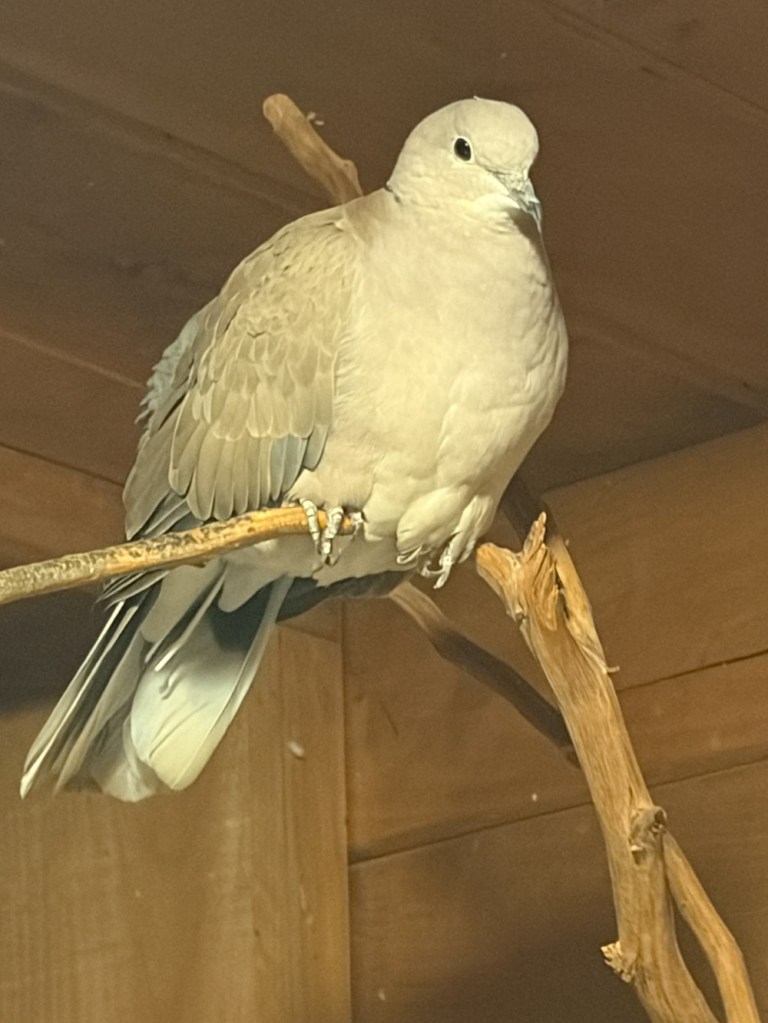
Hundreds (it felt like thousands) of wings descended around the stone table I was sitting on at dawn. Transfixed by this sight that seemed to be occurring within as well as without I could barely comprehend the thousands of soft coos that floated through the air. Celestial music filled my ears. Was this really happening I wondered even as the birds clustered round my feet? I’d loved doves as a child, had drawn thousands of them. In Medieval paintings white doves descended upon Mary as Grace. The child believed. Doves were like no other birds the child was sure…
The buildings and churches of Assisi all had doves cooing from rooftops distracting me from outdoor lectures. I was attending a Jungian conference in Assisi Italy and every morning found me wandering the narrow streets or climbing Saint Francis’s mountain to pick wildflowers and sweet herbs. I had no idea until approaching Assisi that the golden sunflowers that stretched across the horizon almost blinding me that I would spend one week of my life in two worlds. One as a member of a professional conference, the other submerged in experiences that lifted me out of ordinary reality. The time with the doves was just one of many experiences of Mary, Saint Francis and Old Women (who approached me in the streets) that lifted me out of the life I knew.
What I felt and sensed was stronger than any rational thought, so experiential reality held me fast and even at the time these experiences were occurring I hoped this reality would never let me go.
The Dinner Party by Judy Chicago: Donald Woodman, Wikimedia Commons
Knitting and other forms of needlework made a resurgence when Second Wave feminism reclaimed traditional “women’s work” as a form of feminist expression, promoting crafting as a tool of feminist empowerment. The most prominent example of this was Judy Chicago’s 1979 The Dinner Party that celebrated prominent female historical and mythical figures. A massive artwork, it consists of 539 quilted triangle pieces from all over the world, embroidered place banners, and ceramic plates arranged on a large triangular table.
Women form the vast majority of those engaged in knitting resistance,[i] and beyond the reclamation of women’s domestic arts, craftivism provides women a voice that is often usurped and talked over in masculine political spaces. As one of the participants in a resistance knitting circle that was studied by feminist scholars stated, “’Because politics is still very sexist and configured for men . . . I think women don’t get very far . . . I think craftivism is . . . something that’s accessible to women . . . and is an alternative form of expression.”[ii]
Published by Hypatia Press, The Cleansing deconstructs the roots of religious-based misogyny and purity culture through the real story of a Vestal Virgin accused of breaking her vow of chastity. Midwest Book Review called the novel, “Original, exceptional, deftly crafted and a simply riveting read from cover to cover.”
Writing a novel about the persecution of a Vestal Virgin priestess in ancient Rome really brought home for me just how deep the religious roots of misogyny and purity culture go. In my novel, The CleansingI focused on the true story of a Vestal accused of having sex and being blamed for the massacre of 50,000 men in one battle.
Two hundred years before Christianity, Rome’s religious leaders claimed only a “crime” of that magnitude—of one of their sacred virgins breaking their vows—could have “disgusted” the gods enough to cause them to turn their backs on Rome. The Vestal faced a death sentence—being buried alive—for this so-called “crime.”
Meanwhile, the general who made a massive strategic error in battle, the man responsible for marching tens of thousands of soldiers into a trap, walked away scot-free.
It seemed unbelievable to me that they truly believed a woman’s sexual conduct could have that much influence and power. And yet they did, as evidenced by the fact that the Romans buried alive two dozen Vestal Virgin priestesses (that we know of) during Rome’s existence. When a tragedy occurred—war, famine, pestilence—the head priest of Rome, the pontifex Maximus, and the Collegium of priests often claimed that one or more of their six Vestal priestesses “had” to have had sex to explain away the tragedy.
Moderator’s Note: This has been posted on FAR twice, originally on April 7th, 2014 and then again on July 15, 2022. We are posting this a third time because of its importance. It is a piece of history that helps to illustrate how we got to where we finds ourselves today.
During the past week I attended a Los Angeles premiere of a new documentary Anita: Speaking Truth to Power (Dir: Freida Lee Mock USA, 2013). The screening was sold out and I had great seats saved for me– sitting with a friend who works at Samuel Goldwyn, the distributor of this fine film.
In 1991, Anita Hill provided testimony she hoped would serve to dissemble the nomination of Clarence Thomas as a Supreme Court justice. Although the vote would end up being close (52-48) Hill’s testimony did not serve to dissuade the decision — Clarence Thomas’ nomination was confirmed and he was appointed to a life term on the Supreme Court four days after Hill’s testimony concluded. Here is an outline of the debate.
Moderator’s Note: This piece is in co-operation with The Nasty Women Writers Project, a site dedicated to highlighting and amplifying the voices and visions of powerful women. The site was founded by sisters Theresa and Maria Dintino. To quote Theresa, “by doing this work we are expanding our own writer’s web for nourishment and support.” This was originally posted on their site on March 4, 2025. You can see more of their posts here.
Out of forty monuments along the National Mall in Washington, DC, none celebrate women and their contribution to American history.
One of our NWW [Nasty Women Writers] categories is Breaking the Bronze Ceiling where we track the effort to increase the number of monuments dedicated to real women in public spaces.
I’ve made many trips to Washington, DC, trekking the National Mall specifically to visit monuments. Why didn’t I notice women were missing? Am I so conditioned to not seeing women recognized and honored at the highest levels that I don’t even expect it or question their absence?
I felt ignorant and complicit.
It’s 2025 and there is not a single monument to honor women on our National Mall, a place that “draws roughly 36 million visitors a year, more than Yosemite, Yellowstone and the Grand Canyon combined”(Schuessler).
February, the month designated as Black History Month, will see us focus on the voice, the faith, and the heartbeat of one of the greatest singers in all of US History. Many have stated that the voice and songs of Mahalia Jackson can be considered one of the most influential voices of the 20th Century. She not only became one of the most modern voices to bridge popular music, blues, and religious hymns but she also is intrinsically linked to the Civil Rights Movement. She is one of the first commercially successful Black musicians of the modern era.
Mahalia (1911-1972) was born Mahala in New Orleans, Louisiana. Both sets of her grandparents were born into slavery. Mahala’s childhood was filled with hardship, yet a persistent faith emerged. Mahala was raised in a very charismatic Baptist church, Mount Moriah Baptist Church. It is at church that Mahala would start to sing, find her voice, and start to uplift the souls around her.
R—Remember– that is what I think we need to do E– Everything that she did, like poetry, like raising kids N– Not just the horror of what happened… Bam! Bam! Bam! E— Everything she did …like win the Academy of American Poetry Prize E— Everything she did …like be a lesbian, be so beloved, be.
***
N- Not just that video on an endless loop- Bam! Bam! Bam! “Fuckin’ bitch.” I–I want to see her, more of her, before that day, all of her C- Colors. All of the crayons in the coloring box she represented. O- -Oh! I wish I had known her. I wish it hadn’t happened. I wish we weren’t here right now in these United States L– Let me say I wish we were not here. E– Everything feels dystopian. I forget all the crayons in the coloring box, except gray.