Why do it? Sit around a table with people who profess a faith tradition different from our own, drink coffee, nibble on snacks, and talk. What’s the point? No doubt the reasons vary depending on the particular people getting together. Nevertheless, there is the sense that if we “sit down together and talk together about our faiths,” we’ll “break down barriers,” and….then what? Do we think (or hope) that those on the other side of the table will eventually “come around?” Is conversion a goal? Or, perhaps we just want to become more “tolerant” of other faiths.
So, for example, if Muslims share facts with Christians about the history of Prophet Muhammad, the Sunni/Shi’a division, and Shari’a law, will that help Christians tolerate Muslims? Books on the history of religions abound. Yet, religion-based violence flares around our globe. Would learning about doctrinal beliefs–“truths” based on (usually male) interpretation of scriptural narrative–be helpful? Christians understand Jesus to be God incarnate. Muslims reject any doctrine that compromises the oneness of God. Now what? Are barriers broken down? Are we more tolerant? Continue reading “Putting Faith in Interfaith Dialogue by Esther Nelson”
The first blog I read about Ramadan this year was full of the usual self-righteous pontification that takes this occasion to remind people to do such and such at this or that level. Who is the target audience for such an approach, I wondered? It seemed to operate on the basic idea that Muslims will NOT do the right thing unless someone tells them to. Mostly, though I noticed the gloom and doom of it and I decided then to make my Ramadan focus on joy.
First a quick reminder about the basics: Throughout the 9th lunar month, Muslims are obliged to abstain from food, drink and sexual intercourse during the day. It goes on like this for 29-30 days. There are also points of difference about some details of the fast, like how we determine which day to start. Either we actually cite the new moon, go by advanced calculations of the new moon, or some combination of these two. This leads to healthy chaos at the beginning because no one knows when the first day will, be but must prepare in order to get in that pre-dawn meal, called suhur. I say, healthy chaos, not only because I’m a bit of an anarchist, but also because I like that no one has complete control about such an important decision. Continue reading “No Ramadan Gloom and Doom by amina wadud”
A few days ago I had the pleasure of giving a talk at the Secular Student Alliance Conference on how non-believing persons can work with Churches. Amidst the chaos of conferences–managing your time, deciding which talks to attend, and making sure you have enough water (it was a Burning Ring of Fire outside in Tempe, AZ)–I got to meet some pretty incredible secular women.
One of them was Heina Dadabhoy.
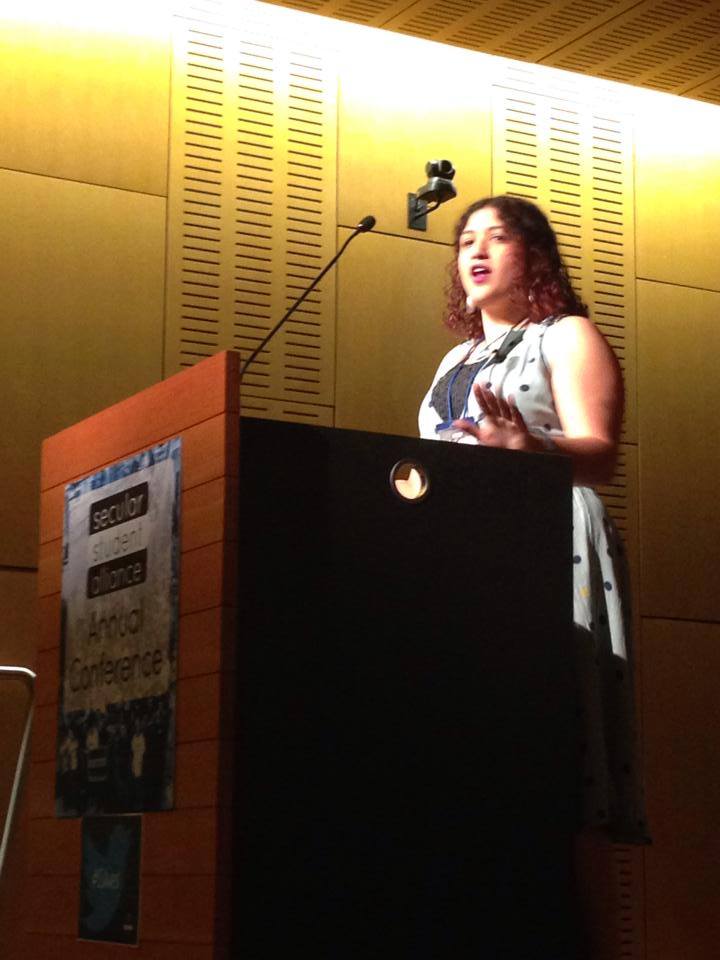
Heina speaking at SSA.
Former Muslim, blogger at Freethought Blogs, and overall bad-ass, Heina spoke about ways in which secular groups can create a more welcoming environment for ex-Muslims and Muslims beginning to doubt. Her talk, “Of Murtids and Muslims,” (a “murtid” is a public apostate) was not only about her experiences coming out as a secular humanist, but considered some of the absurd questions people ask her (and other ex-Muslims) about leaving Islam. “So did your parents try to honor kill you?” “Have you gone through FGM?” It was disturbingly humorous.
What I considered to be Heina’s main point, was that we should respect each others’ individual differences and not generalize and caricature all Muslims with the depictions of some. “Just because you read Ayaan Hirsi Ali’s book,” Heina notes, “does not make you an expert on Islam.” Heina made sure to emphasize the radical diversity that exists in Islam. She also spoke of the some of the issues that people go through when they leave Islam: How do I create a new identity when my old one was intricately tied up in my Muslim community, family, and culture? How do I navigate popular culture when I have missed a bunch of it? How do I find myself in this new secular world? Heina’s answers were refreshingly honest and insightful.
P.S. Aisha (one of Muhammed’s wives) should not simply be reduced to the young person Muhammed married; she was also a war leader, influential Muslim thinker, and someone who contributed greatly to early Islam. This is, of course, Heina’s insight.
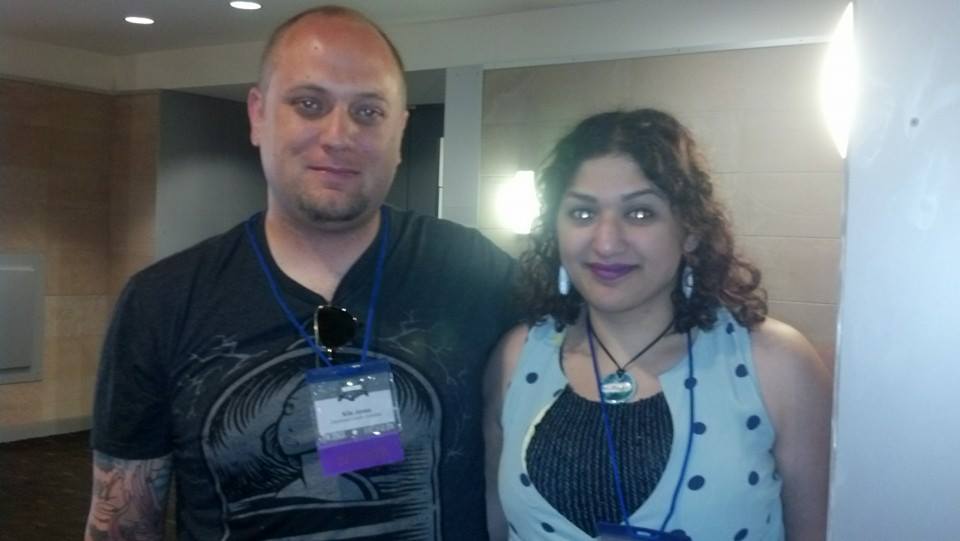
Me and Heina at SSA
Another awesome secular woman I met, was Sarah Morehead.
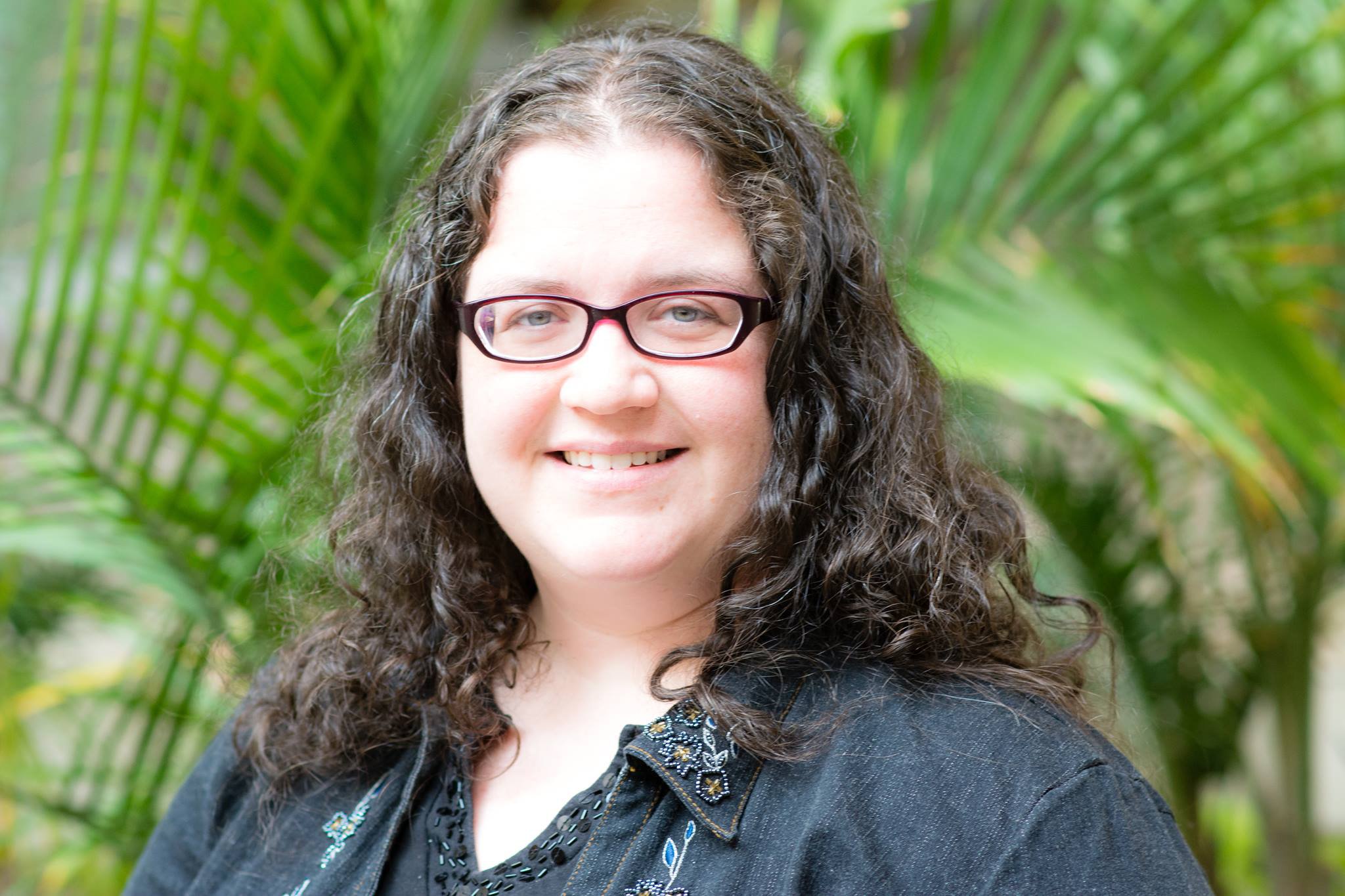
Sarah. Photo from Apostacon.
Sarah is a former evangelical Southern Baptist, Executive Director of the “Recovering From Religion” project, and another overall bad-ass. She spoke on how to start up a Recovering From Religion group on your campus. Here is a blurb about Recovering From Religion,
“If you are one of the many people who have determined that religion no longer has a place in their life, but are still dealing with the after-effects in some way or another, Recovering From Religion (RR) may be just the right spot for you. Many people come to a point that they no longer accept the supernatural explanations for the world around them, or they realize just how much conflict religious belief creates. It can be difficult to leave religion because family and culture put so much pressure on us to stay and pretend to believe the unbelievable. If this is you, we want to help you find your way out. Don’t let people convince you that you just didn’t have ‘enough’ faith, or that you just haven’t found the “right” religion.”
Sarah and I chatted (and often laughed) about our old experiences as conservative Christians. We discussed some of the funny language (Christian-eze) we used to use, the various levels of guilt and shame that were cast upon us, and how science helps explain some of the interesting displays of piety often seen at Pentecostal services. Sarah’s jovial and welcoming demeanor was calming, and as an Executive Director for a project aimed at helping people “recover” from religion, I cannot think of a better person for the job.
Lyz. Photo by SSA.
The last woman I have in mind is Lyz Liddell.
Lyz is the Director of Campus Organizing for the Secular Student Alliance. I have an interview I did with her a while back, on this very blog! Besides running around with her headset on, standing on chairs for announcements, and generally keeping the world of SSA from not crumbling into oblivion, Lyz is a great motivation and example. If you are ever interested in starting a SSA group on your campus, talk to her.
To all those who attended this years SSA West, or who are involved with helping secular students: Unite!
Kile Jones holds a Bachelors of Theology (B.Th.) from Faith Seminary, a Masters of Theological Studies (M.T.S.) and a Masters of Sacred Theology (S.T.M.) from Boston University, and is a current Ph.D. in Religion student at Claremont Lincoln University. He also holds a Certificate in Science and Religion from the Boston Theological Institute. Mr. Jones has been published in Zygon: Journal of Religion and Science, Philosophy Now, Free Inquiry, World Futures, Human Affairs, and the Secular Web. He is the Founder/Editor-in-Chief of Claremont Journal of Religion (www.claremontjournal.com), and is the Founder/Director of Interview an Atheist at Church Day (interviewatheists.wordpress.com).
When I was a little girl, I used to be afraid. I was afraid of the dark. I was afraid of thunderstorms. I remember once cowering on the floor in the back seat of the car waiting for my dad to come take us home. My dad, who was a Methodist Minister, was too busy talking about God to really notice my reaction to being there in the back seat of the car during that terrible storm. Instead, he just kept busy, talking about God to other grown ups—talking in a way I did not understand, or found incredibly boring and long winded, sometimes even just a little frightening.
But Thunderstorms filled in a gap I did not know I had. A gap between my tiny self and the awesome Reality I have since come to know in a very different way. So when I would hear thunder, I thought of it as coming from God. I would begin this conversation with the Awesomeness of It asking moral questions: you know about good and bad. The thunder would seem to provide direct answers. Was that the voice of God?
Isn’t that how so many people think of God: an awesome and overwhelming omnipotent presence—with a voice that roars?
One dark night, during another storm, maybe my father heard me crying. He sat me on his lap and told me, in his quiet voice, how God had promised He would never again destroy the world by water. The sign of this promise, he said to me, was the Rainbow… the place where water, light and power combine to show color and beauty. That was my first experience of transcendence. From that time forward I would seek that loving nurturing experience of the Ultimate. Continue reading ““Papa Don’t Preach”: TED-like Talks at Malmo Nordic Women’s Forum May 2014″
My joy is rebellion, and so is my passion,
my excitement, and even my sexuality,
but only here where truth is kept secret.
Where joy exploding in my vocal cords
and coursing through my limbs is
silenced or censored looked upon as foreign
in this house haunted by sad spirits.
Where my passion rising above the lull
of everyday existence, more in tune with
childlike exuberance is drowned out by
the endless buzz of television noise.
Where my excitement for learning is
relegated to four walls of my blue bedroom,
and conversation and connection propels
me from our first floor to my sister’s
basement apartment.
Where my sexuality is cloistered inciting
fear that even its refined expression would
lead to some mythical disaster in which
men would prey on my delicate femininity.
Where my mind has constricted from being,
asked why I can’t force myself to be satisfied
with a linear spiritual existence or someone’s else
fears and expectations for my life.
My joy is rebellion, and so is my passion,
my excitement, and even my sexuality,
but with love as my fuel, I will be
a rebel with a cause and that cause
will be enlivened truth.
Postlude: As an American Muslim women of African Caribbean, Native American, and European decent, this poem is a reflection on the remnants of both historical trauma and being partially raised in an ultra-conservative community . An experience I am still continuing to heal from. In essence, this is a deeply personal and poetic reflection on my own experience of how intergenerational trauma is often compounded by the practice of literalist interpretations of religion, particularly in my case, Islam. I am continuing a ten year journey in rediscovering my true cultural and spiritual heritage that had been partly denied me. In writing this piece, I hoped to gain clarity on my path to heal and becoming a healer through a more fluid engagement with my own faith, while learning and benefiting from other faith traditions. Through a full engagement with Sufism, an integral part of Islam’s sacred tradition, also known as the science of purification (Ihsan), I hope to continue on my journey of spiritual renewal and healing and to aid the world in healing from the fear and numbness that plagues us as moderns.
Safa N. Plenty is an educator and mental health counselor, who will be pursuing a Ph.D at Claremont Lincoln School of Theology with a focus in spiritual formation and peacebuilding. She holds a Masters of Social Work from Columbia University and an undergraduate degree in interdisciplinary studies with a minor in Africana Studies. For the past two years, she has worked as a K-12 educational contractor and assistant counselor at a local community college. Her research interest include Sufism, Attachment to God, indigenous cosmology, particularly Native American and Somatic psychology. She is also interested in religious mysticism, mindfulness practice in Buddhism and the role of feminism and religion in cultivating a peacebuilding capacity among young Muslim women. She is currently working to develop a faith based healthy relationships program for Mothers and daughters. She enjoys writing poetry, research, and contemplative practice in art.
It is World Pride in Toronto this year. The city is filled with people from everywhere celebrating the gorgeous spectrum of humanity and the right of all human beings to live with dignity. In honor of World Pride and happy coincidence of the beginning of Ramadan, I would like to share one of the earliest sermons I gave at Toronto Unity Mosque reflecting on the struggles of our LGBTQ refugee congregants. I share this to honor those refugees, as well as our other congregants whose journey is no less significant, and also to honor my friends and co-founders of the Toronto Unity Mosque, El-Farouk Khaki and Troy Jackson, as well as Adnan Hussein who was with us from the early days.
In Chilean tradition, the number five has an important meaning regarding the understanding of life. At 5, a person starts school and life in society. At 15, we celebrate the entrance into the young adulthood. At 25, it is expected you have finished college. Age 30 is a good age to get married and by age 35 you’ve probably bought your first house. At 40, it is the perfect time to make an evaluation of your life … At 65, you leave behind all duties and enjoy the rest of the path. Each one of this milestones comes with a celebration or ritual that gathers your family and/or closest friends.
First, there was the kidnapping and threatened sale of Nigerian girls by Boko Haram, which claimed religious acceptability for their acts. As Muslim theologian Jerusha Lamptey opined, this is not my sharia.
Then, the Sultan of Brunei’s horrific new penal code came into effect. Unlike the Nigerian girls, where a social media campaign garnered White House attention, the Brunei law gained visibility because the Sultan–who is dictating law that his track record suggests he does not observe–indirectly owns the famous Beverly Hills Hotel. Hollywood figures have objected to the rules, due to come into effect next year, which would punish proven male-male anal sex with death. (As far as I know, the code does not prescribe any particular punishment for lesbian acts, though the rhetoric has become that the new law prescribes “stoning gays and lesbians.”)
Claims like that of the Sultan or Boko Haram that “Islam” demands implementation of “sharia” ignore the complex reality in which there is not now nor has there ever been a uniform set of identifiable rules that Muslim scholars have agreed on much less that governments in Muslim majority countries have implemented over the centuries. As I wrote elsewhere, so-called sharia laws on the books in Brunei, Nigeria, Pakistan, Iran, Saudi Arabia, or Morocco are not directly revealed by God. They are human products with human histories negotiated in human contexts. The pretense that these laws are straightforward implementations of God’s will not only serves to justify these otherwise unjustifiable rules but also feeds the demonization and dehumanization of Muslims. Though happening on two continents and perpetrated by two quite distinct sorts of actors – a multibillionaire monarch enmeshed in global capitalism and a militant anti-Western, anti-government insurgency – the Nigerian kidnapping and the Brunei law became exhibits A and B for the vilification of sharia. Continue reading “Whose Sharia Is It? by Kecia Ali”
In some alternate universe I would have complete control of what becomes part of discourse about me and about my work. In THIS universe, I just try to set some minimal standards even when it might sometimes not seem generous to the persons who send requests to interview me. Must be some alignment of the stars that I’ve been inundated with requests of late, so I will share some of the “types” of request to ask you–my community at Feminism and Religion blog-sphere–what you make of these, or how better to respond? I seriously contend that all people deserve dignity even when this might clash with the dignity of another human being at times.
First, there are the curiosity seekers from the world of fast pace media sensationalism, perhaps in order to keep up with the latest, hippest media hype they rush in with their requests. While they often include the deadline they are up against, they simultaneously ignore that I might be up against my own deadlines, or just LIVING my life. I’m clear from way back…the kind of work I do is not well suited for the 30 second sound bites, one second for each of the 30+ years I’ve spent to develop coherent reconstruction of Islamic thought and practice, away from the dominant patriarchal paradigm developed during its classical period and maintained until today. By the time I explain even that previous sentence my 30 seconds are up!
Next would be sincere but slightly naive students of modern Islamic thought, Islamic reform or Islamic feminism. At one end they define the parameters of their research problem or their term paper (also on deadline) and then they ask me for references, despite particular interests that may be slightly outside my area of expertise. I usually think and sometimes reply: I am not a reference librarian. At the other end are graduate students who have more detailed inquiry to make and thus send along complex questions each one, in my mind, deserving a mini-dissertation in order to do justice with. I have to temper my desire to assist them with a realistic assessment of how long I can be at their disposal. It is not uncommon to answer one set of questions only to be sent another set. Continue reading “Ask me No Questions by amina wadud”
A recent decision by Brandeis University (founded in 1948 as a nonsectarian Jewish community-sponsored, coeducational institution) to take back its offer to give Ayaan Hirsi Ali an honorary doctorate hit the media with the usual storm over such a controversial figure.
Most of the resistance to her, as a public figure, comes because of her own categorical statements against Islam. Not only does she choose to be an atheist, but she lambasts those who do not make her same choice. Her sweeping statements are meant to galvanize support against the Islam she has suffered from both as a child in a conservative family and as colleague of a brutally murdered film maker. She lost her bid for refugee status in Holland for lying about her past and was taken lovingly into the arms of certain institutions (like the conservative think tank, American Enterprise Institute and tea party politicians, like Pamela Gellar). All manner of official trickery was put in her favor such that she enjoys something millions of her country men and women from Somalia would probably never hope to see: US citizenship and institutional support. Continue reading “No Honor for A Career of Hate by amina wadud”


 Why do it? Sit around a table with people who profess a faith tradition different from our own, drink coffee, nibble on snacks, and talk. What’s the point? No doubt the reasons vary depending on the particular people getting together. Nevertheless, there is the sense that if we “sit down together and talk together about our faiths,” we’ll “break down barriers,” and….then what? Do we think (or hope) that those on the other side of the table will eventually “come around?” Is conversion a goal? Or, perhaps we just want to become more “tolerant” of other faiths.