Hail Mary: The Rosary and Why I Keep Praying by Marie Cartier

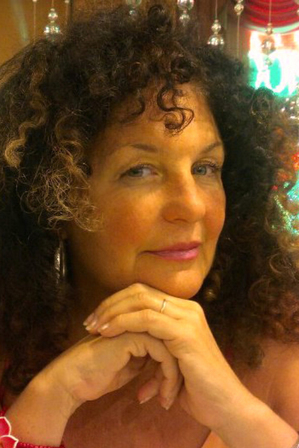
MarieCartierforKCETa-thumb-300x448-72405My mother-in-law is currently in hospice and expected to cross over any time now. My wife is with her. Those two sentences alone—since I am a woman writing this blog—signify historic/herstoric change. I am a woman and I am writing about my mother in law and I am writing that my wife is with her. We are in a sea change regarding gay marriage. I will be allowed bereavement to go with my wife, when the time comes, for the services.

What has not changed in my life is my dependence on traditional prayer. Although I am a witch/Wiccan, have done all kinds of meditation from Transcendental Meditation, and Buddhist chanting, to visualization, spell work, and New Age affirmation—when push comes to shove as they say, I get out the Rosary.

Why? Continue reading “Hail Mary: The Rosary and Why I Keep Praying by Marie Cartier”

Art, Nature, and Spirit by Judith Shaw

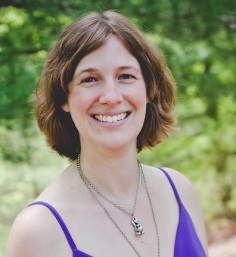
judith Shaw photoThe beauty and the power of the Earth are all around us.  Even in the poorest and most blighted urban environments trees, hollyhocks, sunflowers and other sturdy plants grow up through the concrete.  We are children of the Earth, of the Goddess, who in Her many forms, is the manifest symbol of the sacred Earth.

Most of us love the space we find ourselves in when spending time with nature –  hiking, walking, camping, birdwatching, swimming in the sea, riding a bike, working in our gardens – all activities that help us feel connected to this Earth we walk upon; that help us find an inner peaceful place.

Continue reading “Art, Nature, and Spirit by Judith Shaw”

Stop. Drop. And Pray. by Valentina Khan

543296_10151140607043082_1192980077_n

The other night, it was close to 11:00 pm and I was finally enjoying my own little ‘midnight’ snack and a healthy dose of reality TV when I got a phone call from a cousin I haven’t heard from in quite some time. He is in the East Coast and it seemed too late for a leisure phone call from him. So I answered in a panic, yet, all he wanted was to say “hi” and to talk a little bit about the obligation of a Muslim to pray the five daily prayers. OK, this is odd, I thought, but I guess I could entertain this topic for a few minutes. Might be better for me than the junk TV I was winding down to anyway.

We chatted for a few minutes and he started to get very heated about the requirement of the five daily prayers.  To back up a little, let me paint a quick picture of this eccentric cousin of mine. He is smart.  A New Yorker.  Middle-aged. He has studied at prestigious universities, has traveled the world, and even delved into religion so much so that he used to give sermons on Fridays, the holy day of the week for congregational prayer in the Muslim tradition. His main question for me, “Do you really believe in the flying white horse story?” Continue reading “Stop. Drop. And Pray. by Valentina Khan”

From Evangelical Christianity to Feminist Evangelism by Andreea Nica

AndreeaI always knew I was a feminist, despite my lack of knowledge in the movement and philosophy growing up. I did, however, have the religious support of my family and community to be an Evangelical Christian. I knew all the right words, mannerisms, and behaviors to represent myself as the proper Christian woman. I went on mission trips abroad, wore purity rings, attended sexual purity retreats and church camps, prayed fervently, spoke in tongues (glossolalia), contributed 10 percent of my meager earnings, and above all, fell in love with God.

As a first-generation college student, I was thirsty for knowledge and ready to take on the world. Some of my favorite courses during my undergraduate career included: “Psychology of Women,” “Women, Gender, and Ethnicity,” and “Psychology of Sexuality.” My coursework in gender, sexuality, and the social sciences compelled me to pursue graduate studies in gender, culture, and media at a university abroad. My studies in gender theory and feminist philosophy, and how it intersects with religion and social institutions ignited my spirit.

As a result, my relationship with god suffered. My newfound feminist beliefs were not solely to blame, however. Rather, a variety of reasons contributed to my detachment from god and the Evangelical church which I explain in my post, “Leaving Behind My First Love.” My new feminist identity was the main driver for questioning my relationship with god. Everything from the male-dominated language and rhetoric used in the church, to the discrimination and prohibition of female pastors, to the stringent gender roles expected of congregants. Continue reading “From Evangelical Christianity to Feminist Evangelism by Andreea Nica”

Coming to Consciousness: Eckhart Tolle and Yoga by Elisabeth Schilling

roadBoth Eckhart Tolle and yoga have helped me become more conscious lately. As a Christian, I had always been a bit of a spiritual hypochondriac. Believing in the ultimate external body that had an opinion about my body – how it should feel, how it should be positioned – left me self-doubting and scrutinizing every moment for possible infractions. Christianity is supposed to be the peace that passes all understanding, but I think I had turned it into a moral gage that would never land on perfect for very long.

Furthermore, it was always difficult for me to believe what I was supposed to without being filled with ego about it. But let us face it, as someone who had journeyed outside those fundamentalist leanings, I was still a hypochondriac (it was simply that grad school had given me more physical conditions to be suspicious of) and completely full of ego, perhaps even more so. Except here I mean ‘ego’ not in a reductive way, but in the broader, more all-encompassing way that Eckhart Tolle describes.

One good way to explain ego is to relate the story that is found in Eckhart Tolle’s A New Earth but that I first encountered in Yu Dan’s Confucius from the Heart: Ancient Wisdom for Today’s World. This makes me think it is a familiar story to many people, but perhaps even those people will enjoy reading it here once again. Dan narrates the story as such who also tells us it is a Buddhist tale: Continue reading “Coming to Consciousness: Eckhart Tolle and Yoga by Elisabeth Schilling”

Thealogy of the Ordinary by Molly

crop027

The Goddess Gaia is alive
In this time and in this space
She speaks in sunrises
And waves against the shore
She sings with the wind
She dances in moonlight
She holds you close
Your heart beats in time with hers
A great, grand hope and possibility
For this planet…

Over the last two months, I have been listening to a wonderful telesummit about priestesses. I am also a huge fan of the radio show, Voices of the Sacred Feminine. However, as I listen to both, I sometimes find myself wondering if walking a Goddess path is also viewed as synonymous with, “believe everything, question nothing.” Crystal essences, gemstone healing, soul contracts, past lives, spirit guides, astrology, the many realms and dimensions of the occult, mystical, New Age and metaphysical. Is wholesale suspension of logic required to join hands with the Goddess? Is deft management of the tarot essential to the priestess path?  Is excavating my “inner masculine” relevant or appropriate? Must I ascribe to “enlightened” tenets like, “you are not your body,” “I am a spiritual being having a spiritual experience” and “we made an agreement to do this work before we showed up in this body at this time and place” in order to move forward? Continue reading “Thealogy of the Ordinary by Molly”

Women are like countries: both need to fight hard for independence by Oxana Poberejnaia

oxanaRita M. Gross in her book Buddhism After Patriarchy presents portraits of prominent women from Buddhist history. Some stories are extraordinary for the brutal details they contain. For example, Yeshe Tsogyel was raped, kidnapped and beaten by her suitors to the point that her back was a bloody pulp. She subsequently escaped to meditate in a cave.

In a patriarchal society, religious fervour is not recommended for women. Submission and obedience – yes. The life of an ascetic, a wanderer or a hermit – no. A son is relatively free to pursue religious activities (especially if he is one of the younger children and the issue of inheritance is sorted out). However, all daughters are better off tucked into a marriage. Supporting your husband and sons on their spiritual path – yes. Independent striving away from family life – no. Continue reading “Women are like countries: both need to fight hard for independence by Oxana Poberejnaia”

No Ramadan Gloom and Doom by amina wadud

amina 2014 - croppedThe first blog I read about Ramadan this year was full of the usual self-righteous pontification that takes this occasion to remind people to do such and such at this or that level. Who is the target audience for such an approach, I wondered? It seemed to operate on the basic idea that Muslims will NOT do the right thing unless someone tells them to. Mostly, though I noticed the gloom and doom of it and I decided then to make my Ramadan focus on joy.

First a quick reminder about the basics: Throughout the 9th lunar month, Muslims are obliged to abstain from food, drink and sexual intercourse during the day. It goes on like this for 29-30 days. There are also points of difference about some details of the fast, like how we determine which day to start. Either we actually cite the new moon, go by advanced calculations of the new moon, or some combination of these two. This leads to healthy chaos at the beginning because no one knows when the first day will, be but must prepare in order to get in that pre-dawn meal, called suhur. I say, healthy chaos, not only because I’m a bit of an anarchist, but also because I like that no one has complete control about such an important decision. Continue reading “No Ramadan Gloom and Doom by amina wadud”

The Mosaic Language of God by Andreea Nica

Andreea Nica, pentecostalismThroughout my “bible-thumping, smitten with God” years, I scribbled countless thoughts and prayers in four devotional journals. Recently I came across these journals, wiping away the years of dust accumulated. As I have been detaching from the Pentecostal god, it was a painful, downright mortifying experience to read through my past communication with god. This god seemed so foreign now given my liberated, enlightened, evolved self. I remember writing to and about Him, but I couldn’t help thinking how dysfunctional and convoluted the language I used really was.

I love you Father. Take me…surrender me to your will…your ways. Let me not lean on my own understanding and foolishness.

Mary Daly in Beyond God the Father advocates, “Time to go beyond God the Father. Don’t you see? If God is male, then the male is God. Reclaim the right to name your self, your world, your God. The liberation of language is rooted in the liberation of ourselves. Be a wild woman…God is not A Being. God is Be-ing.”

Many social scientists contend that language is the foundation of our socially constructed realities. We use language as a creative tool and guide to frame our perceptions of the world around us. We also use language to create our own unique creative expressions. That even though we share and appropriate from the accessible pool of creative expressions, each individual designs and discovers their own true form. Continue reading “The Mosaic Language of God by Andreea Nica”

Confession by Darlena Cunha

Darlena family portraitGood afternoon, Fr. John. I’m here for confession. No, I’d like the curtain back, please. I want you to see my face. I really need to talk to you, get my bearings. But this confession will not be solely about my sins, for, unfortunately, I am not sure I will ever change my ways.

Does that exclude me? Is Catholicism a club? Should my twin daughters, five years old, be subjected to scorn and pity that their mother is a sinner? That they were born in sin? They don’t look like sin, to me. They are light, and love, and happiness. They have shaped me, taught me, brought me into the woman I was meant to be. Is it wrong of me to want to do the same for them? Is it better to turn me out and lose two potentially pure beings who will make their own choices in their religion and could be devout Catholics, or put up with me in the hopes that my children will be more worthy?

I’m here because I like you, you know. I like Catholicism. It’s in my blood, my heritage, my family. And where I’m from, everyone belongs.

I was baptized, received communion, was confirmed, attended youth group. I went to an all-girls Catholic college my freshman year. Full-ride because I’m fairly smart, and I work hard. That’s where I lost Him, you see. I don’t know how, or why, but one early fall day when the leaves were crisp and bright but not yet falling, I looked up at the chapel on campus, and He was gone. Or He seemed gone. Continue reading “Confession by Darlena Cunha”