Good Theology is Feminist Theology by Carol P. Christ

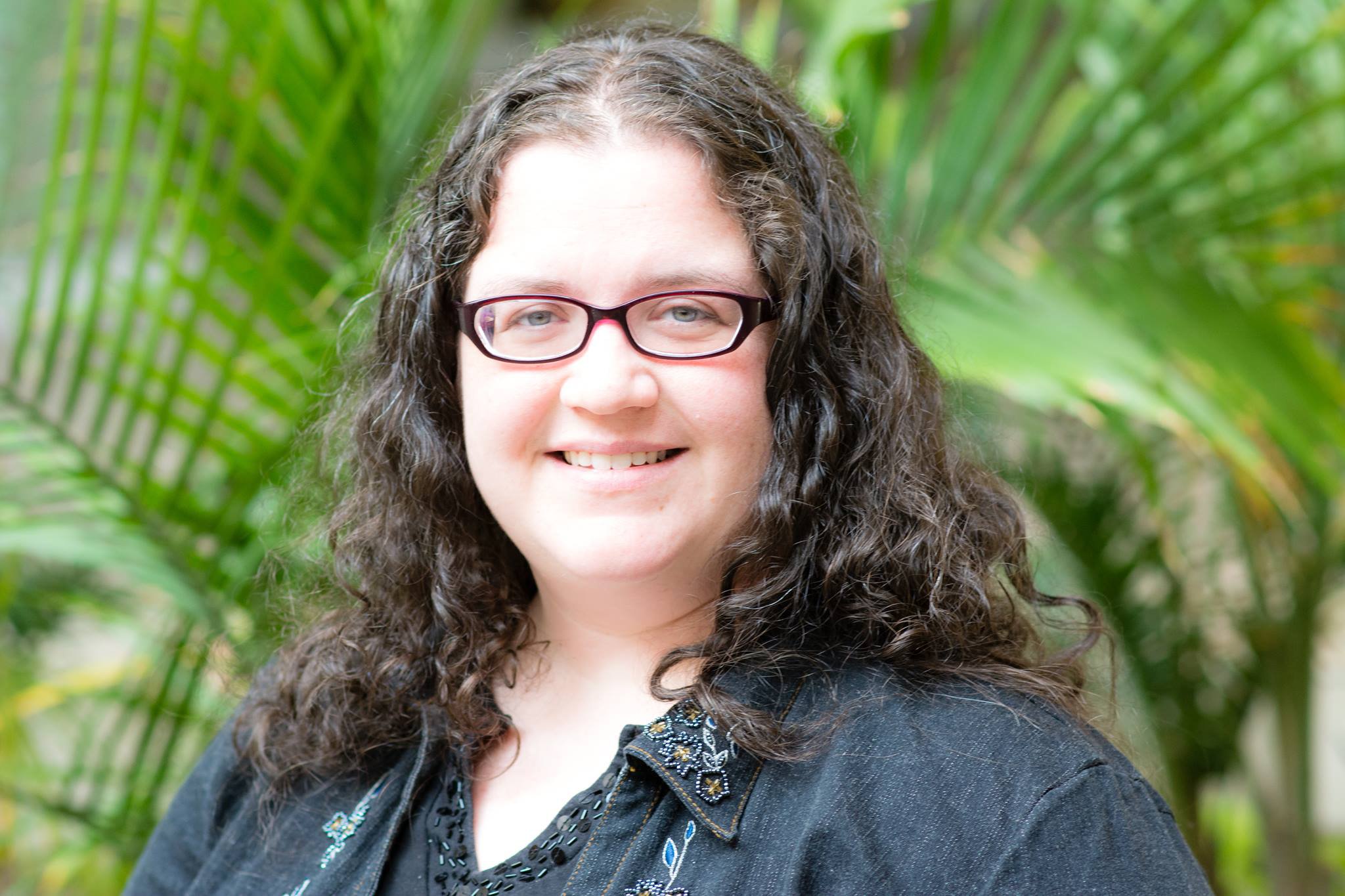
carol christJudith Plaskow and I are just now completing the draft of the manuscript of the book we have been working on for the past 2 ½ years. It has a new title: Two Views of Goddess and God for Our Time.* I have been thinking of little else for the past few weeks. An editor who is considering our book said that she was hoping we could address our book to an audience larger than the feminist theology community. Thinking about this, a light dawned: if feminist theology is right that traditional theology denies the full humanity of women, then good theology must be feminist theology. Our work is not tangential to the theological mainstream, but is at its center.

We have revised the Introduction and Conclusion to the book with the assumption that our work should appeal not just to other feminists, but to a wide range of intelligent readers and thinkers. The fact that we were asked to participate in a dialogue about the nature of God in Tikkun magazine’s Summer 2014 inspires us to hope that we are right that feminist theology is becoming part of the progressive theological mainstream.

We began our new book because – though we agree about many things – we disagree about God and Goddess. After working together for decades with shared commitments to feminism, justice, the environment, and the flourishing of life, it was a bit of a shock to come face to face with our differences on such a major theological issue as the nature of divinity. We began our discussion with a shared critique of the God of Biblical traditions as a dominating male other. We agreed that this God has justified not only male domination of women, but other forms of domination as well, including myriad forms of injustice and war. We questioned the theological doctrine of divine omnipotence in light of the holocaust, the on-going domination of one half of the human race, and other oppressions including slavery, colonialism, and war.

But as we articulated our own views of divinity in light of this critique, our views diverged: Judith concluded that God is an impersonal power of creativity that is the ground of all being and becoming, including all good and all evil. Carol understands Goddess as the intelligent embodied love that is the ground of all being and becoming, a personal presence who cares about the world and all individuals it, but who does not have the power to intervene with a mighty arm to set things straight.

We both can give reasons for our views, and in the course of our theological discussion in our book, we give many. Our different views of Goddess and God are significant both theologically and personally. Is God or Goddess good? Or does the divine power include both good and evil? Does Goddess or God care about the fate of the world and our individual lives? Or are love, care, and understanding qualities that are not appropriately attributed to divinity? Is there someone listening to us when we worship, pray, or meditate? Or is addressing Goddess or God a metaphoric way of speaking that inspires feeling in individuals and communities but not in a divine individual? Is the notion that Goddess is love likely to inspire us to love the world more deeply and to promote its flourishing? Or does the notion that God includes both good and evil remind us more clearly of our own capacities to do both?

The fact that we could not agree about the nature of Goddess or God despite our many attempts to persuade each other with rational arguments, led us to conclude that the philosophical, theological, and moral reasons we give in justification of our views are only part of the story. All of these reasons are situated in our individual bodies and in communities and histories. We do not believe there is any simple link between experience and theological views. On the other hand, our experiences form the matrix from which we all begin to think theologically. As we develop our theological views, we constantly test them against our experiences, asking if they ring true, if they help us make sense of our personal, communal, and social lives.

In the first chapters of our book Judith and I locate our theologies in the contexts of our lives. We not only articulate our views of Goddess and God, but also situate them in community. Judith is committed the feminist transformation of Judaism, while I am one of the early voices of the feminist Goddess movement. In the concluding chapters we probe and query each other’s views–from experiential, rational, and moral perspectives. We are hoping to model the kind of feminist dialogue we would like to see more of—one that crosses religious boundaries and is not afraid to probe the differences in standpoints and theological views.

We also hope that our book will inspire a lively feminist–and wider–dialogue about the nature of divinity—something that has been oddly missing heretofore in feminist theology. Engaging in a thoroughly open and honest theological debate is not always easy—even among friends. But we can both testify that doing so has not only illuminated important issues in feminist theology, but also has strengthened our friendship.

*Much this essay is adapted from a draft of the book.

Carol P. Christ is looking forward to the fall Goddess Pilgrimage to Crete which she leads through Ariadne Institute.   Space available.  Carol can be heard in a recent interviews on Voices of the Sacred Feminine, Goddess Alive Radio, and Voices of Women.  Carol is a founding voice in feminism and religion and Goddess spirituality. Her books include She Who Changes and Rebirth of the Goddess and with Judith Plaskow, the widely-used anthologies Womanspirit Rising and Weaving the Visions.  Follow Carol on GoddessCrete on Twitter.

The Mosaic Language of God by Andreea Nica

Andreea Nica, pentecostalismThroughout my “bible-thumping, smitten with God” years, I scribbled countless thoughts and prayers in four devotional journals. Recently I came across these journals, wiping away the years of dust accumulated. As I have been detaching from the Pentecostal god, it was a painful, downright mortifying experience to read through my past communication with god. This god seemed so foreign now given my liberated, enlightened, evolved self. I remember writing to and about Him, but I couldn’t help thinking how dysfunctional and convoluted the language I used really was.

I love you Father. Take me…surrender me to your will…your ways. Let me not lean on my own understanding and foolishness.

Mary Daly in Beyond God the Father advocates, “Time to go beyond God the Father. Don’t you see? If God is male, then the male is God. Reclaim the right to name your self, your world, your God. The liberation of language is rooted in the liberation of ourselves. Be a wild woman…God is not A Being. God is Be-ing.”

Many social scientists contend that language is the foundation of our socially constructed realities. We use language as a creative tool and guide to frame our perceptions of the world around us. We also use language to create our own unique creative expressions. That even though we share and appropriate from the accessible pool of creative expressions, each individual designs and discovers their own true form. Continue reading “The Mosaic Language of God by Andreea Nica”

Women at the Secular Student Alliance Conference by Kile Jones

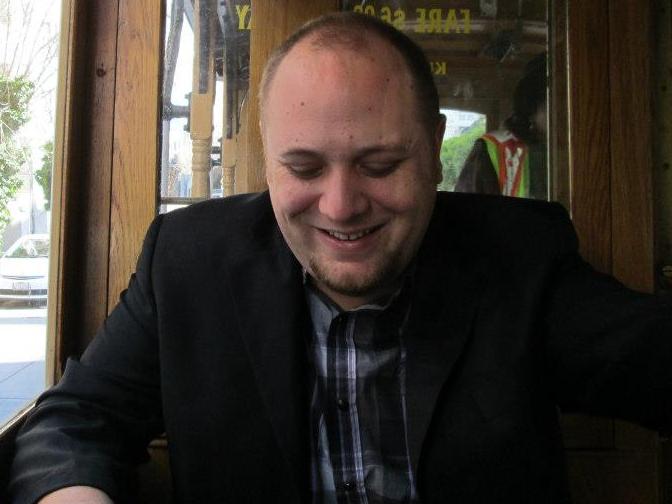
KileA few days ago I had the pleasure of giving a talk at the Secular Student Alliance Conference on how non-believing persons can work with Churches.  Amidst the chaos of conferences–managing your time, deciding which talks to attend, and making sure you have enough water (it was a Burning Ring of Fire outside in Tempe, AZ)–I got to meet some pretty incredible secular women.

One of them was Heina Dadabhoy.

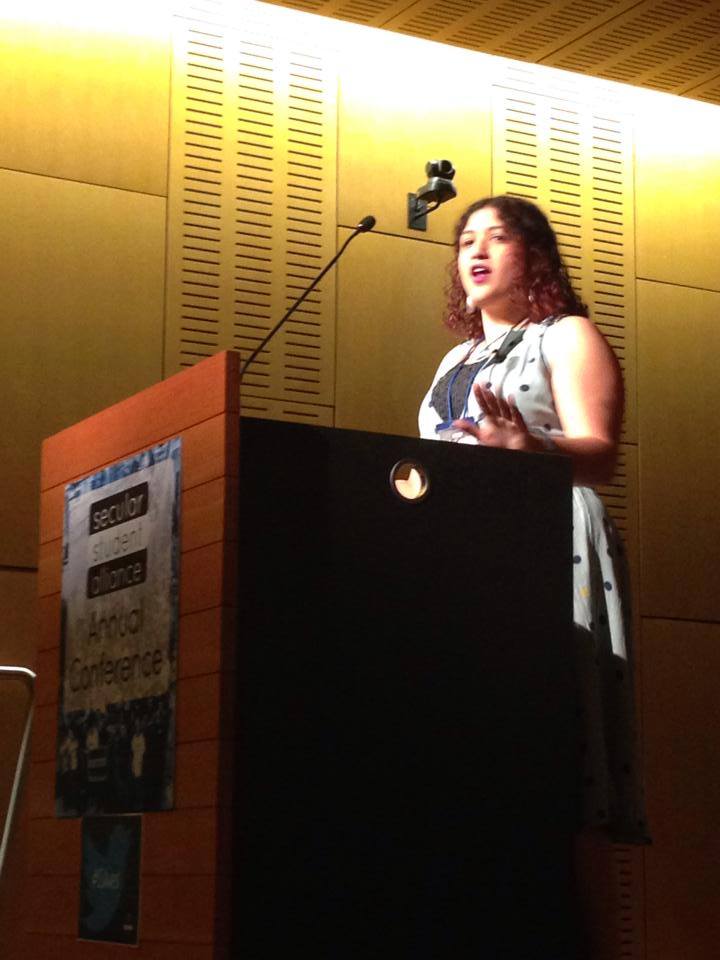
Heina speaking at SSA
Heina speaking at SSA.

Former Muslim, blogger at Freethought Blogs, and overall bad-ass, Heina spoke about ways in which secular groups can create a more welcoming environment for ex-Muslims and Muslims beginning to doubt.  Her talk, “Of Murtids and Muslims,” (a “murtid” is a public apostate) was not only about her experiences coming out as a secular humanist, but considered some of the absurd questions people ask her (and other ex-Muslims) about leaving Islam.  “So did your parents try to honor kill you?”  “Have you gone through FGM?”  It was disturbingly humorous.

What I considered to be Heina’s main point, was that we should respect each others’ individual differences and not generalize and caricature all Muslims with the depictions of some.  “Just because you read Ayaan Hirsi Ali’s book,” Heina notes, “does not make you an expert on Islam.”  Heina made sure to emphasize the radical diversity that exists in Islam.  She also spoke of the some of the issues that people go through when they leave Islam: How do I create a new identity when my old one was intricately tied up in my Muslim community, family, and culture?  How do I navigate popular culture when I have missed a bunch of it?  How do I find myself in this new secular world?  Heina’s answers were refreshingly honest and insightful.

P.S. Aisha (one of Muhammed’s wives) should not simply be reduced to the young person Muhammed married; she was also a war leader, influential Muslim thinker, and someone who contributed greatly to early Islam.  This is, of course, Heina’s insight.

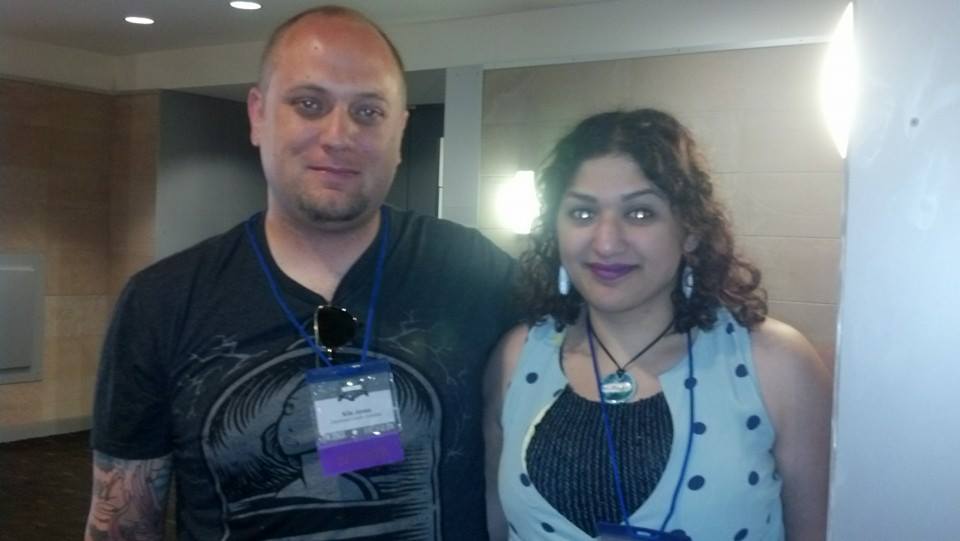
Me and Heina at SSA
Me and Heina at SSA

Another awesome secular woman I met, was Sarah Morehead.

Sarah. Photo from Apostacon.

Sarah is a former evangelical Southern Baptist, Executive Director of the “Recovering From Religion” project, and another overall bad-ass.  She spoke on how to start up a Recovering From Religion group on your campus.  Here is a blurb about Recovering From Religion,

“If you are one of the many people who have determined that religion no longer has a place in their life, but are still dealing with the after-effects in some way or another, Recovering From Religion (RR) may be just the right spot for you. Many people come to a point that they no longer accept the supernatural explanations for the world around them, or they realize just how much conflict religious belief creates. It can be difficult to leave religion because family and culture put so much pressure on us to stay and pretend to believe the unbelievable. If this is you, we want to help you find your way out. Don’t let people convince you that you just didn’t have ‘enough’ faith, or that you just haven’t found the “right” religion.”

Sarah and I chatted (and often laughed) about our old experiences as conservative Christians.  We discussed some of the funny language (Christian-eze) we used to use, the various levels of guilt and shame that were cast upon us, and how science helps explain some of the interesting displays of piety often seen at Pentecostal services.  Sarah’s jovial and welcoming demeanor was calming, and as an Executive Director for a project aimed at helping people “recover” from religion, I cannot think of a better person for the job.

Lyz.  Photo by SSA.
Lyz. Photo by SSA.

The last woman I have in mind is Lyz Liddell.

Lyz is the Director of Campus Organizing for the Secular Student Alliance.  I have an interview I did with her a while back, on this very blog!  Besides running around with her headset on, standing on chairs for announcements, and generally keeping the world of SSA from not crumbling into oblivion, Lyz is a great motivation and example.  If you are ever interested in starting a SSA group on your campus, talk to her.

To all those who attended this years SSA West, or who are involved with helping secular students: Unite!

Kile Jones holds a Bachelors of Theology (B.Th.) from Faith Seminary, a Masters of Theological Studies (M.T.S.) and a Masters of Sacred Theology (S.T.M.) from Boston University, and is a current Ph.D. in Religion student at Claremont Lincoln University.  He also holds a Certificate in Science and Religion from the Boston Theological Institute.  Mr. Jones has been published in Zygon: Journal of Religion and Science, Philosophy Now, Free Inquiry, World Futures, Human Affairs, and the Secular Web.  He is the Founder/Editor-in-Chief of Claremont Journal of Religion (www.claremontjournal.com), and is the Founder/Director of Interview an Atheist at Church Day (interviewatheists.wordpress.com).

#YesAllWomen, the Darwin Debate, and the God Complex by John Erickson

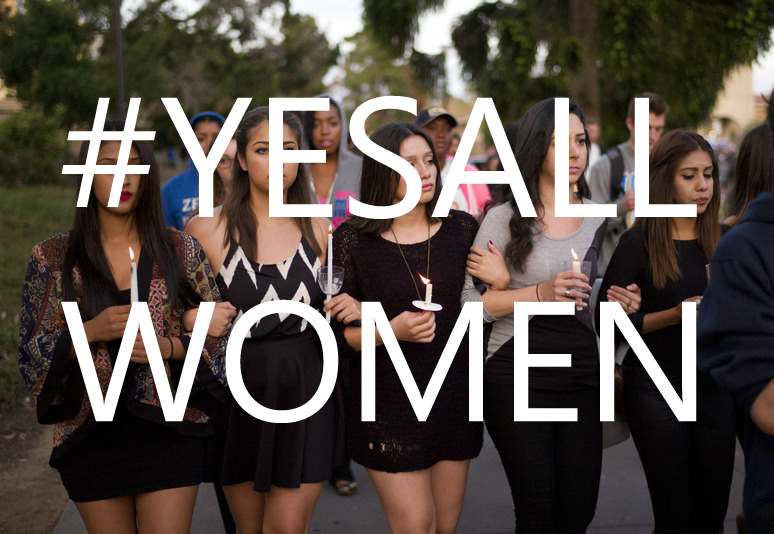
#YesAllWomen proved that although not all men commit horrible crimes against women, the men that often get the headlines and create the most controversy are the ones that need to be watched out for.

John EricksonThe one thing I typically will choose to do on the rare occasion that I’m able to sit down and relax is to watch a documentary.  While some people may go to the gym, read a book, or hang with friends, I typically choose to stay in, nestle up on my couch, and learn.  While on my last bout of relaxation, I chose to watch the HBO documentary Questioning Darwin. Although it offers very little new insight into the evolution vs. creationism debate, it does offer an interesting new way to look at the recent social media hashtag war feminists, allies, and supporters found themselves in over the #YesAllWomen movement that took the world by storm.

yesallwomen

Now, before I discuss #YesAllWomen, I have to admit that I did not enter into the safe space women created for themselves to tell tales of the horrible things they have and have had to face on a daily basis.  I firmly believe that men should not have entered into the digital space Continue reading “#YesAllWomen, the Darwin Debate, and the God Complex by John Erickson”

Theological Reflection: Outward, Not Inward by Kelly Brown Douglas

Rev.-Dr.-Kelly-Brown-Douglas - Version 2I was asked recently what frustrates me most about theology. I am a theologian, and love doing theology. Nevertheless, I do have my moments of frustration with the theological enterprise. I am most frustrated when theology loses its dynamic edge and focus. Too much of theological reflection has become “navel gazing” falling prey to the infamous accusation of Medieval theology, that is, wondering “how many angels can dance at the end of a pin.” It seems to me, that we must not lose sight of the fact that the foundation of theological reflection is the revelation of god, which is nothing less than god’s movement that is god’s dance, in human history. All that we know about the transcendent reality is made known to us by that reality making itself known by entering into our world. The best of theological reflection, then, is a response to that revelation, wrestling with the meanings and challenges of god’s revelation to us. Again, far too often our theology is consumed by intellectual strivings as opposed to struggling with god. We, as theologians and religious thinkers, find ourselves debating the essence of god—who god is in god-self, what we call the godhead—as opposed to who god is in relationship to us and our world. Too often we focus our attention on the appropriate pronouns and nouns that we should use to define god as opposed to the verbs that describe the very movement of god in our world. And so, despite the fact that we do not know god in “god-self” or in the god head, theological reflection is spent debating it, and has a long history of debating it. In the meantime, the world stays just as it is—which is anything but a reflection of the gods/goddesses we claim to follow. Even as we can assume that who god reveals god-self to be is a reflection of the very essence of god, theological reflection is best served not by this upward, inward turn to god, but by following god outward into our world. As god moves toward us and into our world, so too are we to move toward one another and into the world, for this is where we will find god. Theological reflection must not be about who god is in god-self, but rather about who god is for us and who we are to be for god. Theology, as it is essentially grounded in the notion that god acts first, is at best an attempt to discern how god is acting so that we can act back in a responsive and responsible way. So what does this mean? Continue reading “Theological Reflection: Outward, Not Inward by Kelly Brown Douglas”

Songs for the Soul by Elise M. Edwards

Elise EdwardsDuring the Christian season of Lent, many Christians focus on spiritual practices or disciplines that bring them closer to God. This year, I did not really engage in this type of reflection until the end of Lent. I have been wrapping up my first year teaching college students full-time, I’ve been focused on several writing projects, and I’ve been traveling. I did not intentionally think about spiritual practices until I participated in a silent retreat before Holy Week and traveled first to spend the holiday with my family and then again to mourn and remember the life of my aunt.  I reflected on them when I most needed them.

Continue reading “Songs for the Soul by Elise M. Edwards”

What’s Good About Good Friday? by Barbara Ardinger

Barbara ArdingerI grew up Calvinist and Republican in a suburb of St. Louis, Missouri. My parents belonged to—but rarely attended—Immanuel Evangelical & Reformed Church in Ferguson, Missouri. When children reached the age of twelve, they were “confirmed” in the church, which meant taking a Bible class taught by the minister, Rev. Press, and then going through a ceremony that made them eligible to take communion, which in that church was grape juice and tasteless crackers. Transubstantiation? I learned what the word meant, but I had (and still have) no idea if it really happens.

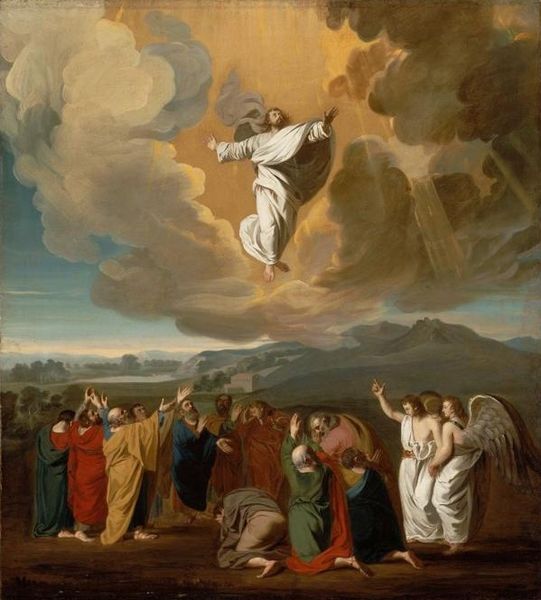
Ascension by John Singleton Copley (1775)

I’ve always been one to ask untidy questions, so of course I asked a lot of questions in confirmation class. God tells us half a dozen times in the Old Testament, for example, that he is a “jealous god.” How, I asked Rev. Press, can a jealous god be a loving god? What’s good about a jealous god? (A couple decades later, when I was studying the Aramaic Bible as translated by George M. Lamsa from the Pshitta manuscripts, I learned that the correct word is “zealous.” That was no help. I still don’t see much good in either jealousy or zealotry.) A week or two later, I asked Rev. Press, “What’s good about Good Friday?” Shortly thereafter, my mother advised me to stop asking questions in confirmation class. (Can we assume she’d received a pastoral phone call?) Continue reading “What’s Good About Good Friday? by Barbara Ardinger”

Gendered Imagery of God (Part 2) by Elise M. Edwards

Elise Edwards

In my previous post, I shared some of the ways in which I’ve been wrestling with gendered imagery for God, the first person of the Christian Trinity often referred to as God the Father. In this entry, I’d like to reflect on ways I am reconsidering the gender of the Christ.

It is only recently, after reading Melinda Bielas’ post “Waiting for Jesus… I mean, Superman” (December 17, 2013), that I began to question male language for the Christ. I got into an interesting conversation with Grace Kao in January about it. My thoughts on this topic are still unformed and more theologically “speculative” than I usually share on this site, but I’d love to hear what you think. I think it is important for Christian feminists to consider the doctrines of the faith and assess where they support the co-humanity of women and when they degrade it. Continue reading “Gendered Imagery of God (Part 2) by Elise M. Edwards”

Watching “Noah” Brought Me Closer to Humanity by Andreea Nica

Andreea Nica, pentecostalismAs a child, I enjoyed the story of Noah’s Ark. I would often imagine pairs of animals running for safety in Noah’s architecturally majestic haven. Practical questions didn’t enter my mind during this blissful period of naivety. I ignored the part where God expressed regret in creating humanity, or when Noah gets drunk and lies bare naked for his children to cover his shame. My bible study teacher would explain to us that the point of the story was that Noah, a holy man, trusted God and carried out his will.

Disclaimer: I understand that the film is not meant to be an exact representation of the story in the bible, but loosely based around it. Also, if you plan on watching the film, read at your discretion.

In the film, Noah’s character is played by leading actor Russell Crowe, who appears strong, confident, and zealous in his trust in God – all necessary qualities to fulfill God’s demand of killing off the rest of humanity because of their wickedness. Later in the film, Noah realizes that he and his family are also wicked leading to his revelation, ahem, God’s revelation, that humanity must cease with Noah’s family. This doesn’t pan out too well with his children and wife. It was also bad news for Emma Watson, the orphan girl Noah’s family saves and raises as their own, who after accepting that she is barren is miraculously healed and gives birth to two girls. Noah decides that the female infants must die according to God’s will to end humanity. Continue reading “Watching “Noah” Brought Me Closer to Humanity by Andreea Nica”

IS EVIL PART OF THE NATURE OF REALITY AND DIVINITY? by Carol P. Christ

 carol-christWhat is the origin of evil? Is it innate in human nature or even in the nature of the universe? Judith Plaskow and I discuss this question in our forthcoming book Goddess and God in the World and this is a chance to listen in our conversation.

I am responding to Judith’s allegation that in imagining Goddess as loving and good I am fantasizing an ideal deity who exists apart from the evil-and-good world that we know. Judith speaks of an “evil impulse” in human beings which she considers to be innate in human beings and in the nature of reality. Judith says that my “defense” of the goodness of God comes down to “the traditional free will defense.” She also questions my view that human beings can 

I argue that it does not because the traditional free will defense imagines an omnipotent God who existed before the creation of the world. Then I continue:

I think what you meant to say is that like those who invoke the traditional free will defense of the omnipotent God, I attribute humanly chosen evil entirely to human beings—and not to Goddess or God. Continue reading “IS EVIL PART OF THE NATURE OF REALITY AND DIVINITY? by Carol P. Christ”