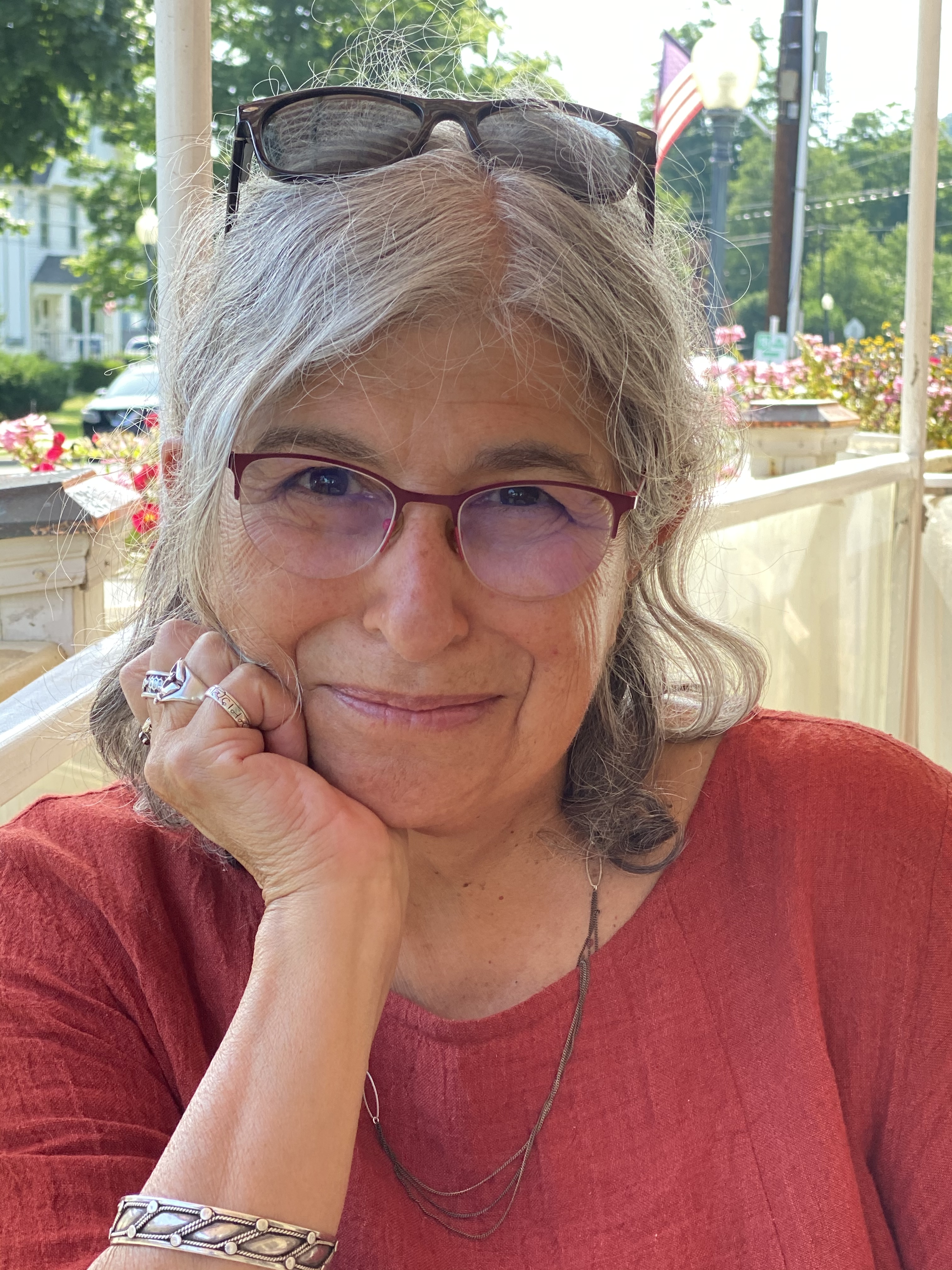
On Tazria-Metzora and Covid: Saving Lives, Saving Worlds, and Saving the World by Ivy Helman

It is often said that every year when you read the same Torah passages, you are in a different place, spiritually and otherwise.  Therefore, one will always be learning new meanings and discovering new insights from them.  No more is that true than in this week’s Torah parshah Tazria-Metzora.  

Tazria-Metzora (Leviticus 12:1- 15:33) is a double parshah containing a list of rules concerning ritual purity and impurity, mostly having to do with leprosy.  The parshah begins with the requirement for women a certain number of days after childbirth to immerse in a mikvah as well as offer animals for sacrifice at the temple.  Then, it commands the circumcision of a boy child at 8 days of age.  The next three chapters discuss an extensive list of what has to be all possible encounters with leprosy, including the infection of a home itself. The parshah prescribes various interactions between lepers, homes with leprosy, and the kohenim.  Mostly, the kohenim decide if the skin lesions people or houses have are leprosy, another skin disease or harmless.  If diseased or if the lesions are inconclusive, the people and houses enter quarantine. The kohenim also consult on whether a leper or house is healed and how to go about atonement.  For atonement, former lepers immerse in the mikvah and pay for the kohenim to offer specific sacrifices at the temple. Homes also undergo a type of ritual purification by the kohenim when they have been healed of leprosy. This double parshah ends with immersion requirements for emissions of semen and menstrual blood. 

Historically, there are two considerations, which I have discussed in other posts, to address first. To begin with, there is the ancient world’s understanding of disease as punishment for sin.  This sin can either be the sin of the diseased person or punishment from generations past.  For more about how this cycle of sin, punishment, repentance and atonement work as well as my thoughts on it, see here.    

Continue reading “On Tazria-Metzora and Covid: Saving Lives, Saving Worlds, and Saving the World by Ivy Helman”

Aren’t We All Divine Children? by Janet MaiKa’i Rudolph


Consider the following four birth stories:

  1. A high priestess became pregnant in a manner that was forbidden in her society. She gave birth to a baby boy. Fearing for her child’s life, she fashioned a basket of rushes and cast him into a river. He was retrieved by a man named Akki whose name means “the drawer of water.” Akki raised the boy.
  2. A son was born to a young princess who had been forced to keep her pregnancy a secret because it was forbidden. When her son was born, she placed him in a basket and floated him down the river. He was found and raised by foster parents. He grew up to become a noted warrior, speaker and eventually a king. 
  3. A young boy accidentally ingested some drops of star-studded wisdom from the cauldron of a goddess and, in this manner, was suddenly awakened to divine knowledge. The goddess grew furious that her divine wisdom was stolen. Desperate to escape her life-threatening wrath, a wild chase ensued. The boy turned himself into a rabbit, but the goddess turned herself into a dog to chase him down. The boy turned himself into a fish to swim away but the goddess became an otter to continue the chase. The boy then turned himself into a bird, but the goddess became a hawk. Finally, the boy turned himself into a seed and hid in a large pile of grain. The goddess turned herself into a hen and ate up all the grain including the boy-as-seed. In this manner she found herself pregnant. She planned to kill the baby when he was born, but when she saw him, he was so beautiful that she fell in love and she could not bring herself to do so. The goddess sewed the baby into a leather sack and threw him into the river. He was retrieved by a man named Elphin who renamed and raised him.
  4. A woman of the priestly caste of her tribe gave birth to a baby boy. At the time, all boys born to her tribe were under a decree of death. To save her son’s life, she created a basket of reeds and floated him down the river. He was found by a royal princess who retrieved him from the water, gave him a new name and raised him to adulthood.

Continue reading “Aren’t We All Divine Children? by Janet MaiKa’i Rudolph”

God’s Womb by Joyce Zonana

The first time I came across the phrase, I thought I must be making a mistake. “Que Dieu l’enveloppe dans sa matrice,” the passage read in French, “May God’s womb enfold her.” or possibly, “May God enfold her in His womb.” His womb?

Joyce Zonana
The first time I came across the phrase, I thought I must be making a mistake. “Que Dieu l’enveloppe dans sa matrice,” the passage read in French, “May God’s womb enfold her,” or possibly, “May God enfold her in His womb.” His womb?

I’d just started translating Ce pays qui te ressemble [A Land Like You], Tobie Nathan’s remarkable novel of Egypt’s Jews in the first half of the twentieth-century, and I couldn’t be sure I was correct in thinking that “womb” was the proper rendering for “matrice.” But a quick search confirmed my hunch. Matrice (from the Latin matrix < mater) might be translated as “matrix” or “mould,” but that made no sense here. “Uterus or womb” was the anatomical meaning, and it was the first meaning listed in my French dictionary.

The phrase, or something very like it, kept turning up, always after a dead person was named:  

Que Dieu accueille son âme en sa matrice.

Que Dieu l’enveloppe dans sa matrice.

Que Dieu la berce dans sa matrice. 

May God’s womb welcome his soul.

May God’s womb enfold him.

May God’s womb cradle her.

In all, “God’s womb” is mentioned seven times in this novel set in Cairo’s ancient Jewish quarter, Haret al-Yahud. Each time, it’s part of a ritual prayer, a formulaic wish for the wellbeing of a departed soul. But what extraordinary wellbeing is wished for here, what a remarkable envisioning of God as the possessor of a welcoming, warm womb. Continue reading “God’s Womb by Joyce Zonana”

Musings on The Crown by Janet MaiKa’i Rudolph


Even though I was a late-comer to the Netflix series The Crown, when I did watch it, I was riveted. Lots of thoughts ran through my mind at this picture of royalty. The concept of royalty in human history is vast and multi-faceted, however in this blogpost I am only pulling on a few threads that tugged at me as I watched this show.

I laughed as people greeted the Queen and said, “your highness.” Does that make the rest of us lownesses? And where did all this pomp come from anyway? And why is the British monarch the head of the Church of England which is a bible-based Christian religion?

Monarchy, religion and war have always seemed so connected in our culture. Indeed, during the coronation of Queen Elizabeth, she was handed “the sword of state” as if she would actually be using it. (I looked it up, true to the ceremony). Continue reading “Musings on The Crown by Janet MaiKa’i Rudolph”

Delilah Reclaimed by Janet Maika’i Rudolph

*This post includes a call for stories at the end.

In my previous blogpost, I wrote about the Biblical tale of Samson and Delilah and why it was likely written in a manner to hide older pagan mythos. You can read it here: Delilah Lost. I promised to share my own myth about the story and tell it as best as I can.  Here it is:

Samson was known as one of the strongest forces in the galaxy, a shining light in the sky. Humans would one day recognize his rays of light as his hair. In the infinity of time, his attention was drawn to movement in the star system known as Sorek. Looking more closely, he saw a woman dancing in dazzling motion while draped in star dust and star light. He could hear the slight tinkle of bells as she shimmered. It was as if the heavens themselves were shouting ha-la-hu-ya at her beauty. She noticed his gaze and winked back at him, tempting him with her swirls and her sparkling eyes. He was enthralled. Continue reading “Delilah Reclaimed by Janet Maika’i Rudolph”

Delilah, Lost by Janet Maika’i Rudolph


Delilah is a beautiful name on its own merits. As a biblical personage Delilah is forever connected to Samson for their tales are intertwined. As it is told in Judges, Samson is the clear hero of the tale and Delilah is merely the temptress who betrays him. But as in all spiritual accounts there is more here than meets the eye. A spiritual journey is never a linear affair. When reading the story of Samson and Delilah, it immediately becomes clear that something mythical is afoot. The root of Samson’s name is the same as the word shamash, the Hebrew word for sun. The root of Delilah is lila, meaning night. Right away we understand that this story contains apparent opposites, heavenly aspects, the sun and the night, light and dark . . . Continue reading “Delilah, Lost by Janet Maika’i Rudolph”

Yes, there are Goddesses in the Bible, Part 5 by Janet Maika’i Rudolph


As I wrote my last blog post, the Great Goddess of the Canaanites, Ashera was honored and worshipped (according to the bible) within and through groves of trees. Ashera and El, the “great bull god” were deeply connected. In fact, in Canaanite mythology, El and Ashera were married.

But before delving into their relationship, I would like to start in a different (but connected) direction – the lovely archetype of the morning star and the evening star. The planet Venus, named for her namesake Goddess (or vice versa), is both the planetary vision of the morning star and the evening star. Whether She be Goddess, planet or evening/morning star, when She appears in one form, She embodies them all. Continue reading “Yes, there are Goddesses in the Bible, Part 5 by Janet Maika’i Rudolph”

Yes, there are Goddesses in the Bible, Part 4 by Janet MaiKa’i Rudolph

This is the 4th in a series of blog posts about finding goddesses in the bible who had been hidden away through translation or denigration or other means. In my last blog post I discussed Lilith as a Great Goddess symbolized by both tree and bird. You can see it here

Today I continue with the topic of trees along with an examination of reversals and how many of beautiful, female pagan symbols were changed or removed from the texts. Perhaps the most obvious and pernicious has been that Eve “caused the fall” of humankind through a sinful act. Thus, the logic goes, it was Her action that has created the “grand curse” that we have labored under ever since. As I wrote in my last blog post, Lilith is another example, being portrayed as a demon in order to denigrate her Great Goddess roots. Lilith originally embodied both bird and tree energies. In my last blog post I showed one image of the Goddess in the tree which was a common theme in ancient Levantine cultures. The image today shows the goddess breast in the tree, which is identified as Isis suckling the future pharaoh Tutmose III. These images show the “Goddess in the Tree” as freely bestowing Her gifts and nurturing (not cursing) humankind. Continue reading “Yes, there are Goddesses in the Bible, Part 4 by Janet MaiKa’i Rudolph”

Yes There are Goddesses in the Bible, Part 3

This blog post is the 3rd in a series of looking for female deities in the bible who have been translated out of easy reach or otherwise hidden within its words. In my last blog post I discussed bird imagery and the bible. It is available here

 You can’t complete a discussion about birds without also bringing up Lilith. She appears by name only in one place in the bible; Isaiah 34:14. Isaiah uses the word liyliyth as a feature in a hellish landscape. Although it is also a name, liyliyth is treated as a common noun. The most prevalent translation is “screech owl” although others have included such names as night creature, night monster, night hag, and she-vampire. Continue reading “Yes There are Goddesses in the Bible, Part 3”

Yes, There are Goddesses in the Bible – Part 2 by Janet Maika’i Rudolph


As I wrote in my last blog post, there are female deities and goddesses sprinkled all throughout the bible. They just aren’t obviously in plain sight.

One example is the Goddess and Her association with birds. Many ancient creation myths have stories about life emerging from a cosmic egg and the Goddess who carries and/or lays that primordial egg-of-life. Like the bird, women carry the eggs of life’s creation within our bodies. This has given rise to numerous cultural symbolisms that have come down to us associating the Goddess with birds. The dove is Venus’ hallmark. Mother Goose is the keeper of our cultural stories. It is the stork who brings us babies. As I will show below, divinity, or the biblical LORD is sometimes depicted as a bird, making this biblical description of god a female. Continue reading “Yes, There are Goddesses in the Bible – Part 2 by Janet Maika’i Rudolph”