

the circle
repeats
tightens
with age
crushing
an
aging heart
I cannot
breathe
through
these lifetimes
of
loss
instead
I relive
old
pain
4AM
lasts
an eternity
each mourning
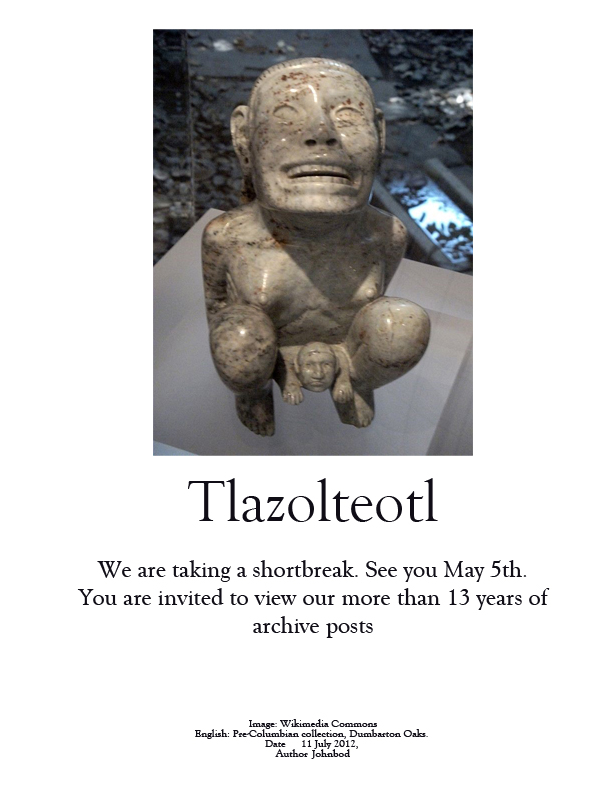
A Brief Break!
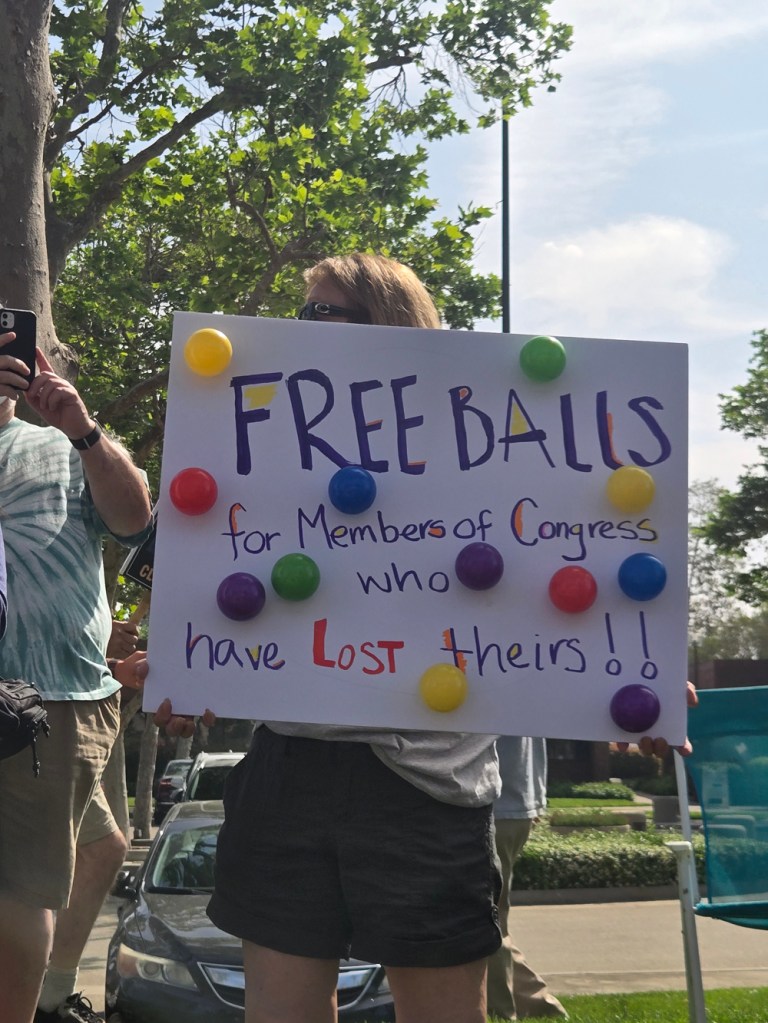
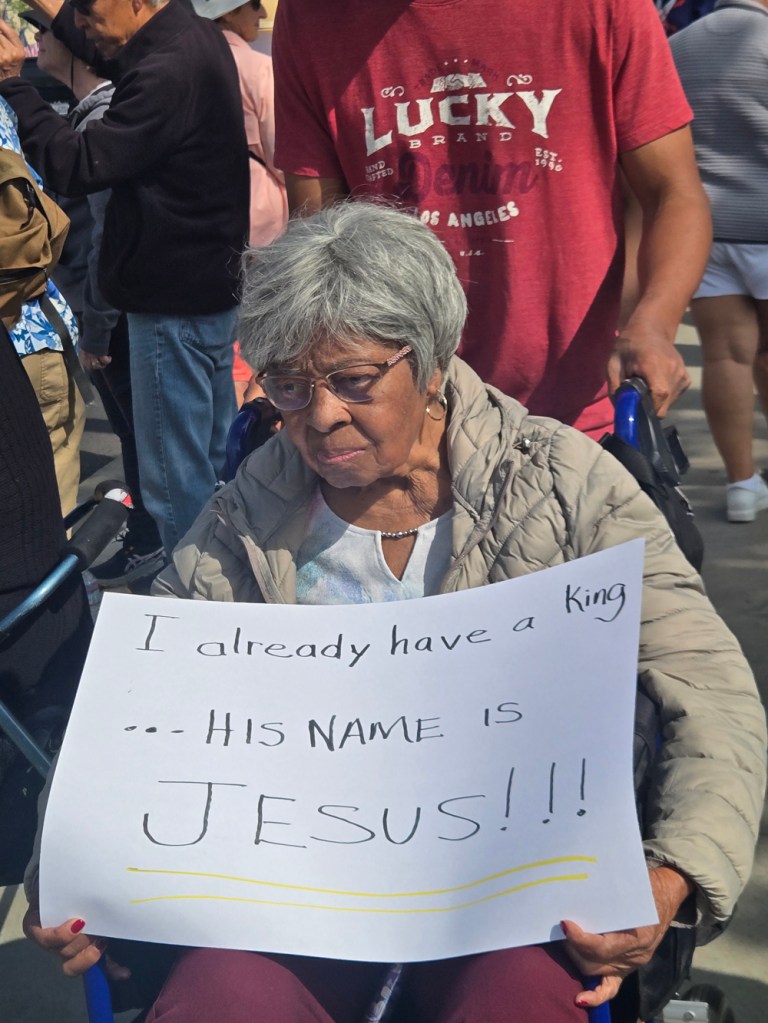
No Kings! March 28, 2026- photo essay by Marie Cartier
The last No Kings rally was the largest one yet! In fact, the No Kings rally in March 2026 was the largest protest on domestic soil in the history of the United States.
Photos by Marie Cartier from Lakewood, CA
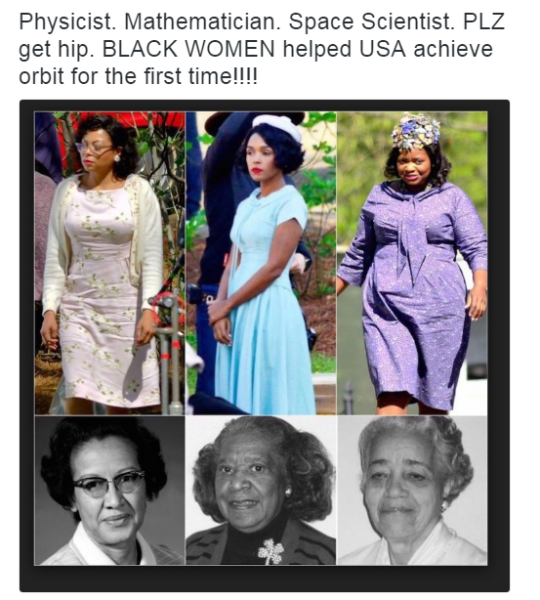
Herstory Profiles: Honoring the wisdom and work that took us to the moon in 2026 By Anjeanette LeBoeuf
In honor of the enormous success and moon joy of the Artemis II project I wanted to use this month’s Herstory Profiles to focus on three extraordinary women who helped make this possible, even if it was over 70 years ago. These three women have just recently in the last nine years been brought to the forefront due public recognition and the Hollywood film Hidden Figures. The film not only inspired by the 2016 non-fiction book written by Margot Lee Shetterly but by the actual women themselves.
How to Talk to a War Goddess: A Poetic Lesson From Sekhmet by Annie Finch
Consensus decision making, according to the mother of matriarchal studies Heidi Goettner-Abendroth, is woven into the definition of matriarchal societies. In these cultures, the respect, empathy, kindness, maturity, and belief in sustainable relationships that consensus implies are foundational. War, as the inimitable Yael Deckelberg sings to us, is “not a woman’s game”; any society that truly hears women will not play it. Overseen through the caring wisdom of circles of elder women in what Genevieve Vaughan calls the Maternal Gift Economy, matriarchal societies have less than no use for such a cruel, stupid, wasteful custom. As my great-aunt Jessie Wallace Hughan, founder of the War Resisters League, used to say, someday humanity will consider war as absurd as we now consider the custom of dueling. But we won’t see the end of this integral outrage in our lifetimes; that day will likely arrive only after we’ve all come to our matriarchal senses.
Meanwhile, here we are again.
Continue reading “How to Talk to a War Goddess: A Poetic Lesson From Sekhmet by Annie Finch”Roots in the Air by Sara Wright
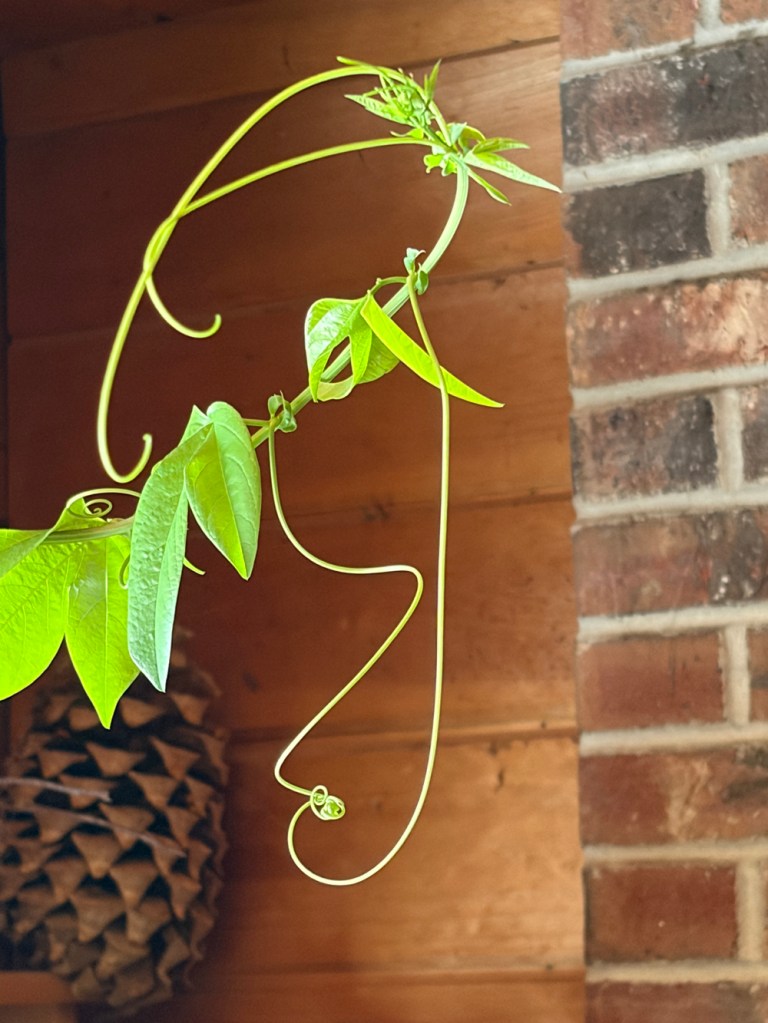
I am a plant woman, that is a woman who has an intimate relationship with plants. As an ecofeminist writer I believe that women and plants have a ‘natural’ connection to one another. We see this mythologically as women turn into trees, hold ceremonies under trees, listen to them for wisdom, take comfort from them in distress.
Why do we look to the stars for direction and ignore the urgent messages about interspecies communication that trees and plants convey to us here on earth?
I think this is a very important question to be asking when our planet is facing ecological collapse.
What follows is one woman’s story.
Continue reading “Roots in the Air by Sara Wright”Embraced by Grace by Margot Van Sluytman
I have Come Full Circle. March 27th is the 48th anniversary of the murder of my father Theodore Van Sluytman in Scarborough, Ontario, Canada. An Easter Monday. My entire life from that time the age of 16 to this time now the age of 64 was, is, and will always be a connection to how word with a capital W and words with a lowercase w, infuse, inspire, and affect my life. I might even say infect my life.
After being contacted by one of my father’s three murderers, almost 30 years after he put the bullet in my father’s heart, we did share healing. All seemed well in the crucible of tying up loose ends as it were. Ten years later, however, he, made choices that were deeply unaligned to that meeting.
When he and I met, it was powerful. It was profound. Terrifying too. And liberating. His choices 10 years after that meeting, though they shattered me for a time, leaving me with feelings of smallness, stupidity, and inadequacy based on the fact that in choosing to meet him major rifts in my family occurred. Few supported my choice to meet him. However, I grew to understand that we are the poetry that we wish to read, to be, and to see in the world. That we are human. I thought about my feelings of smallness, stupidity, and inadequacy. Thought long and hard. Many times. In early dawning days. Sitting in the gloaming. Late into the night.
Continue reading “Embraced by Grace by Margot Van Sluytman”Legacy of Carol P. Christ: IS EVIL PART OF THE NATURE OF REALITY AND DIVINITY?
This was originally posted on March 31, 2014. We are posting this on Sunday instead of Carol’s usual Monday in order to accommodate other scheduled posts this week.

What is the origin of evil? Is it innate in human nature or even in the nature of the universe? Judith Plaskow and I discuss this question in our forthcoming book Goddess and God in the World and this is a chance to listen in our conversation.
I am responding to Judith’s allegation that in imagining Goddess as loving and good I am fantasizing an ideal deity who exists apart from the evil-and-good world that we know. Judith speaks of an “evil impulse” in human beings which she considers to be innate in human beings and in the nature of reality. Judith says that my “defense” of the goodness of God comes down to “the traditional free will defense.” She also questions my view that human beings can
I argue that it does not because the traditional free will defense imagines an omnipotent God who existed before the creation of the world. Then I continue:
I think what you meant to say is that like those who invoke the traditional free will defense of the omnipotent God, I attribute humanly chosen evil entirely to human beings—and not to Goddess or God.
Continue reading “Legacy of Carol P. Christ: IS EVIL PART OF THE NATURE OF REALITY AND DIVINITY?”The New Archbishop of Canterbury Is A Woman by Laura Shannon
On 25 March, 2026, in a profoundly significant historic ceremony, the 106th Archbishop of Canterbury was installed in Canterbury Cathedral. Her name is Sarah Mullally. She is the first woman to hold the position of spiritual leader of the Church of England and the Anglican Communion worldwide. As such, in spiritual authority in the UK she stands second only to the King.
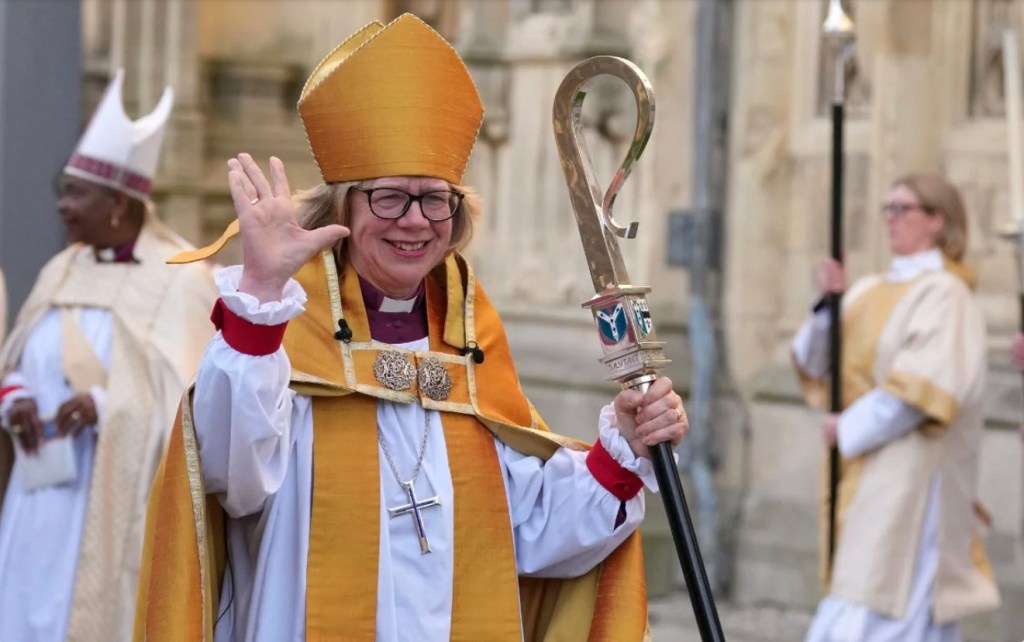
archbishop of Canterbury in Canterbury, England, Wednesday, March 25, 2026, the first
woman ever to lead the Church of England. Photo: AP/Alastair Grant.
Dame Sarah Mullally is married with two children, and worked for decades as a midwife and nurse before she was ordained as a priest in 2002. In 2018 she was named the first female Bishop of London, and in 2026 the first female Archbishop of Canterbury. Her installation (aka enthronement) as Archbishop took place one day before her 64th birthday. She describes herself as a feminist and has ordained both men and women.
Continue reading “The New Archbishop of Canterbury Is A Woman by Laura Shannon”Aquarius and the Woman at the Well by Judith Shaw
Those of us who are old enough to remember the hit song of the 1960s, The Age of Aquarius, have long lived with the promise of the dawn of this new age. The song and the hope of the 60’s promised that, when The Age of Aquarius came, the world would be transformed into a world of peace and love.
This is the dawning of the Age of Aquarius
The Age of Aquarius
Aquarius! Aquarius!
Harmony and understanding
Sympathy and trust abounding
No more falsehoods or derisions
Golden living dreams of visions
Mystic crystal revelation
And the mind’s true liberation
Aquarius! Aquarius!
—The Age of Aquarius, by The Fifth Dimension
 Feminism and Religion