My Many Grandmothers by Laura Shannon

Carol P. Christ has described spending meaningful time with her grandmother as a child and the unconditional love she received from her mother and grandmothers: ‘my relationships with my mother and grandmothers were full of love. This makes it easy for me to imagine the loving arms of Goddess embracing the world.’ She talks about this in her new book with Judith Plaskow, Goddess and God in the World: Conversations in Embodied Theology.

I have always loved to hear these kinds of stories from Carol and other friends, since I lost my own grandmothers before I felt I really knew them. My mother’s mother passed away when I was a young child. My father’s mother lived until I was in my twenties, but Alzheimer’s stripped her of her ability to recognise her family many years before her physical death. How I wish I had known them as an adult and had been able to talk to them, even once, woman to woman. And how I wish I had received the advice, support and unconditional love which Carol describes, and which I have seen other grandmothers offer their grandchildren. This absence has left an aching heart, a raw wound, for my entire adult life.

Continue reading “My Many Grandmothers by Laura Shannon”

A Feminist Retelling of Noah’s Ark by Trelawney Grenfell-Muir

My daughters came to me after Sunday School one day, concerned about a story they had heard in which God drowned almost everyone on Earth. So I sat down and thought about why a community might want to tell that story, and what valuable wisdom might be lifted from it for my children. Here is what I told them:
God/ess  has  many  faces,  which  help  us  understand  different  things we  need  to  know  at different  times.  Sometimes we think of God/ess  as  Crone,  an  old,  old  woman  crowned  with  silver  hair  as  an  emblem  of  her  wisdom,  who helps  us  learn  to  let  go  of  anything  that  is  holding  back  the  wellness  of  our  community  and ourselves.  Continue reading “A Feminist Retelling of Noah’s Ark by Trelawney Grenfell-Muir”

(Not Yet) Elder Reflections by Chris Ash

Four years ago, as I went to touch up my roots with a shade of red I’d been dying my hair since I was 18, I noticed that what had started as a few random strands of gray amidst my natural reddish brown had become streaks of brilliant silver. I began dying my hair red as a style choice, long before I’d ever even thought of going gray. I loved the way my natural hair reddened in the summers, with copper highlights flashing under the beach sunsets. There was never an intention to hide gray or look younger, but there was a time in my thirties when the first few strands of gray seemed to make my darker roots look muddy, like they were dirty instead of graying.
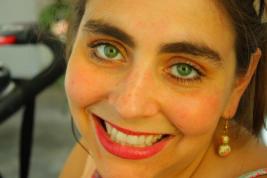
But brilliant streaks of silver? This, I could do. I switched from my usual permanent henna dye to a temporary red to keep my roots touched up while the henna’d hair grew out, and waited. Three years later, all the permanently red hair had grown out, and I was ready to have fun. I went to the stylist, had him bleach out the parts I’d been dying red, and had him color it all with a wild ombre of colors that would look good with silver. My hair was a darkened nebula, silver roots reaching down into four different shades of purples of blues. After each new dye – a brilliant nebula, each time fading over a few months into a soft mix of gray-blues and silver. Even at the end of the fade-out, people still ask me if I just had my hair colored. Every week, the color seems a new shade.

Currently, I’m at the end of a fade out. Honestly, I probably would have colored it a few weeks ago if I weren’t so busy, but at this point my hair is mostly gray with some slight bluish highlights.

And twice in the last week – TWICE! – I’ve been offered the senior discount by well-meaning cashiers.

At 42. Continue reading “(Not Yet) Elder Reflections by Chris Ash”

An Open Letter to Mom by Natalie Weaver

Dear Mom,

I want to take this opportunity to tell you I have learned so much from you over these years that I have been privileged to call you “mom.” I watch you, as you get older, as I also get older, and I continue to learn from you.  You are always telling me that a person cannot know something truly until they get there; that every decade of life is different; and that life becomes, in the end-game, a process of letting go.  I see you, and I know by watching you that this is true.

I remembered you today, from when I was just a child, getting ready to go out for the evening with Dad.  You were spraying your hair into an impressive beehive, pulling on stockings, and fragrancing your wrists with Fabergé cologne.  You were beautiful then, and you taught me that life should be beautiful, our home should be a place of refuge, and every day was worth celebrating.  You used to sing about loving your home, and you maintained it so elegantly.  It was lovely to be your child in that home.  Thank you. Continue reading “An Open Letter to Mom by Natalie Weaver”

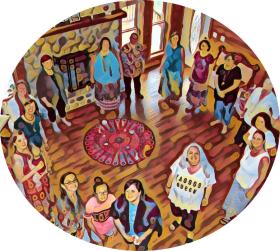
Creating Women’s Circles that Heal and Enrich Our Lives by Anne Yeomans and the Women’s Well

From 1994 until 2012, the Women’s Well, based in Concord, Massachusetts, offered thousands of women the opportunity to participate in women’s circles of all kinds. In the first and second parts of this series, Anne Yeomans, a co-founder of the Women’s Well, and others who co-created the Women’s Well, shared about their experiences with the power and wisdom of the circle and the use of altars and ritual. (Part I and Part II).  This third part, explains the guidelines that the Women’s Well developed for their circles. This post is adapted from the Women’s Well website at www.womenswell.org.

We often used the guidelines in our circles. Sometimes the facilitator or holder of the circle would speak of them and then place them around the circle on printed cards, to remind us of the quality of listening and speaking that we were trying to invite in.

These guidelines were originally drawn from the work of Tom Yeomans who developed a way of working in groups, called the Corona Process. It was an approach to group dialogue that came to him in a dream the night after attending a meeting with the great physicist David Bohn, who at the end of his life became interested in dialogue and world peace. Continue reading “Creating Women’s Circles that Heal and Enrich Our Lives by Anne Yeomans and the Women’s Well”

Inner Garbage (Fear) vs. Inner Goddess (Love) by Vanessa Soriano

I’m sitting on my meditation pillow for the thousandth time searching for clarity.  Initially, going within feels like traversing a jungle; swinging from one thought branch to another.  I’m itching for some peace and I’m almost certain this isn’t the way to it.  But, I’ve been here before and I won’t quit breathing through the discomfort.  I know I will greet the inner goddess soon enough.  Getting past the noise is part of accessing her wisdom.  The noise teaches me discernment (if I allow it to).
Eventually, the monkey mind gathers up all the branches and turns them into a prodigious figure that blocks the sun inside.  Hello darkness my old friend.  Inner garbage (fear) makes her entrance.  I’m still breathing.  Eyes closed.  Determined through slow, rhythmic breaths, to move past her.  I know I cannot run from her.  She’s faster and outwits me every time.  Continue reading “Inner Garbage (Fear) vs. Inner Goddess (Love) by Vanessa Soriano”

“The Burning Lava of a Song” by Joyce Zonana

Aurora’s autobiographical narrative is a passionate paean to poets as the “only truth-tellers, now left to God”; she celebrates them as agents for personal and social transformation. As we come to the end of this National Poetry Month in the U.S., where truth is under siege, it’s worth recalling Aurora Leigh and its daring exploration of poetry, gender, divinity, and social justice.

jz-headshotI was in graduate school when I first read Aurora Leigh, Elizabeth Barrett Browning’s fiery 1856 epic about a young woman claiming her vocation as a poet despite Victorian society’s patriarchal strictures. The poem was not on any assigned reading-list; I’d simply stumbled across it while doing research for my dissertation. The opening lines brazenly assert the speaker’s authority and ambition:

OF writing many books there is no end;
And I who have written much in prose and verse
For others’ uses, will write now for mine,–
Will write my story for my better self . . .

Encountering those words, I was immediately possessed by Aurora’s voice and vision, a welcome change from all the male poets and critics I’d been reading. I devoured the verse novel’s nine books in one night. The poem became the centerpiece of my dissertation, and I studied and enthusiastically taught it for years.

Continue reading ““The Burning Lava of a Song” by Joyce Zonana”

Bible Study Back in the White House after 100 Years – And… They Still Hate Gays and Women! by Marie Cartier

So, I am perusing my twitter feed and I come across this headline:

White House Bible Study Led by Pastor Who Is Anti-Gay, Anti-Women and Anti-Catholic

The opening paragraphs read like my LGBTQ+ religious studies nightmare:

“The first Bible study group held for the U.S. Cabinet in at least 100 years is led by a pastor who believes homosexuality is ‘illegitimate,’ who doesn’t believe women should preach and has described Catholicism as a ‘false’ religion.

Ten members of the Cabinet, including Vice President Mike Pence, Secretary of State Mike Pompeo, and Education Secretary Betsy DeVos, sponsor the study group, which holds meetings lasting between one hour and 90 minutes every Wednesday, according to BBC News. It unfolds at a location in Washington, D.C., that is kept secret for security reasons.

Its leader is Ralph Drollinger, a pastor and president of Capitol Ministries: an organization which aims to ‘evangelize elected officials and lead them toward maturity in Christ.’”

Continue reading “Bible Study Back in the White House after 100 Years – And… They Still Hate Gays and Women! by Marie Cartier”

The Doubt of the Empty Tomb and the Hope for Tomorrow by Katie M. Deaver

I recently had the opportunity to travel to my undergrad institution on a student recruitment trip.  During this trip I was able to preach during the college’s weekday chapel service.  Despite the fact that I have lived, studied, and worked within a seminary community for the last seven years I had not actually written (not to mention preached!) a sermon since I was a senior at this very college… to say the least I was a bit nervous.  As it turned out the sermon writing went well, and I also felt positively about the preaching experience.  But even though the writing and preaching are over I can’t stop thinking about the topics I choose to speak about.

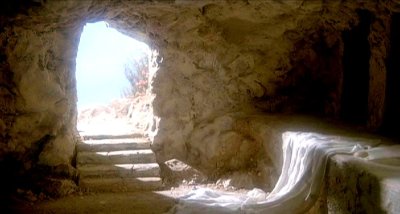
The scripture lesson I used was Luke chapter 24 verses 22-24 “Moreover, some women of our group astounded us.  They were at the tomb early this morning, and when they did not find his body there, they came back and told us that they had indeed seen a vision of angels who said that he was alive.  Some of those who were with us went to the tomb and found it just as the women had said; but they did not see him.”

These verses offer a quick recap of the Easter story that comes earlier in chapter 24 of Luke.  The women go to the tomb with the spices that they have prepared, but when they arrive they discover that the stone has been rolled away and the body of their friend and teacher is not there.  Instead, there are two men in dazzling clothes who ask the women “Why do you look for the living among the dead?”

Continue reading “The Doubt of the Empty Tomb and the Hope for Tomorrow by Katie M. Deaver”

Dragonfly, Guide to Transformation and True Sight by Judith Shaw

judith shaw photoDragonfly, dragonfly darting quickly hither and yonder, up and down, left and right –  a transparent shimmering spark with effervescent wings, representing the dreamtime and the illusionary nature of reality.  Dragonfly, dragon – both immortalized in mythology worldwide.

Continue reading “Dragonfly, Guide to Transformation and True Sight by Judith Shaw”