Yes, You’re a Homophobe by John Erickson

Jesus loved sinners and Jesus would rather be dancing with me in West Hollywood on a Friday night than lugging through a swamp luring ducks into a trap with a duck caller made by a clan who think that my sexual actions are similar to that of an individual having sex with an animal.

John Erickson, sports, coming out.

To be able to walk down the street holding the hand of the one you love is a great feeling and an action that some of us aren’t able to perform without fear.

A line has been drawn in the sand between those who support gay rights and those who do not.  While some call it being on the “right side of history,” I simply now refer to it as not sounding and looking like a bigot in the halls of history and in the various books, Facebook posts, and Tweets that our children will one day read. Continue reading “Yes, You’re a Homophobe by John Erickson”

Who Am I Under Oppression? By Deanne Quarrie

Deanne QuarrieIn a class I am taking we were asked to journal with these questions: Ask yourself who are you in the inner voice that does not speak in the world around you or which you have worked tirelessly to bring into fruition in your life. Who are you that has felt suppressed and suffocated?

I sometimes think that I do not know who I am anymore.  Life teaches us that it is those outside of ourselves who determine our value to society.  We are given love and support (if we are lucky) by our parents as children.  Our value is determined by how much time and attention they give us.  If we get a lot, we grow up confident in ourselves trusting our way through life. When we attend school our value is determined by the effort we put into our studies, the grades we receive and the extracurricular activities we take part in and finally by the friends we choose. Continue reading “Who Am I Under Oppression? By Deanne Quarrie”

What Would Malala Do? by Gina Messina-Dysert

Gina Messina-Dysert profileOctober 11th was International Day of the Girl – a movement that empowers girls around the world to see themselves as powerful change agents. This year’s theme is “Innovation for girls’ education.”  Certainly, this makes sense given that education is one of our most powerful resources – just ask Malala.  During her recent interview on The Daily Show, Malala reminded the world that it is education that can solve global problems – not war.

The youngest person in history to be nominated for a Nobel Peace Prize, Malala is clear in her message; the only way to make change is through peace, dialogue, and education.  When asked about her reaction to the threat to her life by the Taliban, Malala responded saying that she thought quite a bit about what she would say if she came face to face with a Talib.  “I would tell him how important education is and that I would even want education for your children as well. That’s what I want to tell you, now do what you want.”

Although the Taliban has continued to threatened her life, Malala says striking back is not the right approach.  “If you hit a Talib, then there would be no difference between you and the Talib. You must not treat others with cruelty. … You must fight others through peace and through dialogue and through education.”  Such words of wisdom from a child. Continue reading “What Would Malala Do? by Gina Messina-Dysert”

An Ethics of Anger by Ivy Helman

me bio-suitSometimes I feel angry.  I would say that more often I’m upset, disappointed, annoyed or just plain frustrated.  These are easier emotions for me to handle because I tend to shy away from confrontation and conflict.  Of course, when they come up I can deal with them but I’d rather put time and energy into fruitful communication before difficult conflicts erupt.  Nevertheless, this doesn’t always work and other people handle situations and communication differently than I do.  So how does one approach anger?  The anger inside one’s self?  Another’s  anger?  What about when two individuals are angry with each other?  I would like to spend a little bit of time treating each one of these scenarios separately and then conclude with a few general remarks about the importance of empathic feelings of anger over the situations of others.

First of all, everyone handles anger differently.  I’m not sure that there is only one correct way to approach it.  Personally, I use anger as a reflective tool.  Why am I angry?  What happened or didn’t happen to provoke my anger?  Is my anger an appropriate response to the situation in which I find myself?  Are there some concrete actions I can do to right the situation?  These questions allow space for me to not only explore my feelings and ground myself, but more importantly they give me some space between what made me angry and whatever action or inaction I take toward that feeling of anger. Continue reading “An Ethics of Anger by Ivy Helman”

The Hot Seat by John Erickson

Being a man in feminism isn’t easy and that’s how it is supposed to be.

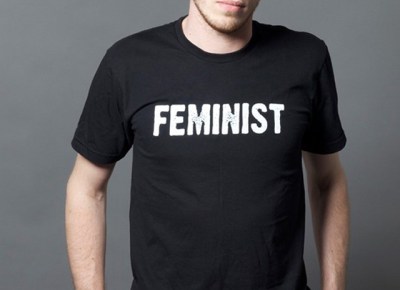
men_feminist_mainI’ve been thinking a lot about what it means to be a male feminist lately.  As the only man to be a permanent blogger on this very site until my colleague and friend Kile Jones came on board, I took my role, as a man in a traditional feminist (online) space very seriously.  Although the ongoing struggle to be a male feminist is one continually wrought with dialogues about power and positionality (amongst a host of many other topics), I am often conflicted when I see male feminists take advantage and destroy the hard work that many, specifically on this site and beyond, worked hard to build and defend.
Not wanting to reopen old wounds or start new online battles, men have been involved in feminism for quite some time.  From James Mott chairing the first women’s rights convention, to radical feminist Andrea Dworkin’s life partner John Stoltenberg, to Michael Kimmel and Michael Kaufman’s life long work to legitimize not only men in feminism but also what it means to be a man who works for gender equality, being a man in feminism isn’t easy and that’s how it is supposed to be. Continue reading “The Hot Seat by John Erickson”

Values of Respect and Compassion for Others by Deanne Quarrie

Deanne QuarrieWe live in an age when there are overall changes in our society in the values of respect and compassion. I no longer see people pulling back chairs or opening doors for others.  Actually, I am constantly witness to a general lack of respect everywhere.  From vulgar profanity in public places to downright abuse of others – this saddens me.  Where I see this lack of respect most of all is within social media.  There, people write anything they want – about anyone they want and to anyone they want without consideration of the grievous harm they might cause. Continue reading “Values of Respect and Compassion for Others by Deanne Quarrie”

Everywhere I am surrounded by tales of violence by Grace Yia-Hei Kao

 Grace Yia-Hei KaoAs I write this blog, I am nearing the end of my week-long family vacation in Palm Desert. While we’ve had lots of fun splashing around in the pool, everywhere I turn I am bombarded by scenes and memories of violence.

Continue reading “Everywhere I am surrounded by tales of violence by Grace Yia-Hei Kao”

The Inter-Faith Youth Initiative and Feminism by Ivy Helman

ivyFrom June 25th through July 2nd 2013, I participated, as one of three Jewish mentors, in IFYI (Inter-Faith Youth Initiative), an inter-faith immersion experience for high school and college-age youth sponsored by Cooperative Metropolitan Ministries (CMM). The mentors and the rest of the staff guided, encouraged, empowered and supported 30 participants. Throughout the week, I also led an art interest group and co-led an affinity group with Beau Scurich, the Muslim chaplain at Northeastern. The entire community of participants and staff gathered around the week’s theme: the ways of truth and love. As Mahatma Gandhi said: “When I despair, I remember that all through history the ways of truth and love have always won. There have been tyrants and murderers, and for a time, they can seem invincible, but in the end, they always fall. Think of it–always,” (emphasis added).

IFYI was not only an exercise in how to live out the ways of truth and love, but it also became a vehicle through which the participants and staff expressed to the larger world what the ways of truth and love meant to us. Here is some of what the ways of truth and love came to mean throughout our journey together. Continue reading “The Inter-Faith Youth Initiative and Feminism by Ivy Helman”

To Have and to Hold: Gay Marriage and the Religion Question

If a conservative religious traditions can’t give their mothers or sisters full equality, how can we expect them to give a GLBT individual the time of day?

John Erickson, sports, coming out.Outrage.  Anger.  Fear.  Hatred.  These are just a few of the words that flashed across my Twitter feed as I woke up on that fateful Wednesday, June 26 morning when the Supreme Court of the United States ruled that the Defense of Marriage Act (or DOMA) was unconstitutional and that supporters of Proposition 8, the hotly contested voter initiative in California that banned same-sex marriage, had no standing.   People were mad.  However, it wasn’t just the typical kind of mad that is associated with hatred, it was a type gay_marriage_81102178_620x350of mad that was met with impossible anguish because what I was reading and feeling was a result of one thing: there was nothing more they could do.

What does all this mean?  Questions from friends and family were filling up my inbox and although I wanted to take a moment to just hit “Reply All,” and input the words: Equality, I had to hold back and start to examine the notion that although equality may now be firmly on the proverbial table, there is still a lot of work to be done, specifically for gay marriage and those wanting to marrying inside the traditional church spaces they grew up in and not just the ones that have come out as open and affirming in recent years towards LGBT individuals. Continue reading “To Have and to Hold: Gay Marriage and the Religion Question”

Public Depression and Feminist Spirituality by Linn Marie Tonstad

Linn Marie TonstadIn her recent book Depression: A Public Feeling, Ann Cvetkovich examines the experience of depression through the genre of memoir as well as by the construction of an archive of depression. Her archive includes sources ranging from John Cassian’s discussion of the way monks experience acedia to analyses of depression as the result of racism and colonialism, to suggestions for spiritual practices of transcendence – daily habituated actions of repetition and physical wellbeing – that might contribute to rendering depression manageable if not curable. The book, part of the Public Feelings project, is fascinating for the scholar of religion on multiple levels.

First, in terms of teaching and mentoring, Cvetkovich’s analysis of depression as reflective of real states of affairs in the world, rather than as a (mere) biological fact, speaks to an experience that I, and no doubt many others, have every year. At some point, an activist student (usually but not always female) will either email me or ask for an appointment to talk about struggles she’s been having. These students are usually heavily engaged in struggles for queer causes, in learning about intersectionality, reading critical race theory or Karl Marx for the first time, or discovering feminist theology, and trying to live into such modes of analysis in their personal relationships as well as in their ‘public’ lives as activists, members of churches, future clergy members, or the like. And unsurprisingly – and very familiarly – such students get to a point where they ask questions about how to remain engaged in such struggles when the opposition – personal and structural – feels so overwhelming. What do I do when I’m at a party and one of my friends says something heterosexist? How do I remain committed to the cause to which I’ve devoted my energies when I see so many other causes needing support? I’m worried that I’m alienating my family by the ways in which I’m changing. How ought I to relate to parishioners who think that opening a soup kitchen constitutes the pinnacle of meaningful service to God and neighbor? Continue reading “Public Depression and Feminist Spirituality by Linn Marie Tonstad”