Emergence and the Spirituality of the Sacred Feminine by Anne Kathleen McLaughlin

goddesses
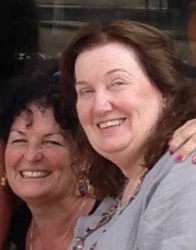
Kathleen and Marie (R-L)

Kathleen and Marie are friends who met at the event in Canada that inspired this post. Marie has given her monthly spot on Feminism and Religion to Kathleen so she can share her reflection with you. 

Emergence: the universe flares forth out of darkness, creating, over billions of years, through trial and error and trying again, astounding newness: carbon for life in the middle of a star…. the birth of planets, our earth holding what is required for life to emerge…. the creation of water from hydrogen and oxygen….the emergence of a cell with a nucleus.

Each of these seemingly impossible happenings did happen, offering us humans the hope that the impossible tasks confronting us in our time can be creatively addressed, showing us, as Brian Swimme expressed it, a domain of the possible beyond imagination. Our human endeavour has been powered by non-renewable energy resources. Our task now is to reinvent the major forms of human presence on the planet in agriculture, architecture, education, economics…. We need to align ourselves with the powers of the universe, consciously assisting, amplifying, accelerating the process of creative endeavour. Continue reading “Emergence and the Spirituality of the Sacred Feminine by Anne Kathleen McLaughlin”

The ‘Other’ as Target Market in Pentecostal Brand Evangelism by Andreea Nica

Andreea Nica, pentecostalismIn my last post, Leaving Behind My First Love, I mentioned I would examine the historical significance of Pentecostalism and how it relates to the marketization of the church and patriarchal standards. I realize this is a complex topic that involves many theoretical frameworks and conceptualizations, so I do welcome your thoughts. In this post, I will be highlighting trends regarding the marketization of Pentecostalism, brand evangelism as a marketing strategy, and how concepts of neo-liberalism intersect with the Pentecostal faith.

Pentecostalism stems from Evangelical Protestantism incorporating spiritual elements such as speaking in tongues (glossolalia), charismatic leadership, religious healings, and ecstatic praise and worship. Modern Pentecostalism dates back to 1906 at the Azusa Street Revival. However, the First Day of Pentecost can be found in the Book of Acts when Jesus’ disciples gathered in a room and began to speak in different languages. Continue reading “The ‘Other’ as Target Market in Pentecostal Brand Evangelism by Andreea Nica”

Extending Compassion and Vegetarianism by Xochitl Alvizo

“I did not know to recognize you as individuals when I bought you, but I know to recognize you as individuals now…”

I had been a vegetarian, and sometimes pescatarian, for more than 10 years before becoming vegan. Despite the length of my vegetarianism, in all that time I had not been inclined to go vegan. First, I really didn’t know too much about veganism and only began meeting a few vegans about five or six years ago here in Boston, none of whom had shared a compelling enough reason for their choice (at least not compelling to me). Further, I had no imagination for life without cheese or Cherry Garcia ice cream(!), and so I happily continued with my vegetarian ways. Then enters Carol Adams…

In a teleconference that WATER had with Carol Adams on March 14, 2012  (Women’s Alliance for Theology, Ethics and Ritual), the beauty of her veganism moved me to a new understanding of my food choices. I listened to the WATER audio recording some months after the actual event (these teleconference audio recordings are a great resource you should all access), and although I had been familiar with some of her work and had heard her speak before, I had not heard her talk about the compassion element of veganism. Her emphasis on increasing compassion, which I witnessed in action during her conversation with one of the listeners, was what moved me to my new practice. Continue reading “Extending Compassion and Vegetarianism by Xochitl Alvizo”

Women’s Erasure in Patriotic Songs by Caroline Kline

Kline, CarolineA couple of weeks ago, I attended my first grader’s school Patriotic Program. At home he had been singing snatches of “Fifty Nifty United States,” “Proud To Be an American,” and “America the Beautiful” for the last few weeks, so I was not surprised by the selection of songs. What did surprise me, when I actually sat down and listened to several verses of these songs, was the extent of the God language present in them (I thought public schools would avoid that a bit more) and the fact that many of these songs featured verses that were overtly androcentric.

Take “Proud to be an American.” The chorus is: “And I’m proud to be an American,/where at least I know I’m free./And I won’t forget the men who died,/who gave that right to me./And I gladly stand up,/next to you and defend her still today./‘ Cause there ain’t no doubt I love this land,/God bless the USA.”
Continue reading “Women’s Erasure in Patriotic Songs by Caroline Kline”

Staying In or Leaving the Religious Community of Your Birth: The Dialogue Continues by Carol P. Christ

carol p. christ 2002 colorThis blog is part of an on-going discussion between me and my friend Jewish feminist theologian Judith Plaskow about the differences in our choices to stay in and leave traditional religious communities, which is part of our forthcoming book Goddess and God since Feminism: Body, Nature, and Power.

When you (Judith) discuss the reasons I left Christianity while you stayed Jewish, I think you hit upon a crucial difference between us when you say that I am more “idealistic” than you are.  I agree that this does not mean that I am more ethical than you are.  When you say that I require more “purity of thought” or perhaps more accurately more “purity of ritual symbolism” than you, I think you have hit the nail on the head.  I simply cannot participate in a religious symbol system that I feel has done and continues to do great harm in the world.

I reiterate that for me this “problem” is not limited to the ways in which the maleness of God justifies male domination—including violence against and rape of women.  Equally important to me are the ways that religious symbolisms justify the violence of warfare and conquest.    I simply will not and cannot participate in religious rituals that justify domination and violence in the name of “God.”  If that makes me a “purist” or an “idealist,” I am willing to accept those terms.  Continue reading “Staying In or Leaving the Religious Community of Your Birth: The Dialogue Continues by Carol P. Christ”

They Don’t Know Me by Jameelah X. Medina

A spoken word piece… 

They think I’m uneducated, relegated to the sidelines of life, desecrated and infected mind with cultish, hocus pocish, dogma of misogyny; my worth based solely on my progeny!?…

They think I’m silent, ruled by a tyrant, never speakin’ unless spoken to, hiding scars and contusions too?! Continue reading “They Don’t Know Me by Jameelah X. Medina”

Fire, Her Bright Spirit by Deanne Quarrie

Deanne QuarrieIn Celtic Tradition our world is composed of Three Realms, those of Land, Sea, and Sky. In the midst of these Realms we find the Sacred Grove, the place of flowing together. There the Sacred Fire burns, by the Well of Wisdom, beneath the World Tree. Sacred Fire is that which weaves itself throughout the Three Realms.  It connects us and all of life to the Realms as well as to our gods and goddesses.  Fire is Sacred Spirit, Sacred Inspiration, without which life would have no meaning.

Fire is the spark, the flame, the heat of passion.  It is what ignites our creativity, fuels our passion and fires our hearts to love.  It is the Dance of Life, the joy found in movement, sexual energy and the warmth that germinates new life in seeds. It is the warmth of sunlight on our skin and the ecstatic pleasure of orgasm. Continue reading “Fire, Her Bright Spirit by Deanne Quarrie”

Serving Spirit by Wendy Griffin

Wendy Griffin, Cherry Hill Seminary To me, it isn’t the belief that is meaningful, it is the feeling I get in those magical moments when I am connected to spirit.

When I was young, my mother owned a girls’ camp on the shores of a string of small lakes in Northern Wisconsin. From the age of 2 until I was 16, I spent every summer surrounded by silver birch trees and strong women. We lived in Army surplus tents and learned to ride horses and paddle canoes, build campfires and treasure the female spirit. Sunday evenings we would walk two by two singing through the forest down to the lake, where we would sit on pine logs on a little point of land between two shores and listen to the waves lap against sand as my mother read to us from Gilbran and her favorite poets. Those were our “Sunday vespers services.”

So I was raised on a Goddess path, although neither my mother nor I knew it then.

I had no interest in religion, which to me was Big Daddy in the Sky. It never occurred to me that what I felt in the forest had anything to do with religion, and I thought being spiritual meant that one prayed a lot and didn’t have any fun. When I left home at 18 and moved to Greenwich Village, I left the feelings I had those summers, what I know now was the spiritual part of me, behind. The world seemed full of wonderful adventures, and I wanted to have my share. Continue reading “Serving Spirit by Wendy Griffin”

Genetic Testing: The Ethical Implications of Expanded Newborn Testing – Who Benefits? (Part Two) by Michele Stopera Freyhauf

Freyhauf, Feminism, Religion, Durham, Old Testament, Blogger, Bible, Gender, Violence, Ursuline, John Carroll

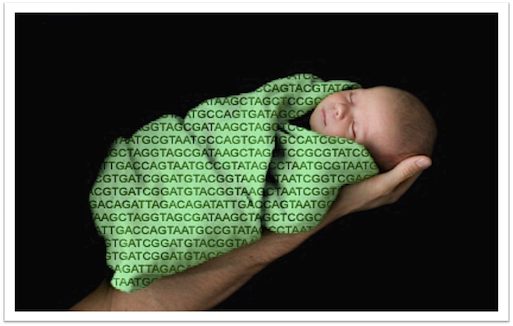
With Angelina Jolie’s decision to have a double mastectomy due to a genetic test that revealed she carried the BRCa gene, the issue of genetic testing is in the forefront once again.  This is the second part of a three-part essay exploring genetic testing on newborns (part one and part two) and concludes with exploring personal choices and the psychological ramifications of genetic testing.

False Positives, Lack of Empirical Evidence, and Dangers in Expanded Newborn Screening

In the year 2000, most states only screened for about four conditions.   As of November 2008, most states adopted screening for the 29 recommended primary conditions and up to 25 secondary conditions (See President’s Council on Bioethics, “The Changing Moral Focus of Newborn Screening,” 36).    Since no federal mandate on newborn screening exists from state to state, this number varies due to the lack of understanding of the diseases or showing no proven benefit.   In fact, the twenty-five secondary conditions recommended  by the American College of Medical Genetics do not need urgent treatment in the newborn period or have no proven treatment (Also see Mary Ann Baily and Thomas J. Murray, “Ethics, Evidence. And Cost in Newborn Screening” Hastings Center Report (38, 2008), 28 ).

Then there is the multiplex technology of tandem mass spectrometry (MS/ MS) that can screen for over 40 “inborn errors of metabolism” from a single drop of blood (See President’s Council, “The Changing Moral Focus of Newborn Screening,” 9).  While this technology has reduced the numbers of false positives, it is still far from being reliable.  This is due to screening forBabySeq rare disorders on a population wide basis – about four million babies annually.  To illustrate this point, in 2007,  3,364,612 infants were screened for Maple Syrup Urine Disease (MSUD) in the United States and 1,249 tested positive. After retesting, only 18 cases confirmed a positive result (See President’s Council, “The Changing Moral Focus of Newborn Screening,” 14).  MSUD is a well-understood condition that shows some benefit for screening.  However, when we expand screening to add conditions that are not understood as well as mandate all newborns in the United States to be tested, false positives are likely to be in the tens of thousands (See also Beth Tarini, et al. “State Newborn  Screening in the Tandem Mass Spectrometry Era: More Tests, More False Positives” Pediatrics,  118 (2006), 448-456).
Continue reading “Genetic Testing: The Ethical Implications of Expanded Newborn Testing – Who Benefits? (Part Two) by Michele Stopera Freyhauf”

Rape Culture and Abstinence Only Education by Gina Messina-Dysert

Gina Messina-Dysert profileRape culture, as has been noted on Feminism and Religion in multiple articles (see Carol Christ’s post this week), permeates every aspect of our society, every aspect of our lives.  Something that I believe warrants serious attention is Elizabeth Smart’s recent comment about abstinence only education.  In her talk at John Hopkins University about her own harrowing ordeal, she well demonstrates the many ways rape culture plays itself out in our society and also shares why we must continue to explore options beyond abstinence only education.

As you may recall, Elizabeth Smart’s name became well known across the US when she was abducted at the age of 14 and then found alive 9 months later.  During her captivity Smart was forced into a polygamous marriage and repeatedly raped (rape culture).  When she was found walking down the street with her captors, many wondered why she hadn’t tried to escape or ask for help (rape culture).  According to Smart, the question she is asked most often is “Why didn’t you run? Why didn’t you scream?” (rape culture).  Smart responded to that question during her talk and her answer included abstinence only education (rape culture). Continue reading “Rape Culture and Abstinence Only Education by Gina Messina-Dysert”